
Hochul Signs New York Auto Reform Law Targeting $4,000 Driver Bills
When New York Governor Kathy Hochul signed a sweeping auto liability and anti-fraud package into the state budget on May 27, she did something Albany had resisted for years, and a major national advocacy group immediately took notice.


Published: Jul 30, 2026
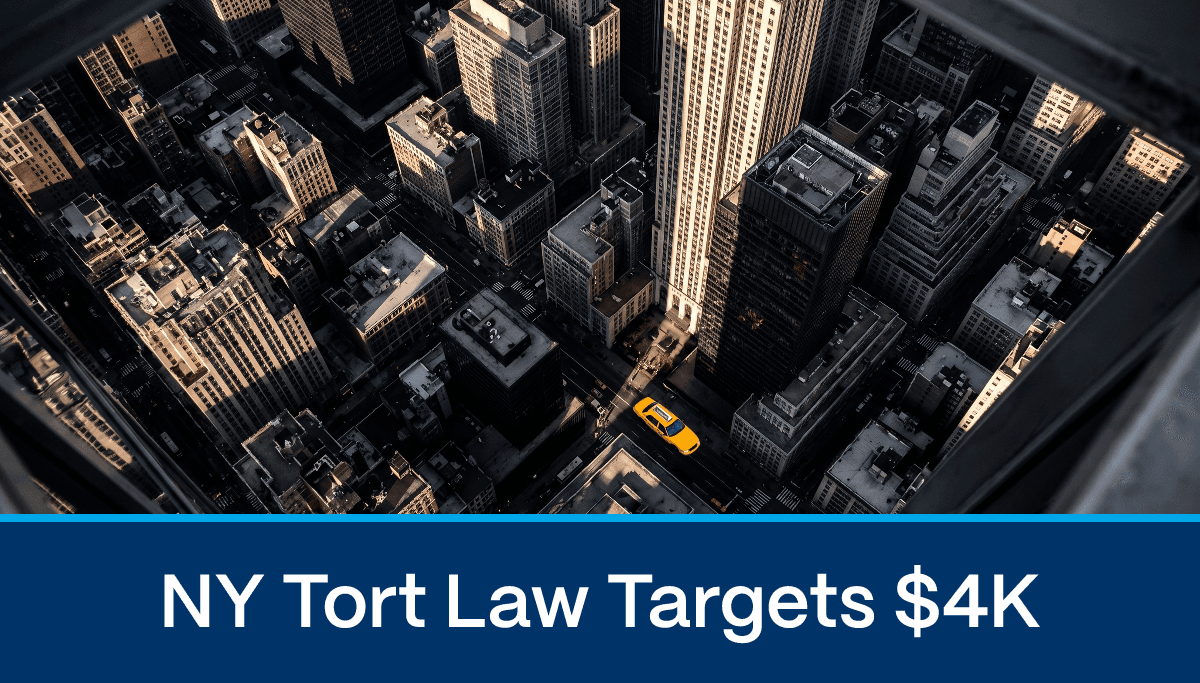
When New York Governor Kathy Hochul signed a sweeping auto liability and anti-fraud package into the state budget on May 27, she did something Albany had resisted for years, and a major national advocacy group immediately took notice.
The New York Post reports that the American Tort Reform Association (ATRA) dubbed Hochul a "Tort Reform Trailblazer" for pushing through the reforms over fierce opposition from trial lawyers and Democratic lawmakers. The law directly targets the structural forces driving New York auto insurance reform, and it carries a stated goal of trimming premiums by 10% for drivers who currently pay, on average, more than $4,000 a year, according to the governor's office.
Hochul earns 'Tort Reform Trailblazer' title, and why it matters
Lauren Sheets Jarrell, the ATRA's vice president and counsel for civil justice policy, did not mince words in her praise.
"Gov. Hochul delivered real, measurable progress for New Yorkers this year, and that deserves credit. Over the objections of a reluctant legislature in 'limbo,' Gov. Hochul showed up as a 'Tort Reform Trailblazer.'"
That recognition carries real political weight. The trial lawyers lobby and many Democratic lawmakers had resisted Hochul's proposals for years, according to the New York Post. Securing the package as part of the approved state budget was, by almost any measure, a significant legislative victory.
Tom Stebbins, executive director of the Lawsuit Reform Alliance of New York, echoed that view.
"By pushing back against Albany's most powerful special interest and delivering historic liability reforms, Gov. Hochul has shown what true leadership, and what a real affordability agenda, looks like."
Hochul is currently seeking re-election to a second four-year term. She replaced former Governor Andrew Cuomo in 2021 and now faces Republican Bruce Blakeman.
Why New Yorkers pay $1,500 more than the rest of the country
The numbers alone explain why this law was urgently needed.
New Yorkers pay more than $4,000 a year for car insurance on average. That figure sits roughly $1,500 above the national average, according to the governor's office. For context, the Save Max Quote Index, drawn from 3.3 million+ real quote requests, consistently identifies New York as one of the most expensive states for auto coverage, a pattern that aligns with the structural cost drivers the new law attempts to dismantle.
What creates that gap? Fraud, excessive litigation, and a court environment so hostile to defendants that New York carries the unofficial designation of "judicial hellhole." The ATRA and reform advocates point to a culture of staged accidents, inflated injury claims, and lawyers who treat the insurance system as a profit center rather than a safety net.
The SMQI data reflects what happens when those pressures compound year after year: premiums climb, and honest drivers absorb the cost of other people's fraud.
What the new law actually changes
The legislation attacks both the lawsuit side and the fraud side of the equation simultaneously. Here is a breakdown of the specific provisions:
Liability and damages reforms:
- Damages are capped for people who are mostly at fault for causing a crash and attempt to sue their victims
- Payouts are limited to $100,000 for drivers who were uninsured, drunk, or committing a felony at the time of a crash, even if the other party was not at fault
- The serious injury threshold is now more restrictive, meaning pain-and-suffering or emotional-distress claims require proof of a severe injury
Fraud criminalization provisions:
- It is now a crime to hire, recruit, or orchestrate someone into staging a car crash
- Medical care providers with a history of misconduct are barred from treating workers' compensation patients or performing independent medical exams
Sheets Jarrell described the combined effect plainly:
"These reforms strike directly at New York's 'fraudemic.' For years, unscrupulous lawyers and the medical providers working with them made staged accidents and inflated injury claims a business model. This law finally gives prosecutors and insurers the tools to go after everyone involved, not just the driver behind the wheel."
How New York's lawsuit and fraud environment compares to other states
New York's premium burden does not exist in a vacuum. A look at how it stacks up illustrates why reform advocates have long called this state a special case.
| Average annual premium | $4,000+ | Per governor's office |
| Gap above national average | $1,500 | Per governor's office |
| "Judicial hellhole" designation | Yes | Per ATRA |
| Staged-accident fraud criminalized | Now, under new law | First such explicit provision |
| Insurer excess-profit scrutiny | Strengthened | Under new law |
For comparison, neighboring New Jersey auto insurance and Connecticut auto insurance markets face their own high-cost pressures, but neither carries the combination of judicial-hellhole status and a $1,500 premium gap above the national average that New York does. States like Pennsylvania have historically benefited from more predictable tort environments, contributing to more moderate premium trajectories.
New York's "judicial hellhole" label reflects a documented pattern of lawsuit-friendly rulings, billboard-lawyer advertising culture, and systemic insurance fraud that, together, have made the state an outlier even within the high-cost Northeast.
Insurers face new scrutiny too, the oversight provisions explained
This law is not a one-sided gift to carriers. The legislation also increases oversight of insurance companies, and insurers will face tougher scrutiny over the rates they set specifically to prevent excess profits.
That provision matters. One of the persistent criticisms of tort reform efforts in other states is that carriers pocket the savings from reduced litigation costs without passing anything on to policyholders. The inclusion of rate oversight signals that Hochul's administration intends to hold both sides accountable.
The 10% premium-reduction goal cited by the governor's office is a stated target, not a guarantee. But the dual structure of the law, curbing fraudulent claims while watching carrier margins, creates at least a framework for that reduction to reach actual drivers.
What this means for you
If you are a New York driver, watch your renewal notice over the next 12 to 24 months for any downward movement in your premium. The 10% reduction goal translates to roughly $400 annually for a driver at the $4,000 average, so a meaningful shift should be visible. Compare quotes at renewal using a tool that pulls from real rate data, and check the New York auto insurance guide for updated rate benchmarks as carriers begin repricing under the new legal environment. If your premium does not decline despite reduced litigation costs in your area, ask your insurer directly for a rate justification.
What still needs to change, according to reform advocates
Even supporters of the law are clear: this is a starting point, not a solution.
Both Tom Stebbins and Lauren Sheets Jarrell acknowledged that New York still qualifies as a "judicial hellhole." Stebbins put the remaining challenge bluntly: "The Legislature should follow her lead by modernizing New York's outdated, lawsuit-friendly laws instead of protecting the billboard lawyers' business model. New York will never be affordable for working families as long as it remains a Judicial Hellhole, and a haven for fraudsters and profiteering attorneys."
That statement points to a structural problem the new law only partially addresses. Statutes governing how lawsuits are filed, what evidence is required, and how quickly cases move through courts remain largely unchanged. The billboard-lawyer ecosystem, advertising firms that solicit accident victims and steer them toward inflated claims, continues to operate.
Reform advocates see the Hochul law as proof that change is possible against entrenched interests. But the distance between a 10% premium-reduction goal and a durable, affordable insurance market in New York is still measured in years of legislative work.
FAQ
Will my New York auto insurance premium automatically go down because of this law?
Not automatically. The governor's office has set a goal of 10% premium reductions, but individual carriers reprice on their own schedules. You should watch your renewal notice and compare quotes actively to see whether your specific insurer passes savings along.
What is the $100,000 payout limit under the new law?
Under the new legislation, payouts are capped at $100,000 for drivers who were uninsured, drunk, or committing a felony at the time of a crash. This limit applies even if the other driver was not at fault, closing a loophole that had allowed high-dollar claims from at-risk motorists.
What does "judicial hellhole" mean for New York drivers?
The term, used by the American Tort Reform Association, describes court environments where lawsuit-friendly rulings and litigation culture make it easy to bring large claims against insurers and defendants. For drivers, it translates directly into higher premiums because carriers price in the cost of defending and settling those suits.
Is staging a car crash now a crime in New York?
Yes. The new law makes it explicitly a crime to hire, recruit, or orchestrate someone into staging a car crash. Previously, prosecution focused mainly on the person behind the wheel. The law now extends criminal liability to everyone involved in organizing such fraud.
How does this law affect medical providers involved in insurance fraud?
Medical care providers with a history of misconduct are now barred from treating workers' compensation patients or performing independent medical exams under the new law. This provision targets the medical side of the staged-accident ecosystem that reformers have called a key enabler of inflated claims.
About Aaren Ramon
Aaren Ramon is a Senior Analyst at Save Max Auto and owner of Elite Shield Agency. He covers carrier moves, regional insurance markets, and consumer-impact reporting from the agency-owner perspective. Read more from Aaren Ramon →
Edited by Taleah McGuire.
Methodology
This article is grounded in the source linked above. Save Max Auto data points referenced here are drawn from the Save Max Quote Index (SMQI), a proprietary instrument reflecting 3,364,317 real consumer quote requests submitted to savemaxauto.com. State and carrier rankings reflect the lifetime dataset; year-over-year shifts reflect a rolling 12-month window. The index is refreshed monthly. External authority figures referenced (NAIC, NHTSA, state regulators) reflect the most recent public data releases available at time of writing.
Sources
- Primary source: New York Post, "Group fighting auto insurance suits, litigation gives Hochul kudos for pushing NYS law"