
New York Mobilizes 270 Officers Across 55 Agencies to Fight Auto Insurance Fraud
At the New York State Police Academy in Albany, nearly 270 law enforcement officers gathered for a single purpose: learning how to hunt down and prosecute the fraud schemes quietly pushing car insurance costs higher for every New Yorker who plays by the rules.


Published: Jul 23, 2026
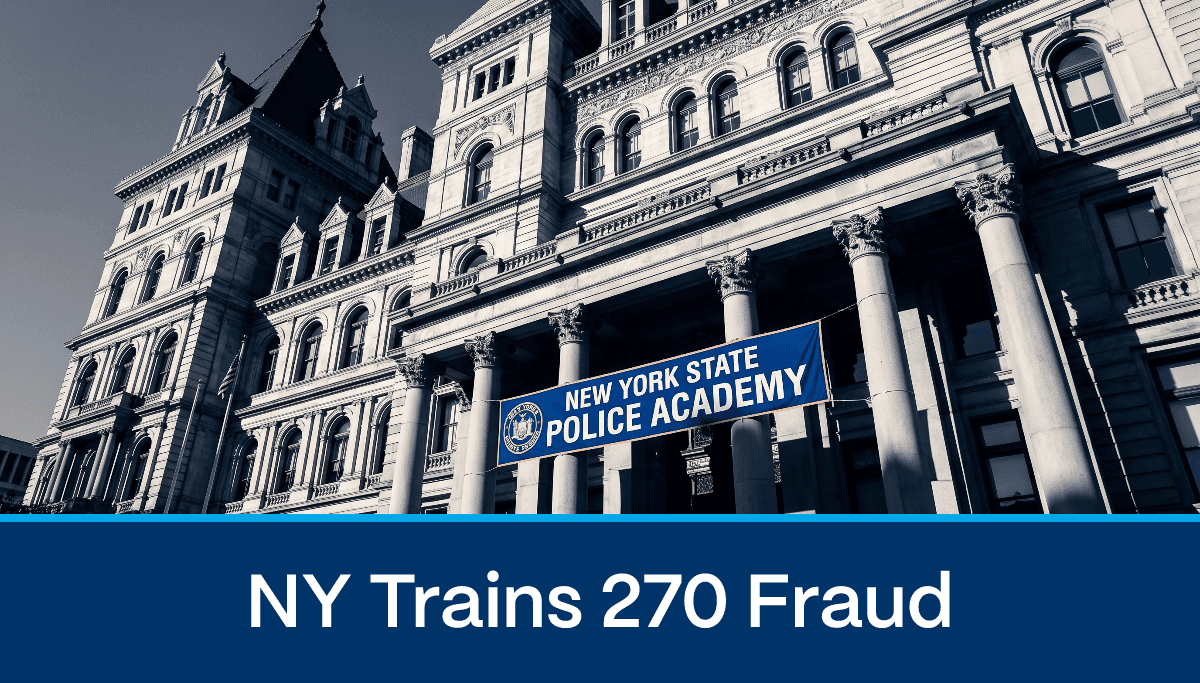
At the New York State Police Academy in Albany, nearly 270 law enforcement officers gathered for a single purpose: learning how to hunt down and prosecute the fraud schemes quietly pushing car insurance costs higher for every New Yorker who plays by the rules.
That training event, reported by Insurance Journal, marks one of the most coordinated state-level responses to New York auto insurance fraud in recent memory. Participants came from 55 agencies, ranging from the NYS Police and local police departments to sheriff's offices, university police departments, and district attorneys' offices. According to Insurance Journal, insurance carriers reported 43,811 suspected incidents of motor vehicle insurance fraud to the Department of Financial Services (DFS) and the Insurance Frauds Bureau in 2025 alone, up from 24,238 in 2020, an 80% increase in just five years.
270 Officers, 55 Agencies, One Mission: Crack Down on New York Auto Fraud
Picture the main hall at the NYS Police Academy in Albany on a Wednesday morning. Officers badge in from across the state, patrol deputies, university campus police, assistant DAs, sheriff's investigators, all crowded into one room to learn the same investigative playbook.
The training was led jointly by the NYS Police and the Department of Financial Services, two agencies that have both added staff specifically focused on auto insurance fraud in recent months. The curriculum wasn't theoretical. Participants received an overview of insurance fraud statutes, real case studies, and hands-on instruction in core investigative techniques drawn directly from the DFS and NYS Police financial crimes and special investigation units.
State Senator Jamaal T. Bailey framed the stakes plainly:
"By equipping nearly 270 law enforcement officers across 55 agencies with specialized tools to detect and prosecute these schemes, we are sending a clear message: deceptive practices will not be tolerated in our state."
Gov. Kathy Hochul, who proposed the symposium back in April, echoed that tone. The event is part of her broader push to reduce insurance fraud and bring down auto insurance costs for law-abiding New Yorkers. Multiple agencies, DFS, State Police, motor vehicles, and criminal justice, have been urged toward a more proactive, coordinated enforcement approach.
Fraud Reports Have Nearly Doubled Since 2020
The numbers driving this mobilization are striking. Here is how suspected motor vehicle insurance fraud incidents reported to DFS and the Insurance Frauds Bureau have shifted:
| 2020 | 24,238 |
| 2025 | 43,811 |
That represents an 80% increase in five years, a trajectory that state officials describe as a sharp and sustained surge, not a statistical blip.
Gov. Hochul put it directly:
"New York has experienced a sharp increase in suspected incidents of auto insurance fraud and the wave of hardship it has placed on law-abiding vehicle owners."
The Save Max Quote Index, drawn from 3.3 million+ real quote requests, consistently shows New York auto insurance costs ranking among the highest in the nation, a pattern that fraud experts say is no coincidence. The SMQI captures what real drivers actually pay when they shop the market, and elevated fraud environments like New York's are a well-documented upward pressure on those figures.
Meanwhile, neighboring New Jersey auto insurance costs and Connecticut auto insurance costs reflect similarly elevated no-fault insurance environments, illustrating how fraud-driven claims inflation is a regional dynamic, not just a New York City problem.
What Changed in the 2027 State Budget, and Why It Matters
The training symposium didn't happen in a policy vacuum. New York's 2027 state budget contains a package of reform measures specifically designed to cut off the financial incentives that make staged accidents and fraudulent injury claims so attractive to bad actors.
The changes are meaningful and specific:
- Prosecutors can now seek criminal penalties against any individual responsible for organizing a staged accident, not just the driver behind the wheel
- Damages are capped for individuals who are engaging in unlawful behavior at the time of an accident
- The statutory definition of a "serious injury" has been tightened to reduce the scope of inflated claims
- Damages are limited for individuals who are mostly at fault for an accident
Before these reforms, organizers of staged accident rings could sometimes escape criminal liability by staying out of the driver's seat. That loophole is now closed.
The combination of tighter legal definitions and expanded criminal liability is intended to attack fraud networks at an organizational level, not just catch individual participants after the fact.
How Law Enforcers Are Being Trained to Spot and Prosecute Schemes
The Albany symposium was designed to be the beginning of something ongoing, not a one-time event.
Participants worked through insurance fraud statutes in detail, studied real case studies drawn from active investigations, and received practical instruction in investigative techniques from the DFS and NYS Police financial crimes and special investigation units.
Crucially, state officials announced that the training curriculum developed for this symposium will be incorporated into the NYS Police school curriculum for future investigators. That means every incoming investigator trained at the academy will receive a baseline understanding of how auto insurance fraud schemes are structured, detected, and prosecuted.
DFS and NYS Police have already added dedicated staff focused on auto insurance fraud as part of this expanded enforcement posture. The long-term intent is institutional: build fraud detection capacity into law enforcement's standard operating knowledge rather than relying on periodic, one-off training events.
The Direct Link Between Fraud and Rising Premiums for New York Drivers
Here is the mechanism that connects every staged crash and inflated injury claim to your insurance renewal notice.
When fraud goes undetected or unprosecuted, insurers absorb the cost of fraudulent payouts. Those costs get distributed across the insurer's entire book of business, meaning honest policyholders subsidize the bad actors through higher premiums at renewal.
New York operates under a no-fault insurance system, which requires insurers to pay out personal injury protection claims quickly and with limited ability to deny them upfront. Fraud networks exploit exactly that structure. Staged accidents generate injury claims that insurers are legally required to process, and tightening the definition of "serious injury" is a direct legislative response to that exploitation.
The 80% surge in suspected fraud incidents between 2020 and 2025 did not happen in isolation from premium trends. State officials explicitly tied the symposium and the 2027 budget reforms to the goal of delivering "real economic relief to drivers," in the words of Senator Bailey.
What this means for you
If you drive in New York, the crackdown matters to your wallet directly. Report any suspected fraud, staged accidents, suspicious injury claims, or pressure from others to participate in a scheme, to the DFS Insurance Frauds Bureau. Review your New York auto insurance policy now and compare rates; as enforcement reduces fraudulent claims over time, competitive pressure may open up more favorable pricing. Stay alert to the 2027 budget reforms taking effect, as tighter serious-injury definitions and expanded criminal liability for fraud organizers are designed to reduce the cost pressures insurers pass on to you.
FAQ
Why is auto insurance so expensive in New York?
New York consistently ranks among the most expensive states for auto insurance. Factors include the state's no-fault insurance system, population density, and, as state officials now explicitly acknowledge, a sustained surge in suspected fraud incidents. The 80% increase in reported suspected fraud between 2020 and 2025 is a significant driver of elevated costs.
What is a staged accident, and how does the new law change who gets prosecuted?
A staged accident is a deliberately caused collision designed to generate fraudulent insurance claims, often including inflated or fabricated injury claims. Previously, criminal liability under New York law focused primarily on the driver. The 2027 state budget reforms allow prosecutors to seek criminal penalties against any individual responsible for organizing a staged accident, closing a loophole that organizers previously exploited.
How do I report suspected auto insurance fraud in New York?
Suspected auto insurance fraud can be reported to the New York Department of Financial Services Insurance Frauds Bureau. DFS is one of the lead agencies coordinating the expanded enforcement effort announced at the Albany symposium.
Will the new training and laws actually lower my premiums?
State officials, including Gov. Hochul, framed both the training and the 2027 budget reforms as measures aimed at delivering "real economic relief to drivers." The direct connection runs from reduced fraudulent claims to lower insurer payouts to reduced upward pressure on premiums. The timeline for those effects reaching individual policyholders will depend on how quickly enforcement and the new legal tools reduce fraud volumes.
Which other states face similar auto insurance fraud problems?
New York is not alone. No-fault states across the Northeast, including New Jersey and states with dense urban populations, face structurally similar fraud dynamics. Pennsylvania car insurance costs are also influenced by fraud-related claims pressures, though Pennsylvania's system differs from New York's pure no-fault structure.
About Aaren Ramon
Aaren Ramon is a Senior Analyst at Save Max Auto and owner of Elite Shield Agency. He covers carrier moves, regional insurance markets, and consumer-impact reporting from the agency-owner perspective. Read more from Aaren Ramon →
Edited by Cassidy Richey.
Methodology
This article is grounded in the source linked above. Save Max Auto data points referenced here are drawn from the Save Max Quote Index (SMQI), a proprietary instrument reflecting 3,364,317 real consumer quote requests submitted to savemaxauto.com. State and carrier rankings reflect the lifetime dataset; year-over-year shifts reflect a rolling 12-month window. The index is refreshed monthly. External authority figures referenced (NAIC, NHTSA, state regulators) reflect the most recent public data releases available at time of writing.
Sources
- Primary source: Insurance Journal, "New York Law Enforcers Learn Best Practices for Battling Auto Insurance Fraud"