
Winter Car Insurance Coverage: Travelers' Claims Data Shows 5 to 6 Point Q4 Spike
Picture a freezing October evening when a thin sheet of black ice sends your paid-off sedan sliding into a guardrail and you realize, only after the airbags deploy, that you quietly dropped collision coverage last spring.


Published: Oct 27, 2026
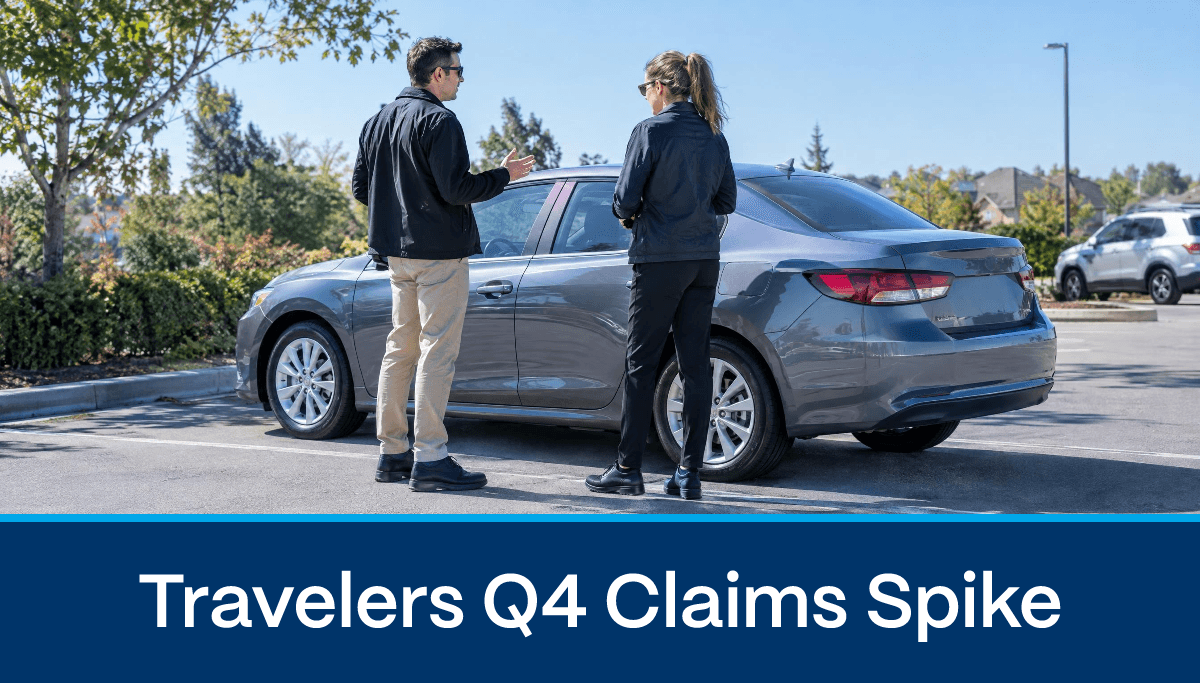
Picture a freezing October evening when a thin sheet of black ice sends your paid-off sedan sliding into a guardrail and you realize, only after the airbags deploy, that you quietly dropped collision coverage last spring.
That scenario is precisely why Money Talks News flagged a striking disclosure from one of the country's largest auto insurers. On October 16, Michael Klein, who oversees personal insurance at Travelers, told analysts that the company's fourth-quarter auto underlying loss ratio has historically run about 5 to 6 points above its average for the first three quarters. He tied the surge directly to "winter weather and holiday driving." According to Money Talks News, federal figures averaged across 2019 through 2023 show roughly 12% of all crashes, nearly 745,000 per year, are weather-related, and about 220,000 of those involve snow, sleet, or freezing precipitation. Your winter car insurance coverage choices right now determine who pays for that damage.
Why the Fourth Quarter Costs Drivers More
The numbers Klein cited are not hypothetical. A 5 to 6 point spike in the loss ratio means Travelers pays out measurably more in claims during the final quarter than during any comparable stretch of the year. Holiday driving multiplies exposure because more vehicles are on the road, often in unfamiliar territory, while temperatures drop overnight and refreeze melting snow into invisible ice.
Federal crash data reinforces the pattern. Of the roughly 745,000 annual weather-related crashes recorded across 2019 through 2023, approximately 220,000 involved frozen precipitation specifically. Those are not minor fender benders. Snow and ice reduce both stopping distance and driver reaction time simultaneously, turning ordinary intersections into high-cost claim events.
"Winter weather and holiday driving," Klein told analysts on October 16, pointing to those two factors as the primary driver of the seasonal loss ratio increase.
The timing matters for your wallet because Travelers also reported that renewal premiums in the auto book were slightly lower than a year earlier in the third quarter of 2026, and Klein noted the company took about 10 rate decreases in auto during that quarter alone. That competitive softening makes late fall an unusually practical moment to shop your coverage rather than simply renewing what you already have.
The Collision Coverage Gap That Catches Drivers Off Guard
Sliding off an icy road and into a guardrail, a ditch, or another vehicle is a collision claim. Oregon's insurance regulator is explicit on the point: without collision coverage, there is no coverage for damage to the car itself.
Drivers frequently drop collision once a vehicle is paid off or reaches a certain age. The logic seems sound at first. If the car is worth less, why pay to protect it? But winter conditions change the math in a specific way. A road that looks clear at 7 a.m. can be a skating rink by the time evening temperatures drop, and a collision on ice often involves more than one impact, adding up quickly.
Before you decide to remove collision, the source guidance is straightforward: compare the annual cost of coverage against what you could realistically afford to spend fixing or replacing the car after a winter fender bender. If that number makes you pause, the coverage is probably still earning its premium.
Drivers in states with long freeze seasons face this question especially hard. For example, Minnesota drivers navigating long winters and Michigan drivers dealing with lake-effect snow should treat this comparison as mandatory, not optional.
Comprehensive Coverage: What Winter Weather Actually Triggers
Comprehensive and collision are separate coverages with separate deductibles, and winter produces both types of claims in ways that surprise drivers who have not read their declarations page carefully.
Comprehensive handles damage that does not originate from a crash. Idaho's Department of Insurance lists weather, fire, animal strikes, vandalism, and theft among the covered examples. Oregon's regulator adds that a tree falling onto a parked car is a comprehensive claim.
That matters in winter specifically because heavy snow and ice bring down tree limbs onto vehicles sitting in driveways overnight. The car never moved. The driver did nothing wrong. Without comprehensive, that repair is entirely out of pocket.
Idaho's Department of Insurance lists "weather, fire, animal strikes, vandalism and theft" among the examples of what comprehensive covers.
Comprehensive carries its own deductible, which may differ from your collision deductible. Raising a deductible from $500 to $1,000 can lower a premium, but the trade-off is real: you pay that full amount before the insurer covers a single dollar of repair.
How 5 Coverage Types Stack Up Against Winter Risks
| Collision | Sliding on ice into a guardrail, ditch, or another vehicle | No coverage if you dropped it from the policy |
| Comprehensive | Tree limbs falling on a parked car; weather damage not from a crash | Separate deductible from collision; does not cover crash damage |
| Roadside Assistance | Towing or roadside help after a winter breakdown or slide-off | Limits vary by insurer; may duplicate auto club or credit card benefit |
| Rental Reimbursement | Substitute vehicle while a covered repair is underway | Does not cover fuel; does not apply automatically; pricier rentals may exceed the limit |
| Uninsured Motorist | Injury or vehicle damage when an uninsured driver slides into you | Requirements and limits vary by state; check declarations page for current limits |
The table above maps to real winter scenarios. Roadside assistance, for instance, addresses Klein's point about holiday driving breakdowns happening far from home. A tow from a mountain pass on Thanksgiving weekend costs far more than one from your neighborhood. Before adding it, check whether your auto club membership, a newer car's warranty, or a credit card benefit already covers that tow. Paying for the same service twice saves nothing.
The Uninsured Driver Risk Spikes When Roads Get Slick
Here is the number that changes how you think about winter driving: the Insurance Research Council estimates that 15.4% of drivers were uninsured in 2023. Roughly 1 in 7 vehicles on the road has no coverage at all.
In Mississippi, that figure climbs to 28.2%. Mississippi drivers already facing some of the highest uninsured rates in the country are especially vulnerable when roads ice over and reaction time disappears.
The winter connection is direct. When an uninsured driver loses control on a slick road and slides into your vehicle, your own uninsured motorist coverage is what steps in to cover your injuries and your vehicle damage. Without it, you are pursuing a driver who, by definition, lacks the insurance to pay you.
Your declarations page shows whether you have uninsured motorist coverage and at what limit. The Save Max Quote Index, drawn from 3.3 million-plus real quote requests, consistently shows that drivers in high-uninsured-rate states frequently carry minimum limits, leaving a gap precisely where their exposure is greatest. Per the SMQI, shopping uninsured motorist limits alongside liability limits often reveals coverage mismatches that cost little to correct.
Adding uninsured motorist coverage may not significantly increase your premium. The source makes clear that Travelers took about 10 rate decreases in auto during the third quarter of 2026, meaning the pricing environment is more favorable than it has been in recent years.
What this means for you
Pull your declarations page today and run through four concrete steps before the first snow falls. First, confirm you have both collision and comprehensive, and calculate whether your deductible is a number you can cover from savings without scrambling. Second, set up a dedicated savings account for your deductible amount so holiday spending does not drain the fund you need if a tree limb comes down on your car in December. Third, audit your roadside assistance and rental reimbursement for duplicate benefits already hiding in your auto club membership, car warranty, or credit card. Fourth, check your uninsured motorist limits against your state's uninsured driver rate, especially if you live in a state like Mississippi, where 28.2% of drivers carry no coverage, or high-winter-traffic states like Minnesota or Michigan. Because Travelers reported taking about 10 rate decreases in auto during the third quarter of 2026, late fall is a strategically sound moment to compare what the coverage you actually want would cost, not just what you are already paying.
FAQ
Does comprehensive or collision cover ice damage to my car?
It depends on how the damage happened. If your car slid on ice and struck another object or vehicle, that is a collision claim. If a frozen tree branch fell onto your parked car, that is a comprehensive claim. Both coverages carry separate deductibles, so check your declarations page for both amounts before assuming one covers all winter damage.
What happens if an uninsured driver hits me on a slippery road?
Uninsured motorist coverage is what steps in when a driver with no insurance causes your injuries or vehicle damage. The Insurance Research Council estimated 15.4% of drivers were uninsured nationally in 2023, and in some states like Mississippi the rate reached 28.2%. Without uninsured motorist coverage, you would need to pursue the at-fault driver directly, which is often financially futile.
Is this a good time to shop for lower car insurance rates?
According to the source reporting, Travelers took about 10 rate decreases in auto during the third quarter of 2026, and renewal premiums in its auto book were slightly lower than a year earlier. That signals competitive market conditions heading into winter, making late fall a reasonable window to price the coverage you want at current rates rather than automatically renewing.
Should I drop collision on my older paid-off car to save money?
Dropping collision can make financial sense for a very low-value vehicle, but winter changes the calculation. Before removing it, compare the annual premium against what you could realistically pay out of pocket to repair or replace the car after an ice-related crash. Oregon's insurance regulator notes clearly that without collision coverage, there is simply no coverage for damage to the car itself.
What does roadside assistance actually cover in a winter breakdown?
Roadside assistance, sometimes called towing and labor, generally covers a tow or other roadside help when you break down or slide off a road, though limits vary by insurer. Before adding it to your policy, check whether you already have equivalent coverage through an auto club membership, a newer vehicle's warranty, or a credit card benefit. Paying for the same tow twice through overlapping coverage provides no added protection.
About Aaren Ramon
Aaren Ramon is a Senior Analyst at Save Max Auto and owner of Elite Shield Agency. He covers carrier moves, regional insurance markets, and consumer-impact reporting from the agency-owner perspective. Read more from Aaren Ramon →
Edited by Brooke Grissom.
Methodology
This article is grounded in the source linked above. Save Max Auto data points referenced here are drawn from the Save Max Quote Index (SMQI), a proprietary instrument reflecting 3,364,317 real consumer quote requests submitted to savemaxauto.com. State and carrier rankings reflect the lifetime dataset; year-over-year shifts reflect a rolling 12-month window. The index is refreshed monthly. External authority figures referenced (NAIC, NHTSA, state regulators) reflect the most recent public data releases available at time of writing.
Sources
- Primary source: Money Talks News, "Insurer Travelers Says Winter Drives Up Car Claim Costs. 5 Coverage Checks Before the First Snow"