
How Travelers Auto and Homeowners Insurance Became a Personal Lines Powerhouse
When a single business segment anchors an insurer's entire revenue engine, consumers and investors alike take notice, and Travelers' Personal Insurance segment is doing exactly that. Zacks Investment Research reports that The Travelers Companies' automobile and homeowners insurance business is a significant contributor to the company's revenues...


Published: Jul 9, 2026
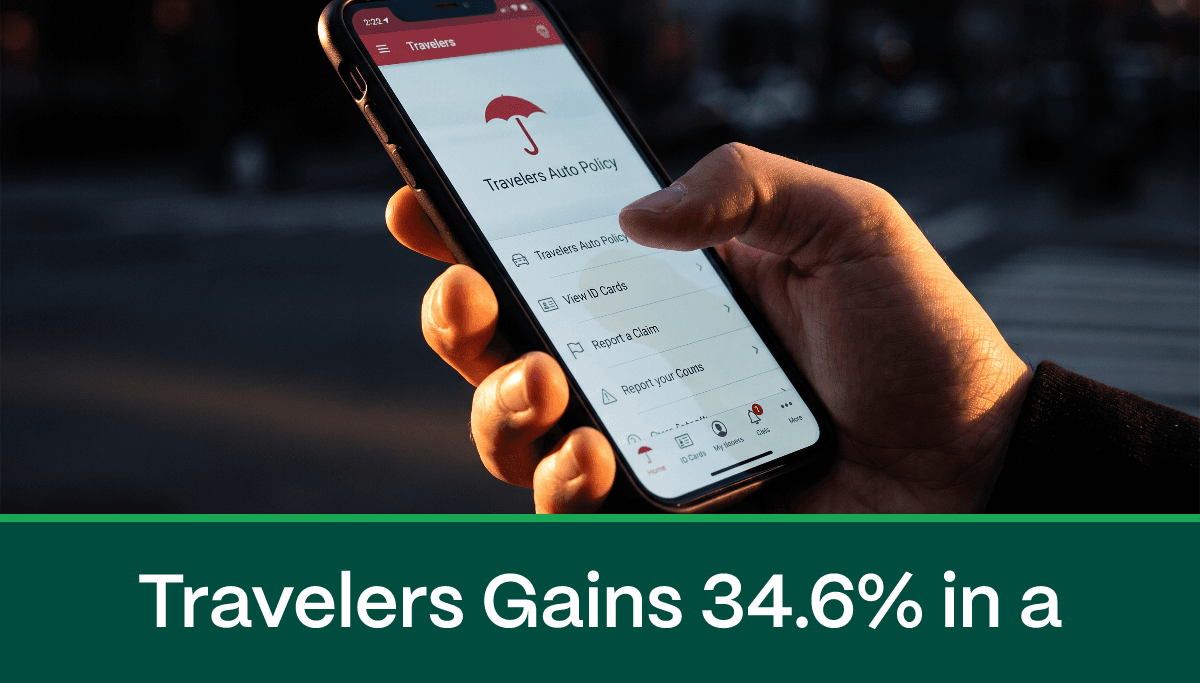
When a single business segment anchors an insurer's entire revenue engine, consumers and investors alike take notice, and Travelers' Personal Insurance segment is doing exactly that.
Zacks Investment Research reports that The Travelers Companies' automobile and homeowners insurance business is a significant contributor to the company's revenues and underwriting earnings. That combination of Travelers auto and homeowners insurance has helped the carrier build one of the most durable personal lines franchises in the United States and Canada. According to Zacks Investment Research, TRV shares have gained 34.6% in the past year, outperforming the broader industry, a signal that the market is paying close attention to how this segment performs.
How Travelers Built a Personal Lines Powerhouse
Travelers' Personal Insurance segment covers personal risks, primarily automobile and homeowners insurance, for individuals across the United States and Canada. The business is built on a foundation of annual policy renewals, which generate a stable and recurring stream of premium revenue.
What makes that revenue base resilient? High customer retention and strong agency relationships. Those two factors work together to keep policyholders in place even when competitors offer lower introductory rates.
The segment also benefits from structural tailwinds on both sides of the ledger. Rising home values increase insured property values in the homeowners book, while the auto side benefits from favorable pricing actions and the simple, durable reality that auto coverage is mandatory in virtually every state. Shoppers comparing options in markets like Texas auto insurance or California auto insurance will consistently find Travelers competing at scale.
The Bundling Advantage: Why Auto Plus Home Matters
Bundling is not a marketing gimmick. It is a retention engine with real financial consequences.
"Travelers' ability to bundle auto and homeowners policies enhances customer loyalty, increases policyholder lifetime value and creates cross-selling opportunities that support premium growth."
That single capability, wrapping auto and homeowners into one relationship, does three things at once. It reduces the likelihood a customer shops away at renewal. It raises the total premium per household. And it opens the door for agents to introduce additional products over time.
For consumers, the math can work in your favor too. Carriers that bundle typically reward loyalty with multi-policy discounts that meaningfully reduce per-policy costs. The Save Max Quote Index, drawn from 3.3 million+ real quote requests, consistently shows that bundled shoppers receive more competitive rate offers than mono-line auto shoppers, reinforcing why Travelers leans so heavily into this strategy.
Tech Under the Hood: Telematics, AI, and Data Analytics
Travelers differentiates itself through what it builds behind the scenes.
"TRV leverages telematics, predictive analytics, artificial intelligence and digital claims technologies to improve risk selection, detect fraud, optimize pricing and streamline claims handling."
Each of those tools targets a specific profit leak. Telematics captures real driving behavior so pricing reflects actual risk rather than demographic proxies. Predictive analytics flag policy applications that carry elevated loss potential before a claim ever occurs. AI-assisted fraud detection reduces the portion of every premium dollar lost to illegitimate claims. Digital claims technology compresses cycle times, cutting the administrative costs embedded in every loss adjustment.
Taken together, these capabilities help Travelers maintain underwriting profitability even when inflationary pressures drive repair costs higher and when catastrophe losses spike. That is the competitive moat the technology is designed to protect. Drivers in weather-exposed states, including those shopping Florida auto insurance or Colorado auto insurance, interact with these systems every time they file a claim or renew a policy.
Travelers vs. Progressive vs. Allstate: How the Giants Stack Up
All three carriers share a common playbook, but the execution details differ. Here is how they compare across the dimensions that matter most to personal lines performance.
| Core personal lines | Auto + Homeowners | Auto (primary), Homeowners (complementary) | Auto + Homeowners |
| Bundling strategy | Yes, loyalty and cross-sell focus | Yes, retention and premium growth | Yes, cross-selling and retention |
| Technology tools | Telematics, AI, predictive analytics, digital claims | Advanced telematics, AI-driven pricing, data analytics | Pricing analytics, telematics, digital claims |
| Geographic footprint | U.S. and Canada | U.S. (primary) | U.S. (primary) |
| Revenue model | Recurring premiums via annual renewals | Recurring premiums | Recurring premiums |
| Share price performance (past year) | +34.6% | Not specified | Not specified |
Progressive's core strength remains automobile insurance, with homeowners serving as a complementary line. Allstate and Travelers share a more balanced auto-and-home positioning. All three emphasize bundling as the primary retention lever and technology as the primary pricing edge.
Stock Performance and Valuation: What the Numbers Show
TRV shares have gained 34.6% over the past year, a performance Zacks Investment Research characterizes as outperforming the industry.
That outperformance comes with a valuation premium attached. Travelers currently trades at a price-to-book multiple of 2.29, compared with the industry average of 1.49, meaning investors are paying significantly above book value for exposure to this franchise.
On earnings estimates, the picture is mixed at the margin. The Zacks Consensus Estimate for TRV's second-quarter 2026 EPS moved up 0.4% in the past 60 days. The full-year 2027 EPS estimate, by contrast, moved down 0.1% over the same window. Consensus estimates for both 2026 and 2027 EPS and revenues still point to year-over-year increases. TRV currently carries a Zacks Rank of 3, or Hold.
The stock also carries a Value Score of A, an interesting combination given the above-industry price-to-book multiple.
What this means for you
If you carry both auto and homeowners insurance, ask your agent or compare directly whether bundling those two policies with Travelers, or any major personal lines carrier, reduces your total annual premium. Use the SMQI insight that bundled shoppers attract stronger competitive offers as leverage when negotiating at renewal. Travelers' investment in telematics means driving behavior is increasingly priced into your premium, so enrolling in a usage-based program could work in your favor if your driving record is clean. Shoppers in states like New York or New Jersey, where premiums are structurally higher, have the most to gain from multi-policy discounting.
Key Risks to Watch
Travelers' business model carries real vulnerabilities that consumers should factor into long-term carrier relationships.
- Earnings volatility from severe weather events can pressure loss ratios in any given quarter, potentially leading to rate increases at renewal.
- Rising vehicle repair costs driven by inflation continue to pressure the auto insurance combined ratio across the entire industry, not just at Travelers.
- The stock's elevated price-to-book multiple of 2.29 versus the industry average of 1.49 suggests the market has already priced in much of the good news, leaving less room for positive surprises.
- Both the homeowners and auto lines are exposed to the same catastrophe and cost pressures that affect Progressive and Allstate equally.
- Estimate movement on 2027 full-year EPS has already ticked slightly negative, suggesting some analyst caution about the outer years.
FAQ
Is Travelers a good choice for bundling auto and homeowners insurance?
Travelers explicitly structures its Personal Insurance segment around bundling auto and homeowners policies to build loyalty and lifetime customer value. Whether it is the right fit depends on your state, home type, and driving profile. Comparing bundled quotes against mono-line alternatives is always the best first step.
How does Travelers use telematics in auto insurance pricing?
Travelers uses telematics technology to capture real driving behavior, which then informs how individual risks are priced. The approach is designed to reward lower-risk drivers with more accurate rates rather than relying solely on demographic inputs like age or zip code.
What does Travelers' stock performance tell me about the company's financial health?
A 34.6% share gain over the past year, as reported by Zacks Investment Research, reflects strong investor confidence in Travelers' earnings model. However, the stock's price-to-book multiple of 2.29 versus the industry average of 1.49 indicates a valuation premium that carries some risk if catastrophe losses or repair cost inflation accelerates.
Does Travelers operate in Canada as well as the United States?
Yes. The Personal Insurance segment covers individuals in both the United States and Canada, making Travelers one of the few major personal lines carriers with a cross-border presence in North America.
How do Progressive and Allstate compare to Travelers on bundling?
All three carriers use bundling as a central retention and growth strategy. Progressive leans more heavily on auto as its primary product with homeowners as a complement, while Travelers and Allstate treat auto and homeowners as more equally weighted pillars of their personal lines businesses.
About Aaren Ramon
Aaren Ramon is a Senior Analyst at Save Max Auto and owner of Elite Shield Agency. He covers carrier moves, regional insurance markets, and consumer-impact reporting from the agency-owner perspective. Read more from Aaren Ramon →
Edited by Cassidy Richey.
Methodology
This article is grounded in the source linked above. Save Max Auto data points referenced here are drawn from the Save Max Quote Index (SMQI), a proprietary instrument reflecting 3,364,317 real consumer quote requests submitted to savemaxauto.com. State and carrier rankings reflect the lifetime dataset; year-over-year shifts reflect a rolling 12-month window. The index is refreshed monthly. External authority figures referenced (NAIC, NHTSA, state regulators) reflect the most recent public data releases available at time of writing.
Sources
- Primary source: Zacks Investment Research, "Travelers' Automobile and Homeowners Insurance Business Drives Growth"