
State Farm Jury Verdict Reveals Hidden Discount Shrank Total Loss Car Payouts for 37,000 Drivers
A jury ruled that Rose Chadwick was underpaid by $600 on a car worth just $4,700, a verdict that could reshape how every American driver receives a total loss car payout. That finding, reported by The Post-Crescent, is not an isolated dispute between one driver and one insurer.


Published: Aug 22, 2026
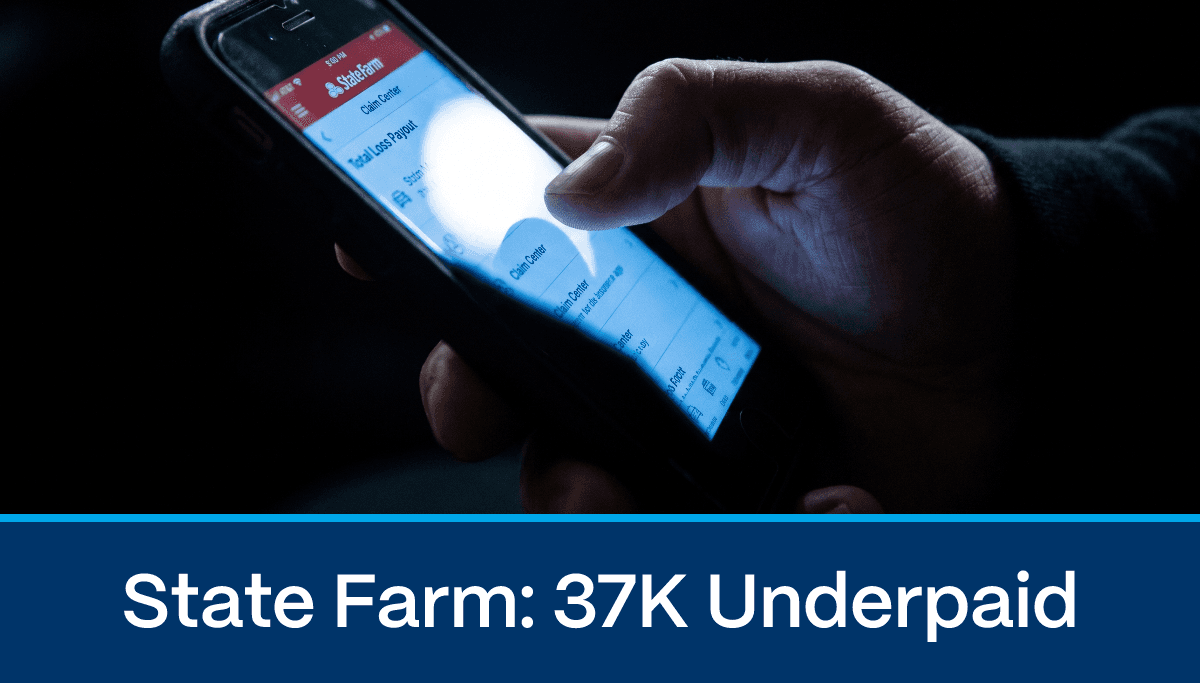
A jury ruled that Rose Chadwick was underpaid by $600 on a car worth just $4,700, a verdict that could reshape how every American driver receives a total loss car payout.
That finding, reported by The Post-Crescent, is not an isolated dispute between one driver and one insurer. According to The Post-Crescent, similar lawsuits targeting a variety of insurance carriers have been filed in at least 19 states, and the attorney leading the Chadwick case argues that the software driving these valuations moves billions of dollars every year. If you have ever had a vehicle declared a total loss, what follows directly affects your wallet.
A $600 shortfall on a $4,700 car: How one lawsuit exposed a widespread practice
Six years ago in Arkansas, Rose Chadwick's daughter borrowed her 2011 Hyundai for an early morning run to the store. A rear-end collision at an intersection left the car totaled. State Farm issued a payout, and Chadwick accepted it the same way most drivers do: without question.
That changed when a social media post alerted Chadwick to allegations that State Farm had been systematically undervaluing totaled vehicles and shortchanging customers. She ran her own numbers, concluded she had been underpaid, and became the lead plaintiff in a class action lawsuit.
The jury agreed with her. It found that Chadwick had been underpaid by approximately $600 on a vehicle worth $4,700. That percentage gap may sound modest, but her attorney, Brian Glasser, argues the same algorithmic discount was applied to tens of thousands of drivers across the country.
"State Farm moves billions of dollars to people for their broken cars every year and insurance companies around America do similar numbers," Glasser asserts. "So we're talking about these computer programs that calculate the value of your replacement vehicle that affect billions of dollars every year."
How 'typical negotiation adjustments' shrank your payout
Here is the mechanism at the center of the case. State Farm used valuation reports generated by Audatex North America to determine the actual cash value of total-loss vehicles. Embedded in those reports was a line item called a "typical negotiation adjustment."
Glasser explains that this adjustment was designed to reflect a used-car buyer's ability to negotiate a lower purchase price at a dealership. In theory, if dealers routinely accepted offers below sticker price, then the "replacement value" of your car should reflect that discount. The insurer could then pay you less.
The problem, according to Glasser, is that the post-pandemic used-car market made that assumption obsolete.
"The computer program that State Farm used to calculate the replacement value of the car did it systematically unfairly," Glasser said.
Since the pandemic, used cars have sold at a premium. Dealers stopped negotiating. Buyers frequently paid above asking price. Yet the Audatex software, Glasser argues, kept applying a downward "negotiation" discount that no longer reflected market reality. The result was a payout smaller than the actual cash value of your vehicle.
How total-loss valuations have shifted since the pandemic
The timeline below illustrates how market conditions diverged from the assumptions baked into standard valuation software.
| Pre-pandemic | Buyers routinely negotiated below sticker price | Discount reflected real dealer flexibility |
| Pandemic onset | Inventory shortages drove prices sharply higher | Software assumptions not updated |
| Post-pandemic | Cars sold at or above asking; dealers would not haggle | Downward discount continued to shrink payouts |
| Chadwick verdict | Jury rules the adjustment was systematically unfair | Audatex methodology faces legal scrutiny |
The gap between what the software assumed and what dealers actually accepted is precisely what Chadwick's legal team argued constituted systematic underpayment. If you live in a state with above-average total-loss claim rates, the stakes are even higher. Wisconsin drivers navigating full-coverage costs and Minnesota drivers managing their premiums should pay particular attention, given that both states neighbor the broader Midwest markets where used-car pricing diverged sharply from pre-pandemic norms.
Who is affected and how big is the class
The Chadwick verdict covered 37,000 plaintiffs. That number alone signals that this is not a niche complaint.
Glasser's framing puts the financial scale into sharper context: insurance companies collectively move billions of dollars every year to cover total-loss vehicles. Even a modest systematic discount per claim, multiplied across tens of thousands of policies, produces an enormous aggregate shortfall for consumers.
The geographic reach is equally striking:
- Similar lawsuits against a variety of insurance carriers have been filed in at least 19 states
- The cases target not just State Farm but other carriers as well
- Each case centers on the same core allegation: that valuation software applied negotiation discounts that no longer matched real-world used-car prices
The Save Max Quote Index, drawn from 3.3 million+ real quote requests, consistently shows that consumers in states with higher vehicle replacement costs face compounding pressure when payouts are undervalued. A short payout means a larger gap to finance when purchasing a replacement vehicle, at a moment when the driver is already dealing with the stress of a collision.
Why some courts blocked class actions, and why this one succeeded
Not every court has allowed these cases to proceed as class actions. Several courts have ruled that challenging a total-loss reimbursement cannot be done en masse, because each claim is unique and must be evaluated individually. Under that reasoning, plaintiffs would have to file separate lawsuits rather than consolidating into a single class.
The Chadwick case took a different path. The jury found in favor of Chadwick and the 37,000 co-plaintiffs, signaling that the court accepted the argument that the software's systematic application of the negotiation adjustment created a common, class-wide injury.
That distinction matters for anyone hoping to pursue a similar claim. The legal question is not simply whether your insurer paid you less than your car was worth. It is whether the same flawed methodology was applied to your claim as it was to thousands of others. Where courts accept that framing, class certification becomes possible.
Chadwick described the insurer's conduct plainly after the verdict: "That's what I pay them for, to be fair with me." She characterized State Farm's practice as "like hiding something you shouldn't hide."
What this means for you
If your vehicle was declared a total loss in recent years, pull your original valuation report and look specifically for a line item labeled "typical negotiation adjustment" or any similar downward pricing modifier. Compare the adjusted value against current listings for comparable vehicles in your area. Drivers in states with active litigation, including those reviewing Arkansas auto insurance options or checking Illinois full-coverage rates, should contact an attorney who handles insurance bad-faith or class-action claims before any statute of limitations closes their window. Document everything: your original payout letter, the Audatex or other valuation report, and any dealer listings you used for comparison.
What to watch as this litigation spreads
The Chadwick verdict is one data point in a much larger wave. Cases have been filed against multiple carriers across at least 19 states, and the legal question of whether valuation software systematically shortchanges consumers remains unsettled in most jurisdictions.
Watch for two developments in particular. First, whether other carriers proactively update their valuation software to remove post-pandemic negotiation adjustments that no longer reflect real market conditions. Second, whether state insurance regulators in additional states open investigations into how Audatex and similar programs are being used to calculate actual cash value.
The SMQI tracks rate and coverage trends across the country, and shifts in how carriers handle total-loss claims would be visible in the quote data over time. Drivers in states like Texas and Pennsylvania, where claim volumes and vehicle replacement costs are both high, should monitor whether their state insurance departments issue new guidance on valuation methodology.
The broader industry practice is on trial. The Chadwick jury sent a clear signal. Whether courts in the remaining 19-plus states follow that lead will determine whether tens of thousands more drivers eventually recover the difference between what they were paid and what their cars were actually worth.
FAQ
What is a "typical negotiation adjustment" and why does it matter?
A typical negotiation adjustment is a downward discount applied by valuation software like Audatex to reflect the assumption that used-car buyers can negotiate a lower price at dealerships. Chadwick's attorney argues that since the pandemic, dealers stopped accepting lower offers, making the discount invalid and resulting in smaller total-loss payouts for policyholders.
How do I know if my total-loss payout was undervalued?
Request a copy of the valuation report your insurer used to calculate your payout. Look for any line item that reduces the vehicle's estimated value through a negotiation or market adjustment. Compare the final figure against current used-car listings for the same make, model, year, mileage, and condition in your area.
Can I join the Chadwick class action lawsuit?
The Chadwick verdict covered 37,000 plaintiffs who were already part of that class. If you were not included, you would need to consult an attorney about whether a separate claim or a different class action in your state applies to your situation. Similar cases have been filed in at least 19 states.
Does this only affect State Farm policyholders?
No. According to the source reporting, similar lawsuits have been filed against a variety of insurance carriers across at least 19 states. The core allegation in those cases is that the same or similar valuation software applied negotiation discounts that no longer matched post-pandemic used-car market reality.
What should I do if I think I was underpaid on a total-loss claim?
Gather your original payout documentation, the insurer's valuation report, and comparable vehicle listings from the time of your claim. Consult an attorney who handles insurance bad-faith or consumer class-action cases in your state. Time limits apply to insurance claims disputes, so act quickly.
About Aaren Ramon
Aaren Ramon is a Senior Analyst at Save Max Auto and owner of Elite Shield Agency. He covers carrier moves, regional insurance markets, and consumer-impact reporting from the agency-owner perspective. Read more from Aaren Ramon →
Edited by Kyle Greenwood.
Methodology
This article is grounded in the source linked above. Save Max Auto data points referenced here are drawn from the Save Max Quote Index (SMQI), a proprietary instrument reflecting 3,364,317 real consumer quote requests submitted to savemaxauto.com. State and carrier rankings reflect the lifetime dataset; year-over-year shifts reflect a rolling 12-month window. The index is refreshed monthly. External authority figures referenced (NAIC, NHTSA, state regulators) reflect the most recent public data releases available at time of writing.
Sources
- Primary source: The Post-Crescent, "Lawsuit accuses State Farm of undervaluing damaged cars"