
Texas CFA Urges Governor-Elect Hinojosa to Appoint Pro-Consumer Insurance Commissioner
Could a single appointment change what millions of Texas drivers pay for auto insurance every year? The Consumer Federation of America sent a formal letter to Texas Governor-elect Gina Hinojosa on November 16, 2026, urging her to name a pro-consumer Texas auto insurance commissioner when she takes office.


Published: Nov 17, 2026
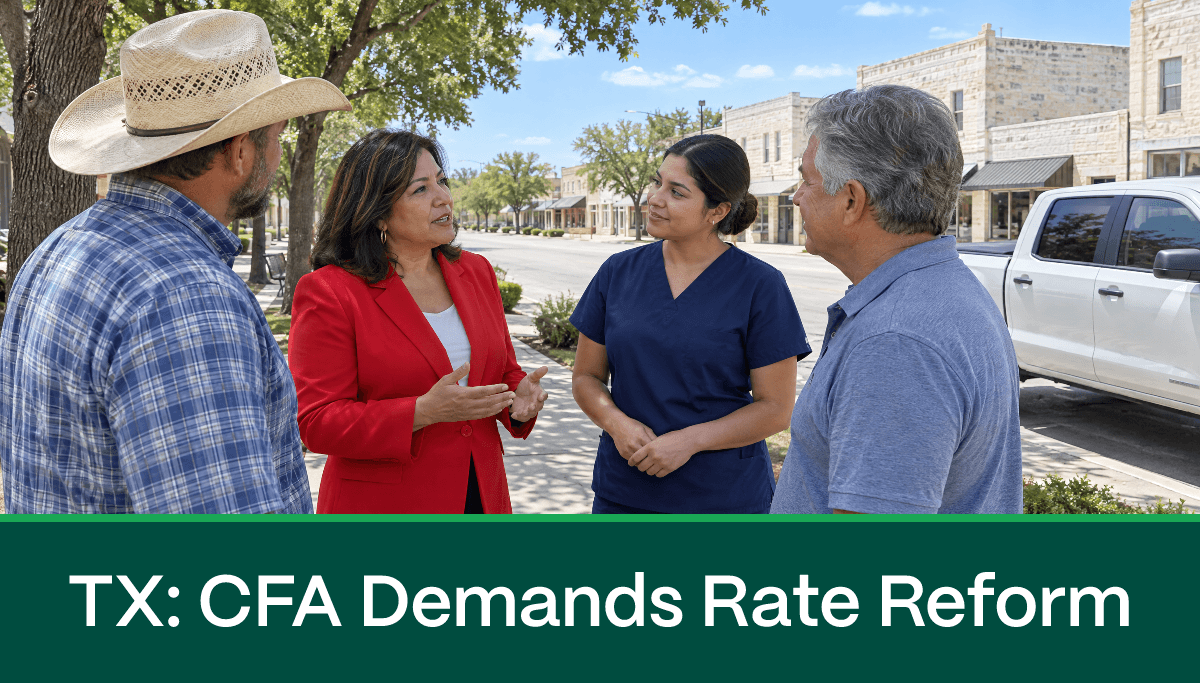
Could a single appointment change what millions of Texas drivers pay for auto insurance every year?
The Consumer Federation of America sent a formal letter to Texas Governor-elect Gina Hinojosa on November 16, 2026, urging her to name a pro-consumer Texas auto insurance commissioner when she takes office. The advocacy group's core argument is blunt: Texans are already paying higher premiums and struggling to find coverage in many parts of the state, and the agency designed to protect them has spent years protecting insurers instead. The Consumer Federation of America believes that one strong appointment could reverse that trend and deliver "significant financial relief to Texans across the state."
Why Texas Insurance Consumers Are Fed Up
Texans are not imagining the pressure. Premiums for auto and homeowners insurance have climbed, and in many areas of the state, finding coverage at all has become genuinely difficult. That access crisis, not just sticker shock at renewal time, is what pushed the CFA to write directly to the governor-elect.
The Save Max Quote Index consistently captures this frustration. Drawn from 3.3 million+ real quote requests, the SMQI shows Texas drivers shopping for new quotes at rates that outpace the national average, a signal that existing policyholders are increasingly dissatisfied with what their current insurers are offering. When drivers shop more aggressively, it usually means renewals are painful.
For a state as large and economically diverse as Texas, that dynamic hits lower-income households the hardest. Drivers in rural counties or high-risk weather corridors can face the double burden of elevated premiums and shrinking carrier options. You can explore current rate patterns in detail at our Texas Auto Insurance guide.
What the CFA Is Asking Governor-Elect Hinojosa to Do
The CFA's ask is specific. In its November 16, 2026 letter, the organization urged Governor-elect Hinojosa to appoint an Insurance Commissioner who will, in the CFA's own words, "work to lower insurance costs and ensure that insurance companies treat consumers fairly."
That phrase carries real weight. A pro-consumer commissioner, by the CFA's definition, is not simply a competent administrator. The group wants someone who is willing to actively hold insurers accountable to Texas law and who will make consumer interests the department's organizing priority, not an afterthought.
The letter does not name a specific candidate. Instead, it sets out a standard: the next commissioner should be willing to use TDI's existing authority aggressively on behalf of policyholders. The implication is that the authority is already there. What has been missing, in the CFA's view, is the political will to use it.
How the Texas Department of Insurance Has Fallen Short
The CFA did not hold back in its diagnosis of TDI's recent record.
"The Texas Department of Insurance (TDI) is among the best resourced Department in the nation, but over the last several years the Department has focused on protecting the interests and profits of insurers at the expense of protecting consumer rights and access to a fair and affordable insurance market."
That is a striking charge. The CFA is not saying TDI lacks the tools or the budget. The department is described as "among the best resourced" insurance regulators in the country. The problem, according to the letter, is how those resources have been directed.
When a well-funded regulator consistently prioritizes industry interests, the practical result is predictable: rate increases face less scrutiny, market conduct problems go unchecked longer, and consumers have fewer places to turn when a claim goes wrong. The CFA's letter implies that this is precisely what has played out in Texas over recent years.
Neighboring states like Oklahoma and Louisiana face their own regulatory challenges, but the contrast with Texas is notable given TDI's resources.
How Texas Stacks Up Against Other Large States on Insurance Oversight
One of the CFA's most pointed arguments is that Texas's regulatory underperformance is not inevitable. It is a choice. The department has the budget and the staff. What it has lacked is direction focused on consumers.
Here is a simplified look at how regulatory philosophy can shape outcomes across large states:
| California | Prior approval required | Yes | Rate justification, credit scoring limits |
| New York | Prior approval required | Yes | Rate transparency, claims oversight |
| North Carolina | Prior approval required | Yes | Assigned risk pool, rate bureau system |
| Texas | File and use | No | Market conduct, complaint resolution |
| Florida | File and use (mostly) | Partial | Fraud prevention, insolvency protection |
Texas operates under a "file and use" system, meaning insurers can raise rates before regulators formally approve them. That structure places extra importance on having a commissioner who actively monitors the market and challenges unjustified increases after the fact. Without that vigilance, "file and use" can effectively become "file and collect."
Drivers in North Carolina and California operate under stronger prior-approval frameworks, which gives regulators a formal gate before rate hikes take effect.
What a New Commissioner Could Actually Change
The CFA's letter makes clear that it believes TDI already has the legal authority to act. A reform-minded commissioner would not need new legislation to start making a difference.
The concrete levers available include:
- Rate review and challenge authority, pressing insurers to justify increases before they take effect or clawing back unjustified ones after the fact
- Market conduct examinations, auditing how companies handle claims, cancellations, and renewals
- Claims oversight, investigating patterns of delayed or denied claims that harm policyholders
- Enforcement of existing Texas law, using penalties and corrective orders against insurers who violate consumer protection statutes
- Consumer complaint data, publishing and acting on complaint ratios to put public pressure on poorly performing carriers
Each of these tools already exists within TDI's mandate. The CFA's argument is that a commissioner who treats them as priorities, rather than background functions, could deliver meaningful relief.
"With the leadership of a strong Commissioner who is willing to hold insurers accountable to Texas law and prioritize consumer interests, we believe TDI can bring significant financial relief to Texans across the state."
That is the CFA's core promise to Texas drivers: this is fixable, and the fix starts at the top.
What this means for you
If you are a Texas driver, watch Governor-elect Hinojosa's commissioner appointment closely, because that decision will shape whether TDI starts scrutinizing your next renewal increase or waves it through. Use the period before the new administration takes office to compare your current rate against fresh quotes, since the market may shift once a new regulatory tone is set. If your premiums have risen sharply or a claim was mishandled, file a complaint with TDI now to add to the record that a new commissioner will inherit.
FAQ
Who is the Texas auto insurance commissioner and how are they appointed?
The Texas Insurance Commissioner leads the Texas Department of Insurance and is appointed by the governor. The commissioner serves at the governor's pleasure, which means Governor-elect Gina Hinojosa will have the direct authority to name a new commissioner when she takes office.
What is the Consumer Federation of America's role in Texas insurance regulation?
The CFA is a national consumer advocacy organization. It does not regulate insurers directly, but it communicates formally with elected officials and regulators, as it did in its November 16, 2026 letter to Governor-elect Hinojosa, to push for policies that protect policyholders over insurer profits.
Does Texas require prior approval before auto insurance rates go up?
Texas uses a "file and use" system, which allows insurers to implement rate changes before formal regulatory approval. This makes the commissioner's willingness to challenge unjustified increases after the fact especially important for consumers.
What can Texas drivers do right now if they think their premiums are too high?
You can file a complaint with TDI, shop for new quotes using a tool that compares multiple carriers at once, and contact your state representative to signal that insurance affordability is a priority issue. Comparison shopping remains one of the fastest ways to find relief, regardless of who leads the department.
How does TDI's budget compare to other state insurance departments?
According to the CFA's letter, TDI is "among the best resourced" insurance departments in the nation. The issue the CFA raises is not a lack of funding but a lack of consumer-focused direction from leadership.
About Taleah McGuire
Taleah McGuire is a Regional Analyst at Save Max Auto with 11+ years of insurance experience including senior roles at Kentucky Farm Bureau. She covers regulatory news, state-specific reform legislation, and traditional carrier coverage. Read more from Taleah McGuire →
Edited by Brooke Grissom.
Methodology
This article is grounded in the source linked above. Save Max Auto data points referenced here are drawn from the Save Max Quote Index (SMQI), a proprietary instrument reflecting 3,364,317 real consumer quote requests submitted to savemaxauto.com. State and carrier rankings reflect the lifetime dataset; year-over-year shifts reflect a rolling 12-month window. The index is refreshed monthly. External authority figures referenced (NAIC, NHTSA, state regulators) reflect the most recent public data releases available at time of writing.
Sources
- Primary source: Consumer Federation of America, "CFA Urges Texas Governor-Elect Gina Hinojosa to Appoint Pro-Consumer Insurance Commissioner"