
Palisades and Eaton Fire Survivors Move to Join California's Fight Against State Farm
Marjan Rajabi had State Farm insurance for 23 years, never filed a single home claim, and still found herself navigating seven different adjusters after the Palisades Fire turned her life upside down.


Published: Jun 19, 2026
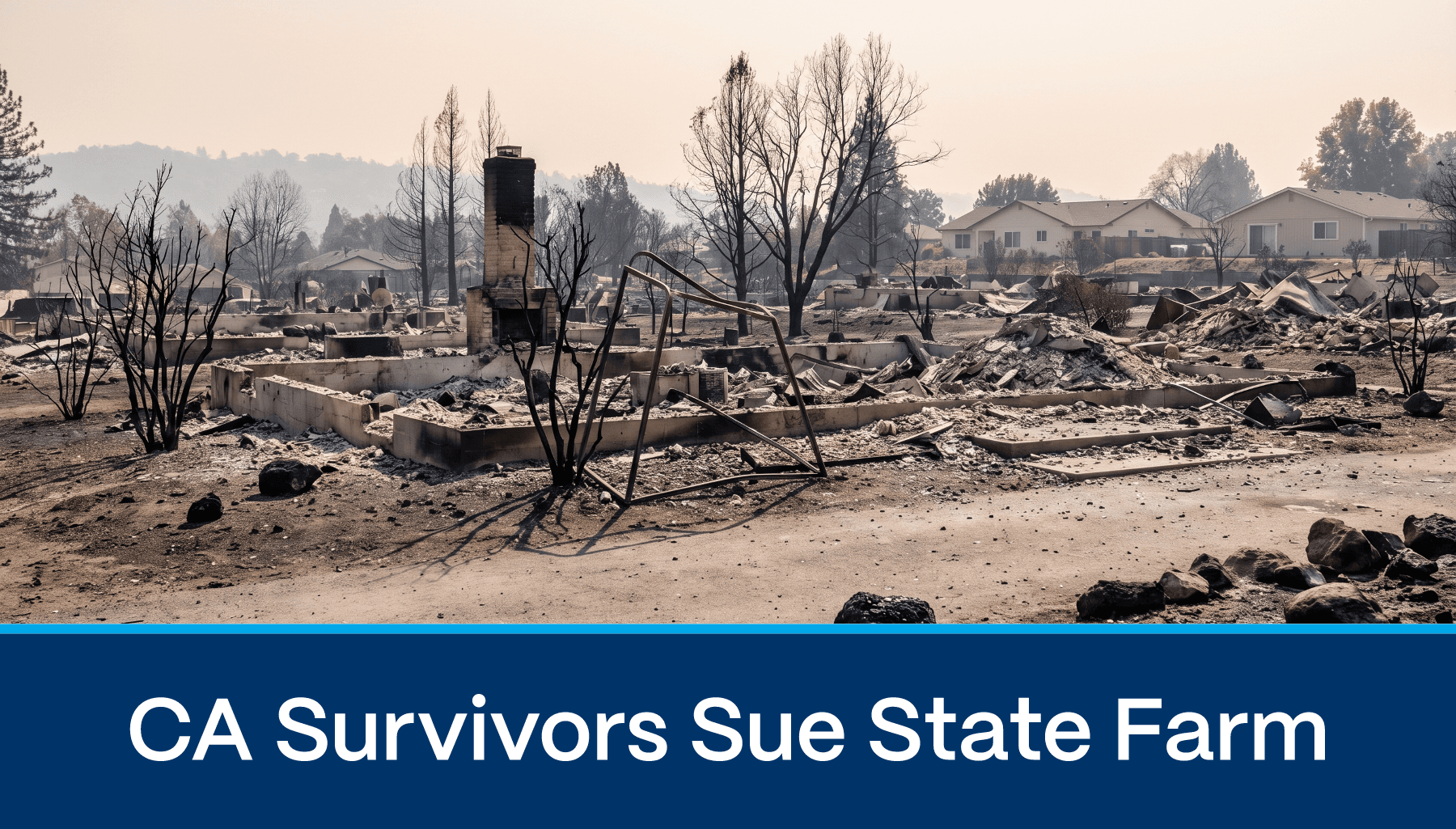
Marjan Rajabi had State Farm insurance for 23 years, never filed a single home claim, and still found herself navigating seven different adjusters after the Palisades Fire turned her life upside down.
That story is no longer an isolated complaint. According to ABC7 Los Angeles, the Every Fire Survivor's Network announced plans on Thursday to petition for the right to join California's existing regulatory action against State Farm, the largest home insurer in the state. The group says families are still owed payouts nearly a year and a half after the Eaton and Palisades fires, and ABC7 Los Angeles published firsthand accounts that paint a picture of bureaucratic obstruction at its worst.
Survivors Petition to Join California's Action Against State Farm
The Every Fire Survivor's Network is made up of Eaton and Palisades fire victims who say State Farm's claims process left them trapped in a cycle of paperwork, confusion, and delay. On Thursday, the group announced it would formally petition to intervene in California's regulatory case against the insurer.
Executive Director Joy Chen explained what that intervention would mean in practice.
"If granted, we'll have the right to conduct discovery, present evidence, cross-examine witnesses, participate in settlement decisions, and advocate directly for the remedies that help survivors rebuild and return home."
Chen was blunt about the power imbalance driving the petition.
"State Farm is a very powerful multibillion-dollar company. When it's just any one of us against this huge machine, it's really difficult for us to get fair outcomes in our claims."
The petition represents a direct escalation. Rather than waiting for California regulators to act on their behalf, survivors are seeking a seat at the table.
What California's Department of Insurance Already Accused State Farm Of
The petition doesn't emerge from a vacuum. Last month, California's Department of Insurance formally accused State Farm of violating the law in its handling of wildfire claims.
That accusation, which predates the survivor petition, gives the Every Fire Survivor's Network a legal opening. By joining an already-active regulatory proceeding rather than filing a separate lawsuit, the group could potentially reach remedies faster and with less individual cost to each member.
For California auto and home insurance policyholders following this case, the Department of Insurance's willingness to pursue State Farm is significant. It signals that regulators view the complaints as systemic, not anecdotal.
Inside the Claims Process: What Survivors Say Went Wrong
The personal accounts in the ABC7 report are specific and consistent. Rajabi described what became a second full-time job after the fire.
"I've had State Farm insurance since the day I bought my house 23 years ago. They were always wonderful with my auto insurance, kind agents, no problems. I never filed a single claim on my house in 23 years, but after the fire, everything changed. The inventory list alone was heartbreaking and overwhelming."
She described cycling through seven different adjusters, with each transition forcing her to restart the process from the beginning. "Each new person meant starting over, more confusion, more delays."
Fellow Palisades Fire victim Diane Brigham described a different but equally damaging pattern.
"The delays, opaque calculations, and antiquated systems appear to be designed to confuse and wear out customers like me so that we give up and settle for less. Like death by a thousand paper cuts, what began as seemingly minor bureaucratic hurdles has become a new disaster for us, uncertainty about how much money we actually have available to rebuild."
The Save Max Quote Index tracks policyholder behavior across more than 3.3 million real quote requests, and the SMQI consistently shows that claims experience is the single biggest factor driving customers to shop for new carriers after a loss event. The accounts from Rajabi and Brigham describe precisely the friction that triggers that behavior.
State Farm's Response and Its $5.9 Billion Payout Figure
State Farm did not dispute the petition directly. In a written statement, the company said:
"We are aware of the petition. We recognize that many wildfire survivors, including those who are State Farm General policyholders, continue to face difficult recovery challenges. Our focus remains on helping customers recover. State Farm General has paid more than $5.9 billion for Eaton and Palisades wildfire claims and remains committed to supporting customers as they rebuild and recover."
The $5.9 billion figure is substantial by any measure. State Farm frames it as evidence of commitment, while survivor advocates frame the ongoing complaints as evidence that dollar volume alone does not resolve individual policyholder grievances.
Both things can be true at the same time.
How California Wildfire Claims Payouts Have Stacked Up
The source reporting focuses on State Farm as the largest home insurer in California, but the broader wildfire insurance landscape provides useful context for understanding what survivors are navigating.
| Insurer named | State Farm General |
| Total paid by State Farm | More than $5.9 billion |
| Fires covered | Eaton and Palisades wildfires |
| Time elapsed since fires | Nearly a year and a half |
| Regulatory action | California Department of Insurance accused State Farm of violating the law last month |
| Survivor group intervening | Every Fire Survivor's Network |
| Adjusters one victim cycled through | Seven |
| Years victim held policy without a claim | 23 years |
The pattern that emerges is not about a single denied claim. It is about a process survivors describe as systematically discouraging full recovery, regardless of how much was ultimately paid in aggregate.
Drivers in neighboring states watching this case should note that wildfire exposure is not limited to California. Oregon auto and home insurance policyholders and Washington State auto insurance customers face expanding wildfire risk and should audit their own policies for similar claims-handling provisions.
What this means for you
If you are a State Farm policyholder in a wildfire-prone area, document every adjuster contact by name, date, and case number, and request in writing that your file not be transferred to a new adjuster without your notification. If California grants the Every Fire Survivor's Network petition, watch the discovery process closely, as any evidence presented publicly could clarify what internal claims standards State Farm was actually applying. Review your own policy now for inventory documentation requirements, because the time to build that record is before a loss, not after. If you are shopping for California auto insurance or homeowners coverage, ask prospective carriers directly how they handle adjuster continuity during active claims.
What Comes Next in the Legal Process
The petition to intervene must first be granted by the relevant California regulatory body. Joy Chen's statement outlines what that grant would unlock: discovery rights, the ability to present evidence and cross-examine witnesses, and a direct voice in any settlement discussions.
If the petition is denied, the Every Fire Survivor's Network would likely need to pursue separate legal channels, which would be slower and more expensive for individual survivors.
If granted, the intervention could produce a public record of State Farm's internal claims-handling practices, documentation that could be used by survivors whose cases are still unresolved and by regulators in other states monitoring the situation.
The case also sets a precedent for how organized survivor groups can engage with state regulatory proceedings, a tactic that could become a template for Nevada auto insurance and Arizona auto insurance markets if wildfire claims disputes intensify in those states.
FAQ
What is the Every Fire Survivor's Network?
The Every Fire Survivor's Network is a group comprised of Eaton and Palisades fire victims who are organizing to pursue claims they say remain unresolved. The group announced on Thursday that it plans to petition to join California's regulatory case against State Farm, seeking intervention rights that would allow survivors to participate directly in settlement decisions.
What did California's Department of Insurance accuse State Farm of doing?
Last month, California's Department of Insurance accused State Farm of violating the law in its handling of wildfire claims. The specific violations were not detailed in the source reporting, but the accusation is the regulatory foundation on which the Every Fire Survivor's Network is now seeking to build its petition to intervene.
How much has State Farm paid out for Eaton and Palisades wildfire claims?
State Farm said it has paid more than $5.9 billion for Eaton and Palisades wildfire claims. The company says it remains committed to supporting customers as they rebuild and recover, though survivor accounts describe ongoing disputes over inventory values and adjuster continuity.
What should I do if my claims adjuster keeps changing?
Document every interaction with your insurer in writing, including the name and employee ID of each adjuster you speak with. Request written confirmation whenever your file is transferred. As the State Farm wildfire claims situation illustrates, adjuster turnover forces policyholders to restart from the beginning, compounding delays and emotional exhaustion.
Can policyholders join a state regulatory proceeding against their insurer?
The Every Fire Survivor's Network is attempting to do exactly that by petitioning to intervene in California's action. If granted, the group would gain the right to conduct discovery, present evidence, cross-examine witnesses, and participate in settlement decisions, rights that normally belong only to the state and the regulated party.
About Taleah McGuire
Taleah McGuire is a Regional Analyst at SaveMaxAuto with 11+ years of insurance experience including senior roles at Kentucky Farm Bureau. She covers regulatory news, state-specific reform legislation, and traditional carrier coverage. Read more from Taleah McGuire →
Edited by Cassidy Richey.
Methodology
This article is grounded in the source linked above. SaveMaxAuto data points referenced here are drawn from the Save Max Quote Index (SMQI), a proprietary instrument reflecting 3,364,317 real consumer quote requests submitted to savemaxauto.com. State and carrier rankings reflect the lifetime dataset; year-over-year shifts reflect a rolling 12-month window. The index is refreshed monthly. External authority figures referenced (NAIC, NHTSA, state regulators) reflect the most recent public data releases available at time of writing.
Sources
- Primary source: ABC7 Los Angeles, "Palisades and Eaton Fire victims going after State Farm for how insurance company handled claims"