
Montana Class Action Targets State Farm Scan Payment Refusals at Independent Shops
The suit argues that State Farm's conduct goes far beyond a single disputed claim. Plaintiffs allege a systematic, company-wide practice of undervaluing, reducing, or outright refusing scan reimbursements whenever a policyholder chose a repair facility outside State Farm's direct repair program (DRP) network.


Published: Aug 17, 2026
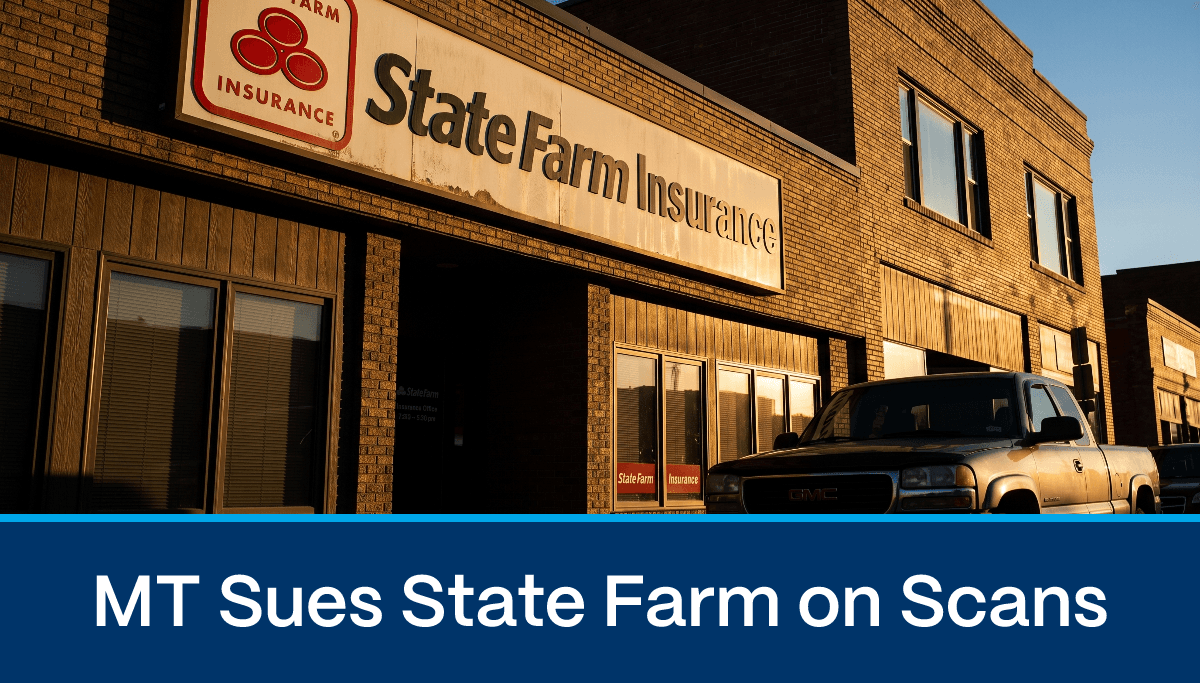
State Farm Faces Montana Class Action Over Scan Payment Refusals
The suit argues that State Farm's conduct goes far beyond a single disputed claim. Plaintiffs allege a systematic, company-wide practice of undervaluing, reducing, or outright refusing scan reimbursements whenever a policyholder chose a repair facility outside State Farm's direct repair program (DRP) network.
The timing matters. Montana's Commissioner of Securities and Insurance had already put insurers on notice with an August 2024 advisory memorandum explicitly prohibiting this type of payment discrimination. Filing this lawsuit against that regulatory backdrop signals that plaintiffs believe State Farm continued the practice after being warned.
For Montana drivers, the stakes are concrete: pre- and post-repair scans verify that a vehicle's safety systems are functioning correctly after a collision. Refusing to pay for them is not just a billing dispute, it is, the complaint argues, a safety issue.
Who Is Suing and What They Say Happened
The two named plaintiffs bring starkly different perspectives to the case.
Lana Curry is a State Farm policyholder. She alleges the company undervalued, reduced, or refused to pay claims on her own vehicle, including refusing to pay for pre- and post-repair scans needed to confirm the vehicle was safe to drive.
Francis Cote is a former Montana chief deputy insurance commissioner, someone who spent a career on the regulatory side of these disputes. His situation involves a third-party claim: his vehicle was damaged by an at-fault driver who carried State Farm insurance. He alleges State Farm failed or refused to pay the full cost required to repair his vehicle to applicable manufacturer repair standards, and that this refusal specifically included pre- and post-repair scans. The result, the complaint states, was out-of-pocket expenses and uncompensated repair costs.
The pairing of a private policyholder and a former top insurance regulator as co-plaintiffs is notable. Cote's background lends the complaint an institutional credibility that is difficult to dismiss.
The DRP Divide: Why Where You Get Your Scan Matters
The advisory memorandum issued by Montana's Commissioner of Securities and Insurance in August 2024 described what a review of consumer complaints had uncovered. That review found a clear two-tier payment structure.
| Scan performed at a DRP shop | Full payment for pre- and post-repair scan |
| Scan performed at an independent shop | Reduced payment or no payment |
| Scan reimbursement rate comparison | Higher rates paid to DRP shops than non-DRP shops |
This table reflects the complaint's core factual allegation. The advisory was blunt about what this means legally.
"Both instances above, these practices constitute illegal incentives or inducements to use DRP auto repair shops (also known as steering) and violate §33-18-224(1)(a)(ii)."
The advisory went further, warning that the same logic applies beyond scans:
"It would also be illegal if an insurer used similar tactics regarding other services, such as calibration. An insurer may not require a customer to use a specific auto repair shop, directly or indirectly, to receive coverage for a repair (a scan in this case) or a higher reimbursement rate."
In plain terms: if your insurer pays for a scan at their shop but not yours, that may be illegal steering under Montana law, regardless of what your policy paperwork says.
Montana's 2024 Advisory Memorandum and the Law Behind It
The August 2024 advisory memorandum sits at the center of this lawsuit. Issued by Montana's Commissioner of Securities and Insurance, it was a direct regulatory response to the complaint patterns regulators were seeing across the state's insurance market.
The advisory reminded consumers of a right they already had: the right to take their vehicle to any auto repair shop or location of their choice. It also reminded insurers of a prohibition they were apparently ignoring.
Specifically, the advisory states that insurers may not engage in any act or practice that intimidates, coerces, or threatens claimants, or that provides an incentive or inducement for a claimant to use a particular repair shop or location.
The statute cited in the advisory, and referenced in the lawsuit, is §33-18-224(1)(a)(ii) of Montana law. The plaintiffs allege State Farm's differential payment practice violated this provision directly.
For consumers in Montana who want to understand how their auto insurance obligations and rights intersect, knowing this statute exists is the first step to protecting yourself when a claim is filed.
What the Lawsuit Is Asking the Court to Order
The remedies sought in this complaint are broad. The lawsuit asks for:
- A declaratory judgment ordering State Farm to pay Curry and Cote's damage claims in full
- Complete compensatory damages and interest for all named plaintiffs and similarly situated class members
- A judgment requiring State Farm to reopen and fully pay all automobile damage claims for necessary pre- and post-repair scans that were previously denied or reduced
That last item is particularly significant. A ruling requiring State Farm to reopen past claims would not just affect future policyholders, it would reach back and compensate drivers who already absorbed these costs without knowing they had legal recourse.
The class-wide scope means any Montana driver whose pre- or post-repair scan was denied or underpaid at an independent shop could potentially be included, depending on how the court defines the class.
The Save Max Quote Index, drawn from 3.3 million+ real quote requests, consistently shows that Montana drivers face relatively concentrated carrier choices compared to larger states. That market structure makes DRP steering allegations especially consequential, when fewer insurers operate in a state, the leverage they hold over shop selection is amplified. The SMQI does not show specific claim denial rates, but the concentration dynamic is relevant context for understanding why independent shops in states like Montana are particularly vulnerable to DRP-favoring payment policies.
Neighboring states have their own regulatory environments. Drivers in Wyoming and Idaho who use independent repair shops should check whether their states have issued similar advisory guidance on scan reimbursement.
What this means for you
If you are a Montana State Farm policyholder or a third-party claimant whose vehicle was repaired at an independent shop, review any claim where pre- or post-repair scan costs were denied or reduced. Document your repair invoices and request a written explanation for any coverage reduction. Contact Montana's Commissioner of Securities and Insurance if you believe your claim was handled inconsistently with the August 2024 advisory memorandum. A class action outcome requiring State Farm to reopen past claims could mean compensation for costs you already paid out of pocket.
FAQ
Can State Farm legally refuse to pay for pre- and post-repair scans in Montana?
According to the August 2024 advisory memorandum issued by Montana's Commissioner of Securities and Insurance, insurers are prohibited from refusing to pay for pre- and post-repair scans. The advisory specifically states that paying for scans at DRP shops while denying them at independent shops constitutes illegal steering under Montana statute §33-18-224(1)(a)(ii).
Do I have the right to choose my own repair shop in Montana?
Yes. Montana's 2024 advisory memorandum explicitly reminds consumers that they have the right to take their vehicle to any auto repair shop or location of their choice. An insurer may not use payment practices, such as refusing to cover scans at independent shops, to pressure you toward a specific facility.
What is a DRP shop and why does it matter for my claim?
A direct repair program (DRP) shop is a repair facility that has a preferred-vendor relationship with a specific insurer. The Montana class action alleges that State Farm paid for pre- and post-repair scans when completed at DRP shops, but denied or reduced the same payments when the scans were performed at non-DRP independent shops, a distinction the advisory says is illegal.
Who can join the Montana class action against State Farm?
The lawsuit seeks to include all class members similarly situated to the named plaintiffs, meaning Montana policyholders or third-party claimants whose pre- or post-repair scan costs were denied or underpaid by State Farm at independent shops. The exact class definition will be determined by the court as the case proceeds.
What should I do if State Farm denied my scan claim in Montana?
Gather your repair invoices showing the scan costs and any written communications from State Farm explaining the denial or reduction. File a complaint with Montana's Commissioner of Securities and Insurance, citing the August 2024 advisory memorandum and statute §33-18-224(1)(a)(ii). Consulting with an attorney familiar with Montana insurance law is also advisable given the active class action.
About Aaren Ramon
Aaren Ramon is a Senior Analyst at Save Max Auto and owner of Elite Shield Agency. He covers carrier moves, regional insurance markets, and consumer-impact reporting from the agency-owner perspective. Read more from Aaren Ramon →
Edited by Taleah McGuire.
Methodology
This article is grounded in the source linked above. Save Max Auto data points referenced here are drawn from the Save Max Quote Index (SMQI), a proprietary instrument reflecting 3,364,317 real consumer quote requests submitted to savemaxauto.com. State and carrier rankings reflect the lifetime dataset; year-over-year shifts reflect a rolling 12-month window. The index is refreshed monthly. External authority figures referenced (NAIC, NHTSA, state regulators) reflect the most recent public data releases available at time of writing.
Sources
- Primary source: Repairer Driven News, "Montana class action alleges State Farm systematically refuses to pay pre and post scans"