
Allstate Milewise vs Flat Premiums: What Low-Mileage Drivers Actually Pay
When Chicago-based product manager Sarah Lopez glanced at her monthly insurance statement and saw that a quiet week of only a grocery run and a park visit cost just a few dollars, she understood exactly what Allstate's pay-per-mile car insurance program was designed to do.


Published: Jun 28, 2026
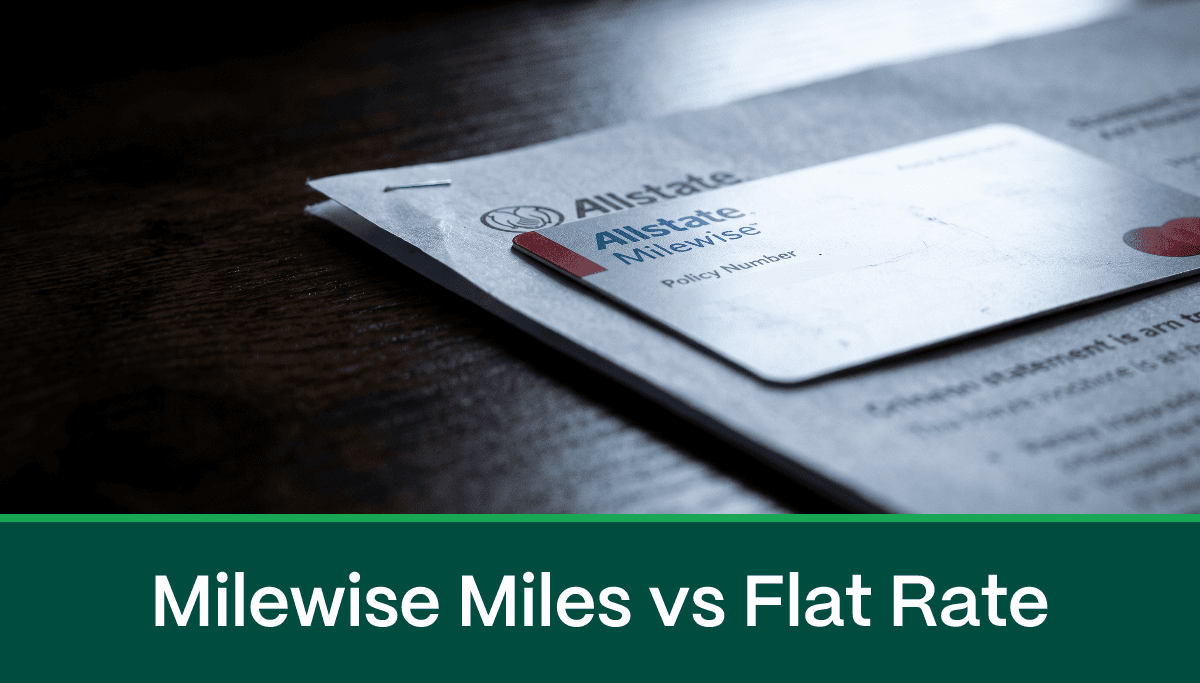
When Chicago-based product manager Sarah Lopez glanced at her monthly insurance statement and saw that a quiet week of only a grocery run and a park visit cost just a few dollars, she understood exactly what Allstate's pay-per-mile car insurance program was designed to do.
That moment captures the core promise of Allstate Milewise, a usage-based policy detailed in a recent overview published by ad-hoc-news.de. Instead of paying a flat monthly premium regardless of how much you drive, Milewise charges a fixed daily base rate plus a separate per-mile charge. According to ad-hoc-news.de, the program specifically targets drivers who log fewer miles than the typical American. The Save Max Quote Index, drawn from 3.3 million+ real quote requests, consistently shows that low-mileage households are among the most likely to overpay on conventional flat-rate policies, making programs like Milewise worth a serious look.
How Allstate Milewise flips the traditional premium model
Traditional auto insurance works on an estimate. Your insurer guesses how much you might drive over the coming year, blends that with your driving history and demographics, and hands you a flat monthly bill. You pay the same amount whether you drive 300 miles that month or 3,000.
Milewise breaks that model entirely.
The program combines a fixed daily base rate with a per-mile charge. That means your statement at month-end looks far more like a utility bill than a conventional insurance invoice. For a commuter who only drives to the train station and back, or a remote worker who rarely leaves the neighborhood, actual costs can fall significantly below what a flat premium would charge.
The key shift is psychological as much as financial. When you feel every unnecessary trip in your wallet, driving behavior naturally adjusts. Sarah Lopez's story illustrates this precisely: full coverage is still there every time she turns the key, but the cost of not driving is nearly nothing.
Tracking every mile: the app and telematics experience
Milewise sits at the intersection of traditional insurance and sensor-driven technology. The product uses a small plug-in telematics device that glows softly on your dashboard, silently recording every mile your car travels. Alternatively, connected car data can serve the same function depending on your vehicle.
Every trip feeds into the Allstate Mobile app in near real time. Once you pull back into the driveway, the journey typically appears in your trip list shortly afterward. The app displays a clean breakdown of your daily base rate, per-mile charges, and total spend for the current term.
Here is what the in-app experience surfaces for policyholders:
- Daily base rate applied for each calendar day
- Per-mile charge tallied for every mile driven that day
- Individual trip summaries showing when and how far you drove
- Safe-driving insights from the same telematics platform
- Basic policy documents accessible within the same interface
"The app and telematics experience gives policyholders a surprisingly tactile sense of how each errand shows up as a line item."
One important nuance: while the app does log events like sharp braking, billing under Milewise focuses on distance rather than behavior scoring. That distinguishes Milewise from purely behavior-based products and keeps the pricing model straightforward for drivers who simply want to pay for the miles they actually use.
Who saves money, and who does not
Not every driver benefits from a pay-per-mile structure. Understanding your own driving profile is the first step before switching.
| Urban resident with short errands | Strong savings potential | Low weekly mileage means low per-mile charges |
| Remote worker who rarely commutes | Strong savings potential | Daily base rate is cheap; miles barely accumulate |
| Second-car owner (weekend use only) | Strong savings potential | Car sits idle most days; flat premiums waste money |
| Daily long-distance commuter | May cost more than flat premium | High daily miles drive up per-mile charges quickly |
| Road-trip enthusiast | Mixed; cap helps on big trips | Daily mileage cap limits damage on long drives |
"However, high-mileage drivers who commute long distances daily may find a standard flat-premium policy more economical."
The SMQI shows that the drivers most likely to benefit from usage-based billing are concentrated in dense urban markets where car ownership exists but daily driving is limited. If you live in a city like Chicago and your car mostly sits parked, Milewise was essentially built for your situation. Drivers in states with high baseline premiums, such as those reviewing Michigan auto insurance or New Jersey auto insurance rates, may find the per-mile model especially compelling given how expensive flat premiums can already be in those markets.
State availability, daily mileage caps, and fine print
Milewise is not available nationwide. Allstate offers the program only in selected U.S. states, and that availability can change as the company adjusts its regulatory filings over time. If you are shopping in a state like Texas or California, availability will depend on Allstate's current filings in those markets specifically.
One consumer-friendly feature worth noting: a daily mileage cap. If you take an unplanned long road trip, you will not receive a bill that spirals far beyond what you budgeted. The cap limits the number of miles Allstate bills you for in a single day, putting a ceiling on surprise charges during longer drives.
Beyond billing, the coverage terms themselves mirror conventional auto insurance. Policy documents specify standard limits, deductibles, and exclusions. The billing model is the main difference, not the scope of what is covered. Full coverage applies every time you drive, regardless of whether you drove two miles or twenty.
Where Milewise fits inside Allstate's broader telematics push
Milewise does not exist in isolation. Allstate has built a broader strategy around telematics-based products, and Milewise sits alongside the company's behavior-focused Drivewise program as part of that effort.
The distinction matters. Drivewise rewards safe driving habits, scoring things like hard braking and speed. Milewise scores only distance. Together, the two programs give Allstate the ability to segment its auto book across two different dimensions: how you drive and how much you drive.
Chief executive Tom Wilson has framed these programs as tools to align price more closely with risk, while still keeping the user interface relatively simple inside the app. That dual focus on precision pricing and simplicity is central to Allstate's pitch to both customers and investors.
In practice, Milewise acts as a quiet bridge between traditional auto insurance and fully digital, sensor-driven products. It is granular enough to reward low-mileage behavior, but not so complex that the average driver feels like they are being graded on every lane change. Drivers curious about how telematics pricing compares across states can explore Illinois auto insurance options, given that Allstate is headquartered in the Chicago area and the Illinois market reflects many of its core product decisions.
What this means for you
If you drive fewer miles than average, request a Milewise quote directly through Allstate's website or an Allstate agent and compare it line-by-line against your current flat premium. Confirm that Milewise is available in your state before you invest time in the process. Review the daily mileage cap in the policy documents so you understand exactly where your road-trip exposure ends. Use the Save Max Quote Index as a benchmark to see where Milewise-style pay-per-mile rates sit relative to conventional quotes across your region.
FAQ
How does Allstate Milewise calculate my monthly bill?
Milewise charges a fixed daily base rate for every day your policy is active, plus a separate per-mile charge for every mile you drive. These two components are tracked through a plug-in telematics device or connected car data and displayed in the Allstate Mobile app. Your total bill reflects exactly how much you drove rather than an estimate.
Is there a limit on how many miles Allstate can charge me in one day?
Yes. Allstate applies a daily mileage billing cap, which means even if you take a long unplanned road trip, your per-mile charges for that day will not exceed the cap threshold. This prevents a single long drive from dramatically inflating your monthly statement.
Who is Allstate Milewise best suited for?
The program is designed for low-mileage drivers, specifically urban residents, remote workers, and households with a second vehicle that rarely leaves the garage. For these drivers, a flat annual-mileage estimate often overstates actual usage and results in overpayment relative to their real risk.
Does Milewise score my driving behavior the way Drivewise does?
No. While the Allstate Mobile app may log certain driving events such as hard braking, billing under Milewise is based on distance driven rather than behavior scoring. This is the key difference between Milewise and Allstate's separate Drivewise program, which does reward safe driving habits.
In which states is Allstate Milewise available?
Milewise is available in selected U.S. states, and availability can change as Allstate updates its regulatory filings. The source does not specify a complete state list, so the safest approach is to check directly with Allstate or a licensed Allstate agent in your state to confirm current availability.
About Brooke Grissom
Brooke Grissom is an Independent Insurance Analyst at SaveMaxAuto, licensed in Property & Casualty and Health insurance. She covers data-driven market trends, cross-state premium comparisons, and carrier financial analysis. Read more from Brooke Grissom →
Edited by Kyle Greenwood.
Methodology
This article is grounded in the source linked above. SaveMaxAuto data points referenced here are drawn from the Save Max Quote Index (SMQI), a proprietary instrument reflecting 3,364,317 real consumer quote requests submitted to savemaxauto.com. State and carrier rankings reflect the lifetime dataset; year-over-year shifts reflect a rolling 12-month window. The index is refreshed monthly. External authority figures referenced (NAIC, NHTSA, state regulators) reflect the most recent public data releases available at time of writing.
Sources
- Primary source: ad-hoc-news.de, "Allstate Milewise from Allstate Corp. - pay-per-mile car cover for occasional drivers"