
On-Device Telematics Cuts UBI Operating Costs by Up to 80%
Most drivers assume their insurance app uploads everything to the cloud, but a major new integration is flipping that assumption on its head. LexisNexis Risk Solutions and IMS have combined forces to bring on-device telematics directly to U.S.


Published: Sep 25, 2026
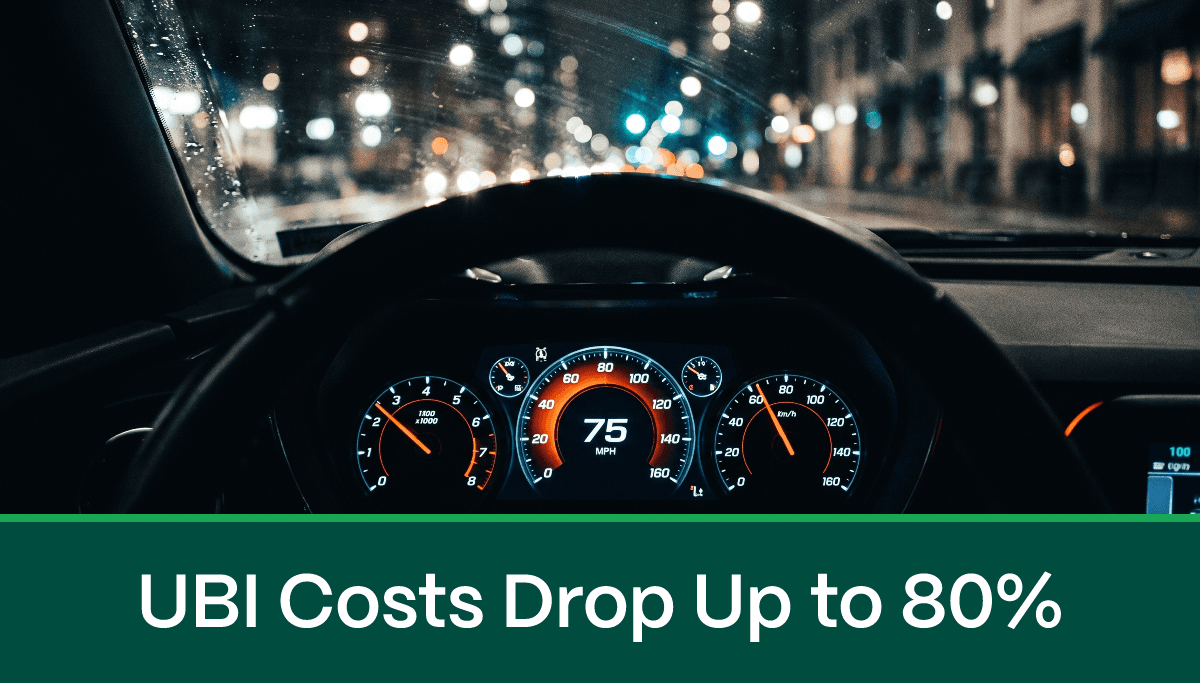
Most drivers assume their insurance app uploads everything to the cloud, but a major new integration is flipping that assumption on its head.
LexisNexis Risk Solutions and IMS have combined forces to bring on-device telematics directly to U.S. auto insurers, processing driving behavior on the policyholder's smartphone rather than routing raw data through external cloud infrastructure. Reported by Beinsure Media, the partnership embeds the LexisNexis Drive Metrics scoring model into IMS EdgeSDK, and the two companies estimate it could reduce UBI operating expenses by 50% to 80% depending on an insurer's existing program and technology structure. According to the Save Max Quote Index, drawn from 3.3 million+ real quote requests, usage-based insurance programs are an increasingly common consideration among drivers actively shopping for coverage, making the infrastructure behind those programs matter more than ever. Beinsure Media published details of the integration on September 24, 2026.
How on-device telematics is reshaping UBI infrastructure
The shift is structural, not cosmetic.
Traditional smartphone telematics programs have operated by sending large volumes of driving data into cloud infrastructure for processing and storage. The LexisNexis and IMS integration moves much of that work onto the policyholder's own smartphone. Driving behavior information remains on the device while the software produces scores and risk attributes that flow into insurance workflows.
This matters because it changes what moves between the driver's phone and the insurer's systems. Instead of transmitting raw acceleration patterns, braking events, and trip data to remote servers, the EdgeSDK performs analysis locally. Only the resulting risk attributes and scores travel outward, not the underlying behavioral data stream.
The companies are targeting two distinct groups: insurers launching new usage-based insurance programs and carriers looking to reduce the operating costs of programs they already run. That dual focus signals that on-device telematics is being positioned as an infrastructure standard, not a niche experiment for early adopters.
For drivers in states where UBI has gained traction, including those in competitive markets like California auto insurance or Texas auto insurance, where pricing precision is under intense regulatory and competitive scrutiny, this architectural shift could determine which carriers can afford to offer behavior-based discounts at scale.
Why cloud costs have long held back usage-based insurance growth
Here is the problem that has quietly stifled UBI adoption for years: cloud infrastructure expenses grow with every driver who enrolls.
Collecting continuous smartphone telematics information generates cloud computing, transfer, and storage costs that increase as an insurer adds more participating drivers. A carrier with a hundred thousand UBI enrollees faces meaningfully higher data costs than one with ten thousand. That scaling problem has made large-scale UBI programs expensive to sustain, and has given many regional or mid-size carriers reason to hesitate before launching one at all.
IMS described the on-device approach as offering potential savings of 50% or more compared with conventional telematics infrastructure. The economic logic is straightforward: raw information that never leaves the smartphone does not generate the same level of central processing expense.
For carriers entering telematics for the first time, that cost reduction lowers the barrier to entry. They need less infrastructure before driving data becomes usable in pricing and underwriting. For carriers already operating UBI products, it offers a path to leaner operations without rebuilding their entire program.
The result is that on-device telematics removes one of the primary economic arguments against scaling usage-based insurance, and does so without requiring drivers to change their behavior or install new hardware.
What the LexisNexis, IMS integration actually does
The integration has two components working together: IMS EdgeSDK and the LexisNexis Drive Metrics scoring model.
IMS EdgeSDK is designed to be incorporated into an insurer's existing mobile application. Carriers without their own app infrastructure also have access to an IMS white-label application using the same technology. That means insurers do not need to build an entire mobile data collection and scoring system internally before launching a telematics product.
Drive Metrics, for its part, is a scoring model LexisNexis developed specifically for auto insurance risk assessment and pricing. The integrated product generates scores and driving attributes through a single execution point on the smartphone, and those outputs follow the same Drive Metrics methodology used across other LexisNexis telematics products. That consistency gives insurers a comparable basis for evaluating driving behavior across different data sources.
The scoring structure also supports insurance workflows beyond initial underwriting. LexisNexis noted the arrangement covers stages between quotation and claims, meaning driving behavior can inform policy management throughout the customer relationship, not only at the point of pricing.
Jeffery Batiste, senior vice president and general manager for auto and home insurance at LexisNexis Risk Solutions, described the combination as bringing smartphone driving information together with vehicle telematics and the company's insurance risk and claims data. IMS CEO Paul Stacy said embedding the scoring mechanism within insurance applications already used by customers gives a larger group of drivers access to personalised pricing based on their own behavior.
The numbers behind the cost savings and predictive power
The business case for this integration rests on three distinct data points that together quantify both the economic and actuarial value of the approach.
| UBI opex reduction estimate | 50% to 80% | Potential operating expense savings for insurers using EdgeSDK and Drive Metrics, depending on existing program structure |
| On-device savings vs. conventional infrastructure | 50% or more | IMS's broader estimate for on-device processing compared with traditional telematics setups |
| Drive Metrics predictive lift | 79% additional lift | Improvement above standard rating factors in LexisNexis testing |
| Claim frequency spread | 8.7x difference | Gap in claim frequency between the highest- and lowest-risk scoring deciles in earlier LexisNexis research |
The 79% predictive lift figure is particularly significant for underwriters. Standard rating factors, age, location, vehicle type, have long formed the backbone of auto pricing. A scoring model that adds 79% predictive lift above those factors represents a meaningful improvement in the granularity of risk assessment, not an incremental one.
The 8.7x difference in claim frequency between top and bottom scoring deciles illustrates why that granularity matters commercially. A carrier that can reliably distinguish its highest-risk drivers from its lowest-risk drivers at that magnitude has a fundamentally more precise pricing instrument than one relying on demographic proxies alone.
LexisNexis designed Drive Metrics for use alongside an insurer's existing rating variables rather than as a standalone replacement for conventional underwriting factors. The SMQI consistently shows that drivers who shop for coverage actively compare both price and program structure, meaning actuarial precision at this level can translate directly into competitive positioning for carriers.
Privacy architecture: what stays on the phone and what leaves it
Consumer concern about telematics has often centered on a simple question: what exactly does my insurer see?
The on-device architecture gives a cleaner answer than cloud-heavy predecessors. Driving behavior information remains on the user's smartphone during local analysis. What the insurer receives are scores and risk attributes, the outputs required for pricing and underwriting, rather than the raw stream of behavioral data.
That distinction matters for two reasons. First, it reduces the volume of personal driving information moving through external infrastructure, lowering exposure in the event of a data breach or system failure. Second, it gives drivers a more legible relationship between what is collected and what is shared. Raw trip data stays local; a processed risk score travels to the insurer.
LexisNexis and IMS described this design as addressing two recurring issues in telematics programs: infrastructure expense and consumer concerns over how driving information is stored.
Carriers retain responsibility for how driving scores enter their rating plans, underwriting processes, and customer communications. The integration provides the infrastructure; individual insurers determine how they communicate data practices to policyholders.
"The combination brings smartphone driving information together with vehicle telematics and the company's insurance risk and claims data.", Jeffery Batiste, SVP and General Manager, Auto and Home Insurance, LexisNexis Risk Solutions
What this means for you
If you are currently enrolled in a UBI program or considering one, ask your insurer whether their telematics app processes data on your device or in the cloud, the answer tells you something concrete about your data exposure. Check whether your state's UBI options have expanded recently, as lower infrastructure costs may prompt more carriers to enter behavior-based pricing in markets like Florida auto insurance or New York auto insurance where premiums run high. If your insurer uses Drive Metrics, understand that your score reflects behavior captured on your smartphone and is evaluated against a model with documented predictive lift above standard rating variables. Review your insurer's privacy disclosures with attention to where processing occurs, not just what data is collected.
Where the broader telematics trend is heading
The LexisNexis, IMS partnership does not exist in isolation. It reflects a wider industry movement toward behavior-based pricing and edge-computing models that reduce reliance on centralized data infrastructure.
Auto insurers have been under sustained pressure to price more precisely as loss costs have climbed. Traditional rating variables, age, location, vehicle characteristics, provide population-level proxies for risk, but they do not capture individual driving behavior. Telematics has long promised to close that gap, but cloud infrastructure costs have slowed adoption, especially among carriers without the scale to absorb those expenses.
On-device processing changes the economics in a way that makes behavior-based pricing accessible to a broader range of carriers. As LexisNexis noted, the integration supports more precise segmentation and personalised auto insurance pricing beyond traditional variables.
"Embedding the scoring mechanism within insurance applications already used by customers gives a larger group of drivers access to personalised pricing based on their own behaviour.", Paul Stacy, CEO, IMS
Carriers in competitive markets, including those serving drivers across Illinois auto insurance or Pennsylvania car insurance corridors, may find that on-device telematics gives them a viable path into UBI where cloud-based programs previously seemed cost-prohibitive. The companies expect smartphone telematics to support pricing beyond traditional variables as insurers seek more granular information on individual driving behavior.
The direction is clear: the industry is moving toward a model where the smartphone is not just a data collection device but an active processing node in the underwriting chain. That shift, if it scales, would represent one of the more meaningful changes to UBI infrastructure since the category emerged.
FAQ
What is on-device telematics and how is it different from standard UBI?
On-device telematics processes driving behavior data directly on a driver's smartphone rather than sending raw data to cloud servers for analysis. In standard UBI programs, large volumes of trip data travel to external infrastructure before a risk score is produced. With on-device processing, only scores and risk attributes leave the device, reducing data movement and associated cloud costs.
How much can insurers save by switching to on-device telematics?
LexisNexis and IMS estimate that insurers using the EdgeSDK and Drive Metrics configuration could reduce UBI operating expenses by 50% to 80%, depending on their existing program and technology structure. IMS separately characterized the broader on-device approach as offering savings of 50% or more compared with conventional telematics infrastructure.
Does on-device telematics mean my insurer sees less of my driving data?
Under the architecture described by LexisNexis and IMS, raw driving behavior stays on your smartphone during local analysis. Your insurer receives scores and risk attributes rather than the full stream of behavioral data. That said, carriers retain responsibility for their own data practices, so reviewing your specific insurer's privacy disclosures remains important.
What is Drive Metrics and why does it matter for my insurance rate?
Drive Metrics is a scoring model LexisNexis developed specifically for auto insurance risk assessment and pricing. The company reports it has produced a 79% additional predictive lift above standard rating factors in testing, and earlier research showed an 8.7x difference in claim frequency between the highest- and lowest-risk scoring deciles. That level of precision means drivers with genuinely safer habits have a stronger statistical basis for lower rates.
Can my insurer use this technology if they don't have their own app?
Yes. IMS EdgeSDK can be incorporated into an insurer's existing mobile application, but carriers without their own app infrastructure also have access to an IMS white-label application using the same technology. This gives insurers a route into smartphone telematics without building an entire mobile data collection and scoring system from scratch.
About Brooke Grissom
Brooke Grissom is an Independent Insurance Analyst at Save Max Auto, licensed in Property & Casualty and Health insurance. She covers data-driven market trends, cross-state premium comparisons, and carrier financial analysis. Read more from Brooke Grissom →
Edited by Aaren Ramon.
Methodology
This article is grounded in the source linked above. Save Max Auto data points referenced here are drawn from the Save Max Quote Index (SMQI), a proprietary instrument reflecting 3,364,317 real consumer quote requests submitted to savemaxauto.com. State and carrier rankings reflect the lifetime dataset; year-over-year shifts reflect a rolling 12-month window. The index is refreshed monthly. External authority figures referenced (NAIC, NHTSA, state regulators) reflect the most recent public data releases available at time of writing.
Sources
- Primary source: Beinsure Media, "LexisNexis and IMS bring on-device telematics to US insurers"