
Michigan Auto Insurance Reform Bills Advance as Lansing Targets Persistently High Rates
Michigan, home to some of the highest auto insurance rates in the nation, is watching Lansing closely as two new legislative proposals aim to bring real relief to drivers across the state. According to CBS News (Detroit), the issue has drawn bipartisan attention, with State Rep. Jennifer Wortz (R-Quincy) and State Rep.


Published: Jul 18, 2026
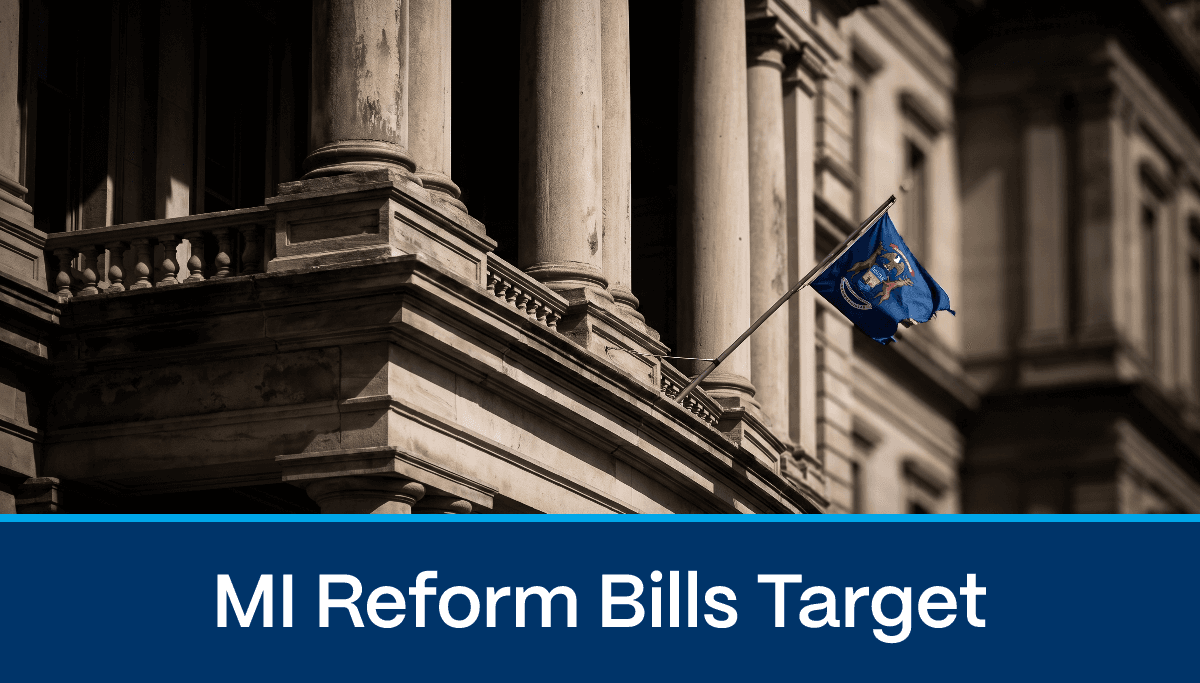
Michigan, home to some of the highest auto insurance rates in the nation, is watching Lansing closely as two new legislative proposals aim to bring real relief to drivers across the state.
According to CBS News (Detroit), the issue has drawn bipartisan attention, with State Rep. Jennifer Wortz (R-Quincy) and State Rep. Joe Tate (D-Detroit) each introducing bills designed to address the structural cost pressures that make Michigan auto insurance uniquely expensive. CBS News (Detroit) featured both legislators alongside James Sullivan, Director of Operations at CURE Auto Insurance, to examine why Michigan drivers continue to pay some of the steepest premiums anywhere in the country and what reform could realistically accomplish.
Michigan Drivers Face Some of the Highest Insurance Rates in the Nation
The situation is not new, but the urgency is growing. Michigan has long ranked among the highest auto insurance rate states in the country, a distinction that hits hardest for working families in cities like Detroit, where incomes are stretched thin and vehicle ownership is often a necessity, not a luxury.
James Sullivan, Director of Operations at CURE Auto Insurance, joined the conversation on Michigan Matters to shed light on what he described as a pressing pocketbook issue for many drivers across the state. Sullivan's participation signals that the insurance industry itself recognizes the reform conversation has reached a critical stage.
For Michigan residents shopping coverage right now, the Save Max Quote Index consistently surfaces Michigan as one of the most expensive states for auto insurance quotes nationally, a pattern that aligns with what lawmakers and advocates have been saying for years. If you've recently shopped for coverage in Michigan and experienced sticker shock, you are not alone.
Understanding why rates are so high requires looking beyond simple supply and demand. The reasons are structural, policy-driven, and deeply embedded in Michigan's unique legislative history.
What's Driving Rates So High in Michigan
Michigan's auto insurance system carries a combination of cost factors that few other states share. The state's no-fault insurance law has historically required drivers to carry unlimited personal injury protection, a mandate that dramatically increases insurer payouts compared to states with capped medical benefits.
That structural reality means insurers price in significant medical-cost exposure with every policy written in Michigan. Urban density in places like Detroit compounds the problem, as higher rates of uninsured drivers, theft, and accident frequency all push premiums upward.
The SMQI, drawn from 3.3 million+ real quote requests, consistently shows Michigan quote requests producing some of the steepest full-coverage estimates among all 50 states, a reflection of exactly the cost environment Sullivan and the Lansing legislators described on Michigan Matters.
Neighboring states offer a stark contrast. Ohio drivers typically pay far less for comparable coverage, and even Indiana auto insurance costs sit well below Michigan's norms, largely because those states do not carry the same no-fault liability exposure that Michigan's system historically imposed.
How Michigan Compares: Average Annual Premiums Across High-Cost States
Michigan is not alone in struggling with elevated auto insurance costs, but it consistently appears at the top of national rankings. The table below illustrates where Michigan sits relative to other states frequently cited as high-cost markets.
| Michigan | Among highest nationally | No-fault structure, unlimited PIP history |
| Louisiana | Among highest nationally | Litigation frequency, fraud exposure |
| Florida | Persistently elevated | High uninsured motorist rates, weather |
| New York | Elevated | Urban density, no-fault exposure |
| New Jersey | Elevated | Dense population, high medical costs |
For Michigan-specific context, the full Michigan auto insurance state guide tracks how premium trends have shifted since the 2019 no-fault reforms began taking effect and what drivers can do to position themselves for better rates.
Louisiana auto insurance costs and New Jersey auto insurance rates round out the high-cost tier and offer useful comparison points for understanding why structural legislative factors, not just market forces, drive the most extreme premiums.
The Bills on the Table in Lansing
The legislative push for Michigan auto insurance reform is now a bipartisan effort. State Rep. Jennifer Wortz (R-Quincy) and State Rep. Joe Tate (D-Detroit) have each introduced separate bills aimed at addressing the persistent cost problem that has defined Michigan's insurance market for decades.
The details of each individual bill were not fully enumerated in the Michigan Matters broadcast summary, but both legislators appeared on the program to explain how their respective proposals would help drivers. Their joint appearance alongside an insurance industry representative underscores that these are not purely political gestures.
"Rising auto insurance rates across Michigan and new legislative bills in Lansing would help stem the tide," as the Michigan Matters broadcast framed the conversation, capturing the stakes for everyday drivers.
Both Wortz and Tate discussed the bills in the context of a broader conversation about what Michigan drivers are actually experiencing at renewal time. The fact that a Republican from Quincy and a Democrat from Detroit are both bringing proposals forward suggests the pressure from constituents is crossing traditional political lines.
A Rare Bipartisan Push, and Where It Could Stall
Bipartisan agreement on insurance reform in Michigan is notable precisely because it has been so elusive. The state's no-fault system has survived decades of reform attempts, and any new legislation faces the same entrenched stakeholders: hospitals, trial lawyers, and insurers all have competing interests in how personal injury protection is structured and priced.
Rep. Wortz representing Quincy, a small community in Branch County, and Rep. Tate representing Detroit brings together constituents with very different daily realities. Rural drivers in Quincy face different rate pressures than urban Detroit drivers, yet both are being pushed to the legislative table by the same fundamental problem.
"They were joined by James Sullivan, Director of Operations at CURE Auto Insurance, to shed light on the pressing pocketbook issue for many drivers," according to CBS News (Detroit), suggesting that industry voices are aligned with the reform push rather than opposing it.
Where bills stall in Lansing is typically in committee, where lobbying pressure from affected industries can slow momentum regardless of bipartisan support. Consumers watching this process should pay attention to committee assignments and hearing schedules in the weeks ahead.
What this means for you
Do not wait for Lansing to act before shopping your current policy. Pull competing quotes now using the Save Max Quote Index to establish a baseline so you know immediately whether legislative changes translate into real savings when you renew. Monitor Rep. Wortz's and Rep. Tate's bill numbers as they advance through committee, and contact your own state representative to signal that auto insurance costs are a priority for your household. If rates drop following reform, you will want to re-shop within 30 days of any effective date to capture the full benefit.
What to Watch Before the August 4 Vote
The auto insurance reform conversation in Lansing is unfolding alongside a separate but related transportation-cost question on the August 4 ballot. Wayne County voters will decide a regional transit measure that directly affects how residents get around Southeast Michigan.
Assad Turfe, Deputy Wayne County Executive, and Tiffany Gunter, General Manager at SMART, appeared on Michigan Matters to discuss the measure. Currently, 17 communities in Wayne County are not part of regional transit, while 43 are. The ballot measure would address that gap by ending the opt-out status for those 17 communities.
Critics of the measure have raised concerns that it would primarily raise taxes. Turfe responded to those objections directly during the broadcast, arguing that the improvements to the transit system justify the cost. Gunter emphasized the broader importance of regional transit to Wayne County and Southeast Michigan as a whole.
The transit-insurance connection matters for consumers because reliable public transit is often cited as a factor that can reduce vehicle ownership rates and, over time, the overall demand for auto insurance in a region. For Michigan drivers already paying premium prices, any structural shift that reduces their dependence on a personal vehicle could translate into real financial relief over time.
Watch Michigan Matters at its new time: 5:30 a.m. Sundays on CBS Detroit and 9:30 a.m. Sundays on CW Detroit 50 WKBD.
FAQ
Why does Michigan have such high auto insurance rates?
Michigan has historically required drivers to carry unlimited personal injury protection under its no-fault insurance law, which significantly increases insurer exposure compared to states with capped medical benefits. Urban factors in cities like Detroit, including higher rates of uninsured drivers and accident frequency, compound the cost further. Structural reform efforts have been ongoing, and the current legislative push from Rep. Wortz and Rep. Tate is the latest attempt to address these root causes.
What are Rep. Jennifer Wortz and Rep. Joe Tate proposing?
Both legislators have recently introduced separate bills aimed at reducing auto insurance costs for Michigan drivers, as discussed on Michigan Matters with CBS News (Detroit). The bills represent a bipartisan approach to a problem that has long resisted reform in Lansing. Specific bill language and provisions were discussed on the program but were not detailed in the broadcast summary.
What is the August 4 Wayne County transit vote about?
Wayne County voters will decide whether to end the opt-out status for 17 communities that are currently not part of the regional transit system, while 43 communities already participate. Supporters argue the change would strengthen public transportation across Southeast Michigan. Critics have raised concerns about potential tax increases, which Deputy Wayne County Executive Assad Turfe addressed directly on Michigan Matters.
How can I lower my Michigan auto insurance premium right now?
Shopping your policy across multiple carriers is the single most effective near-term action, as premium variation in high-cost states like Michigan can be substantial. Reviewing your personal injury protection election and any coverage levels that may have changed after Michigan's 2019 no-fault reforms is also worthwhile. Tracking legislative developments in Lansing around the current bipartisan bills can help you time a re-shop to coincide with any rate-impacting changes.
How does Michigan compare to neighboring states on insurance costs?
Michigan consistently ranks among the highest-cost states nationally, while neighboring states like Ohio and Indiana carry significantly lower average premiums due to different no-fault structures and liability frameworks. Consumers who commute across state lines or are considering relocation sometimes factor insurance cost differences into their decisions. Reviewing the Ohio auto insurance landscape alongside Michigan's provides useful context for just how large that gap can be.
About Taleah McGuire
Taleah McGuire is a Regional Analyst at Save Max Auto with 11+ years of insurance experience including senior roles at Kentucky Farm Bureau. She covers regulatory news, state-specific reform legislation, and traditional carrier coverage. Read more from Taleah McGuire →
Edited by Brooke Grissom.
Methodology
This article is grounded in the source linked above. Save Max Auto data points referenced here are drawn from the Save Max Quote Index (SMQI), a proprietary instrument reflecting 3,364,317 real consumer quote requests submitted to savemaxauto.com. State and carrier rankings reflect the lifetime dataset; year-over-year shifts reflect a rolling 12-month window. The index is refreshed monthly. External authority figures referenced (NAIC, NHTSA, state regulators) reflect the most recent public data releases available at time of writing.
Sources
- Primary source: CBS News (Detroit), "Michigan Matters: Regional transit and auto insurance reform"