
Michigan SB 1154 Strips Insurers of Competition Rate Defense
Michigan has long let insurers escape "excessive rate" findings simply by pointing to competition, but Senate Bill 1154 wants to end that escape hatch for good. Introduced on September 9 by Senator Irwin, SB 1154 would rewrite the rules governing how regulators evaluate auto and home insurance pricing in the state.


Published: Sep 16, 2026
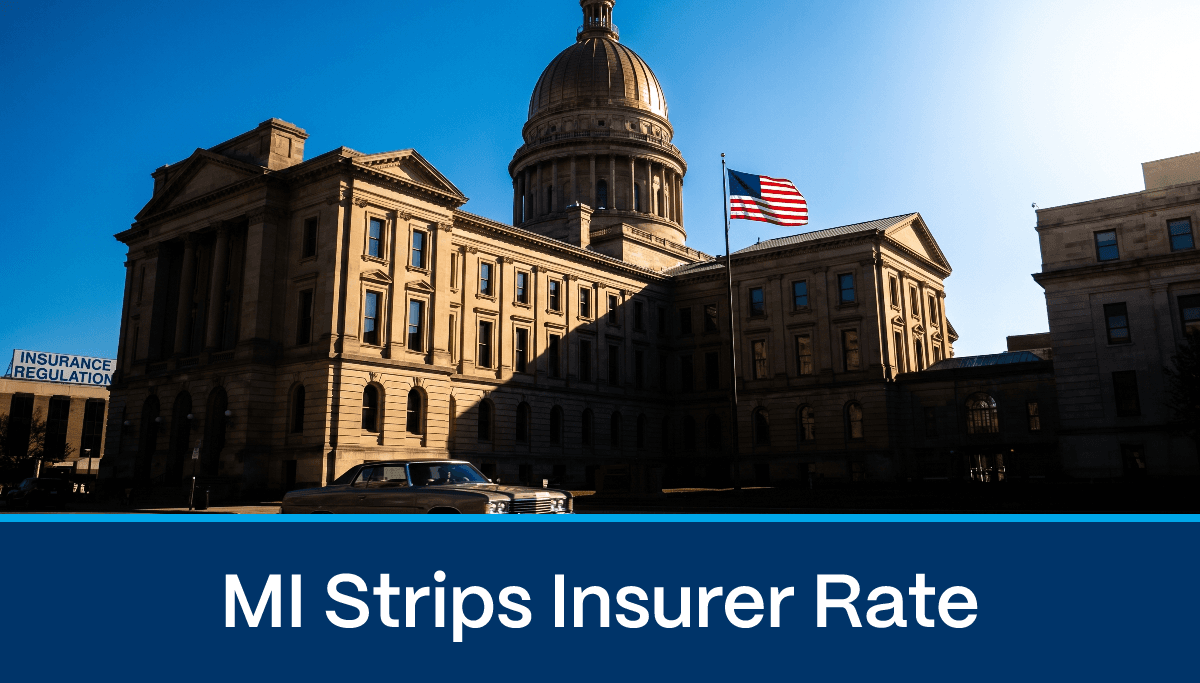
Michigan has long let insurers escape "excessive rate" findings simply by pointing to competition, but Senate Bill 1154 wants to end that escape hatch for good.
Introduced on September 9 by Senator Irwin, SB 1154 would rewrite the rules governing how regulators evaluate auto and home insurance pricing in the state. As Insurance Business first reported, the bill targets Section 2109 of the Michigan Insurance Code (MCL 500.2109), eliminating the competition-based safe harbor that currently prevents the state from declaring a rate excessive whenever a "reasonable degree of competition" exists. For Michigan drivers already navigating one of the country's most complex auto insurance markets, the stakes are significant, and the Save Max Quote Index consistently shows Michigan ranking among the most expensive states for auto insurance quotes nationwide.
Michigan moves to close the competition loophole on insurance rates
Right now, Michigan law gives insurers a powerful shield. If regulators try to flag a rate as excessive, insurers can simply demonstrate that the market is reasonably competitive, and the excessive-rate finding evaporates. The law, as written in MCL 500.2109, makes competition itself the decisive test.
SB 1154 would strip that shield entirely.
Under the bill, state regulators at the Department of Insurance and Financial Services (DIFS) could find a rate excessive based on one straightforward criterion: whether it is unreasonably high. It would not matter how many insurers are writing policies in Michigan. It would not matter whether a carrier can point to robust marketplace rivals. The competitive landscape of the market would simply cease to be a legal defense.
That is a meaningful departure from decades of rate-oversight practice in Michigan. For Michigan auto insurance policyholders, it could represent the first real structural shift in how their premiums are scrutinized at the regulatory level.
How the current safe harbor actually works, and why critics say it fails drivers
The logic behind the existing competition shield is intuitive: if many insurers compete for your business, market forces should keep rates in check. Regulators, under this model, function as a backstop only when competition breaks down.
The problem critics identify is that "reasonable competition" is a standard insurers have historically found easy to meet. A market with many active carriers can still produce rates that feel out of reach for everyday drivers, competition among insurers does not automatically translate into affordable premiums for consumers.
Michigan's auto insurance market has long been a flashpoint for this debate. The state's unique no-fault system and its history of some of the highest premiums in the country have made it fertile ground for legislative reform efforts. If competition alone cannot keep rates in check, the argument goes, regulators need direct authority to call a rate unreasonably high, full stop.
"A rate cannot be held excessive if a reasonable degree of competition exists in the relevant market." , Current Michigan Insurance Code, MCL 500.2109 (as reported by Insurance Business)
That single sentence is what SB 1154 would delete.
What SB 1154 deletes: the four-factor competition test unpacked
The bill does not stop at removing the competition standard itself. It would also eliminate the entire multi-factor framework used to determine whether reasonable competition exists in the first place. That framework currently requires regulators and insurers to consider four distinct factors:
- Number of active insurers: How many carriers are currently writing policies in the relevant market, used as a proxy for competitive depth.
- Present versus historical availability: Whether the current supply of coverage is comparable to past periods, designed to catch markets quietly contracting on consumers.
- Underwriting returns over time: Insurer profitability measured across a reliable time horizon, intended to reveal whether carriers are earning outsized margins.
- Barriers to entry for new carriers: How difficult it is for new insurers to enter the market, a classic economic indicator of whether competitive pressure is real or illusory.
Under SB 1154, this entire subsection would be deleted. Regulators would no longer need to work through these criteria. The question would simply be: is this rate unreasonably high?
That shift hands meaningful discretion back to DIFS, and removes a procedural checklist that critics argue has insulated insurers from accountability even when premiums spike.
What regulators could do differently if the bill passes
With the competition safe harbor gone, DIFS would operate under a cleaner, more direct standard. A rate would be subject to an excessive-rate finding whenever it is deemed unreasonably high, full stop, no competitive-market defense available.
In practical terms, this means regulators could challenge a rate filing without first proving that competition has failed. They would not need to count active carriers, analyze historical availability data, or evaluate entry barriers. The burden of demonstrating reasonableness would rest more squarely on insurers from the start.
"If enacted, the change would mean state regulators could find an auto or home insurance rate excessive based solely on whether it is unreasonably high, regardless of how many carriers compete in the market." , Insurance Business
It is worth noting the bill also makes one technical but telling language change: replacing "shall" with "must" throughout the section. According to reporting, this reflects a broader Michigan legislative drafting convention and is considered non-substantive. The functional heart of the reform is the removal of the competition shield and its supporting framework.
For neighboring states watching Michigan's reform trajectory, the outcome of SB 1154 could signal broader appetite for direct rate-oversight authority. Drivers in states like Ohio and Indiana operate under their own distinct regulatory frameworks, but Michigan's experiment with direct excessive-rate authority may influence reform conversations across the Midwest.
Guardrails that stay in place: adequacy, discrimination, and actuarial rules
SB 1154 is targeted, not a wholesale rewrite of Michigan rate law. Several core protections remain firmly in place.
Rates in Michigan would still be required to meet three foundational standards:
- Rates cannot be inadequate, insurers must still be able to cover expected losses and remain solvent.
- Rates cannot be unfairly discriminatory, pricing must not treat similarly situated consumers unequally without actuarial justification.
- Rates must be supported by credible loss and expense statistics, the actuarial-justification requirements carry over unchanged, including the need for reasonable classification systems.
This matters for consumers to understand. The bill is not removing the floor or the anti-discrimination guardrails. It is removing a ceiling defense, the argument that competition, by itself, makes a rate acceptable regardless of its actual level.
The SMQI, drawn from 3.3 million+ real quote requests, reflects persistent premium pressure in states where regulatory oversight is weaker. Michigan's move to strengthen direct rate review authority, while preserving actuarial rigor, positions the state's framework as one that attempts to balance insurer sustainability with consumer affordability.
What this means for you
If you are a Michigan driver, watch for DIFS to exercise rate-review authority more aggressively if SB 1154 becomes law. Review your current policy and request competing quotes now, before any potential market repricing occurs in response to the new regulatory environment. Use state-specific resources and comparison tools to benchmark your premium against what other Michigan auto insurance shoppers are seeing, and contact your state senator to make your voice heard before the bill clears committee.
FAQ
What is Michigan Senate Bill 1154?
SB 1154 is a Michigan legislative proposal introduced on September 9 by Senator Irwin. It would amend Section 2109 of the Michigan Insurance Code to eliminate the competition-based safe harbor that currently prevents regulators from declaring an auto or home insurance rate excessive when reasonable market competition exists.
How does the current Michigan rate-excess safe harbor work?
Under current Michigan law, an insurer can block an excessive-rate finding by demonstrating that a reasonable degree of competition exists in the relevant market. Regulators must evaluate a four-factor test, including the number of active carriers, availability trends, underwriting returns, and barriers to entry, before an excessive-rate determination can stand.
Would SB 1154 lower my auto insurance premium automatically?
Not automatically. The bill would give state regulators direct authority to challenge rates deemed unreasonably high, regardless of competitive conditions. Whether that authority translates into lower premiums depends on how aggressively DIFS uses its new powers and how insurers respond to the changed regulatory environment.
Which rate rules would not change under SB 1154?
Key protections remain. Rates would still need to be adequate to cover insurer losses, cannot be unfairly discriminatory, and must be grounded in credible actuarial data and reasonable classification systems. The bill removes a specific defense for excessive rates, it does not remove the broader rate-adequacy and anti-discrimination framework.
Where is SB 1154 in the legislative process?
As of the bill's introduction on September 9, SB 1154 has been referred to the Michigan Senate Committee on Finance, Insurance, and Consumer Protection. It must clear committee before advancing to a full Senate vote.
About Taleah McGuire
Taleah McGuire is a Regional Analyst at Save Max Auto with 11+ years of insurance experience including senior roles at Kentucky Farm Bureau. She covers regulatory news, state-specific reform legislation, and traditional carrier coverage. Read more from Taleah McGuire →
Edited by Cassidy Richey.
Methodology
This article is grounded in the source linked above. Save Max Auto data points referenced here are drawn from the Save Max Quote Index (SMQI), a proprietary instrument reflecting 3,364,317 real consumer quote requests submitted to savemaxauto.com. State and carrier rankings reflect the lifetime dataset; year-over-year shifts reflect a rolling 12-month window. The index is refreshed monthly. External authority figures referenced (NAIC, NHTSA, state regulators) reflect the most recent public data releases available at time of writing.
Sources
- Primary source: Insurance Business, "Michigan bill would strip rate-excess shield from insurers"