
How to Get a Lower Auto Insurance Bill: Your Questions Answered
Drivers who stay loyal to the same insurer for 10-plus years may actually be leaving over $1,000 on the table every year, according to research shared with Yahoo Finance. That finding comes from Insurify founder and co-CEO Snejina Zacharia, who told Yahoo Finance that the fix is straightforward: compare rates regularly instead of assuming your...


Published: Aug 16, 2026
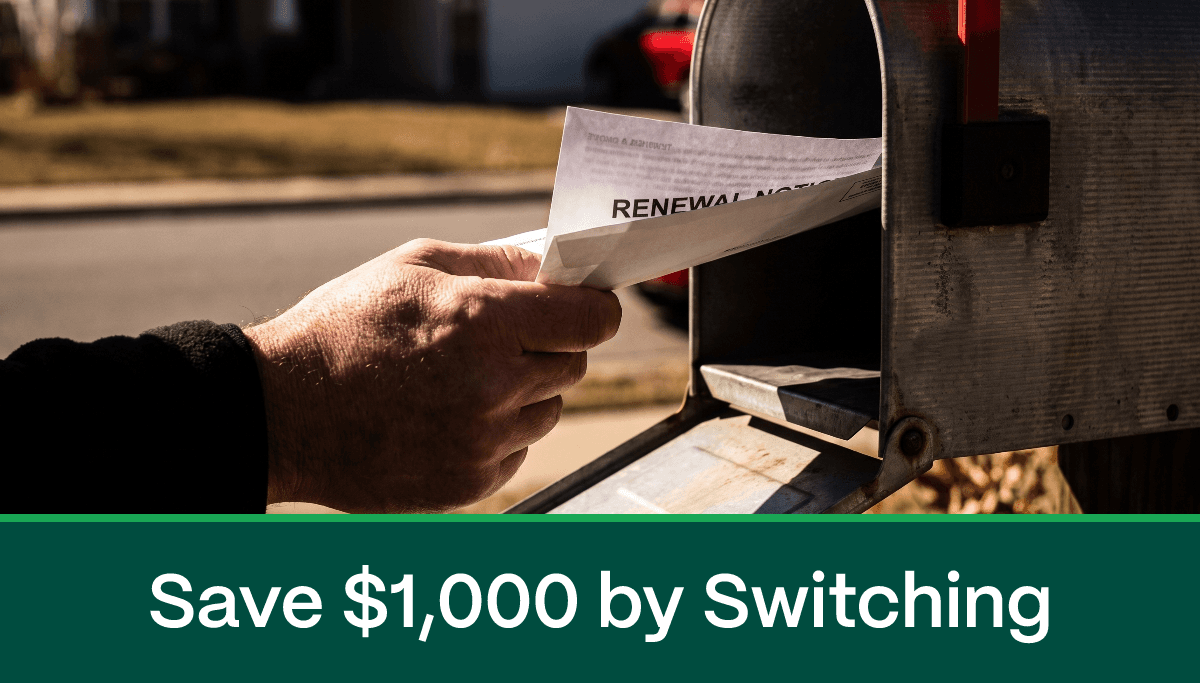
Drivers who stay loyal to the same insurer for 10-plus years may actually be leaving over $1,000 on the table every year, according to research shared with Yahoo Finance.
That finding comes from Insurify founder and co-CEO Snejina Zacharia, who told Yahoo Finance that the fix is straightforward: compare rates regularly instead of assuming your current carrier is giving you the best deal. If you want a lower auto insurance bill, the single most effective lever is shopping around. The rest of this guide walks you through exactly why prices vary, who saves the most, and what to do about it today.
Why your loyal customer status isn't saving you money
You've been with the same insurer for a decade. You've never missed a payment. Surely that counts for something, right?
Not necessarily. Zacharia put it plainly: "sometimes people think that just because they're staying on the same insurance for 10 plus years, they're getting loyalty discounts, but the reality is that they might be saving $1,000 if they just shop."
That's the loyalty trap in one sentence. Insurers are not obligated to reward tenure with competitive pricing. While some carriers do advertise loyalty perks, those discounts rarely offset the savings available by switching to a carrier that is currently pricing your specific risk profile more favorably.
The assumption that staying put equals saving money is one of the most expensive habits in personal finance. The data simply does not back it up.
Why the same driver can get wildly different quotes
Here's the part most drivers don't realize: two carriers can look at an identical driver and arrive at completely different premiums.
Zacharia explained it directly: "carriers across the board are pricing risk differently. So the same exact consumer with exactly the same risk can be priced very differently."
Two forces drive this. First, auto insurance is regulated at the state level, meaning each state sets its own rules about what factors carriers can use, how much they can weigh them, and what minimums must be met. A driver in California operates under a very different regulatory framework than a driver in Texas or Florida.
Second, even within the same state, each carrier builds its own proprietary risk model. One insurer may penalize urban zip codes more aggressively. Another may weigh credit history differently. A third may have surplus capacity in a given market and price accordingly to attract volume.
The result: your premium is not a fixed number. It is one data point in a wide range of possible prices for your exact profile.
How much can switching actually save, and who saves the most?
The headline figure from Zacharia's interview is straightforward: users can save over $1,000 by comparing rates regularly. That's not a one-time event for a special subset of drivers. It is a repeatable outcome tied to the systematic price variation built into the market.
The Save Max Quote Index (drawn from 3.3 million-plus real quote requests) consistently shows that the gap between the highest and lowest quotes for identical coverage widens based on several driver characteristics. The SMQI reinforces what Zacharia described: carrier pricing divergence is not random noise, it is structural.
Drivers most likely to see the largest savings gaps include:
- Drivers in heavily regulated states like New York or New Jersey, where carrier pricing strategies diverge sharply
- Long-tenure policyholders who have never actively shopped
- Drivers whose life circumstances have changed (new vehicle, new address, improved credit) but who haven't re-quoted
- Drivers in states with high baseline premiums, such as Michigan, where even a moderate percentage difference translates to significant dollar savings
| Loyal customer, 10+ years, never re-quoted | Highest |
| Driver with recent life change (move, new car) | High |
| Driver who last shopped 2-3 years ago | Moderate to High |
| Driver who compares annually | Lower, already optimized |
The pattern is consistent: the longer you've gone without comparing, the larger the likely gap between what you pay and what you could pay.
How comparison shopping works, and what 'apples to apples' really means
Q: If I get quotes from multiple carriers, how do I know I'm comparing the same thing?
This is the right question. A quote for state-minimum liability coverage and a quote for full coverage with a $500 deductible are not comparable, even if they come from the same carrier. Mixing them produces a meaningless number.
Zacharia specifically highlighted this challenge and the solution: "sites like Insurify provide that apples to apples real-time experience."
Q: What does 'apples to apples' actually mean in practice?
It means every quote you receive reflects identical coverage parameters: the same liability limits, the same deductible, the same optional coverages, applied to the same vehicle and driver profile. When a comparison platform standardizes those inputs, the only variable that changes across quotes is the carrier's pricing model.
That standardization is what makes the savings real. Without it, a "cheaper" quote might simply be a thinner policy.
Q: How often should I compare?
Zacharia's framing is "regularly." Carrier pricing models shift based on their claims experience, reinsurance costs, and competitive strategy. A carrier that was the cheapest option two years ago may no longer be today.
Common mistakes that keep drivers overpaying
Understanding the market structure is only half the battle. The other half is recognizing the behavioral habits that lock drivers into higher premiums year after year.
The most common traps:
- Auto-renewal without review. When your policy renews automatically, you receive a new premium without ever actively agreeing it represents fair value. Many drivers accept the renewal without checking whether rates have shifted elsewhere.
- Ignoring life changes. Moving to a new zip code, buying a different vehicle, getting married, or improving your credit score can all shift your risk profile in ways that make you more attractive to carriers you haven't tried. If you haven't re-quoted after a major life change, you're likely overpaying.
- Checking only one carrier. Calling your current insurer to ask for a better rate is not comparison shopping. It surfaces only what that one carrier is willing to offer, which is structurally limited by their existing relationship with you.
- Assuming loyalty discounts are competitive. As Zacharia noted, the loyalty assumption is the core of the problem. A loyalty discount on an overpriced policy is still an overpriced policy.
Each of these mistakes compounds over time. A driver who auto-renews for a decade without shopping is not just overpaying one year. They are overpaying every year.
What this means for you
Pull out your current declarations page and note your exact coverage limits and deductible. Use a comparison platform that offers real-time, apples-to-apples quotes as Zacharia described, so you're evaluating identical coverage across carriers. If you've had any life change in the past 12 months, treat that as a trigger to re-quote immediately. Set a calendar reminder to repeat this process annually, because carrier pricing shifts and your lowest rate today may not be your lowest rate next year.
FAQ
Is it actually possible to save over $1,000 just by switching auto insurance carriers?
Yes. Insurify founder and co-CEO Snejina Zacharia stated directly that "users can save over $1,000 if they compare regularly," as reported by Yahoo Finance. The savings stem from the fact that carriers price identical risk profiles differently, so the same driver can receive substantially different premiums from competing insurers.
Why do auto insurance prices vary so much between carriers?
Auto insurance is regulated on a state-by-state level, and each carrier builds its own risk-pricing model. As Zacharia explained, "the same exact consumer with exactly the same risk can be priced very differently." Regulatory differences across states and proprietary carrier algorithms both contribute to the gap.
Does staying with the same insurer for years earn you meaningful discounts?
Zacharia's research suggests not necessarily. While some carriers advertise loyalty perks, the reality is that long-term customers often pay more than they would if they actively shopped. The $1,000-plus savings figure specifically applies to drivers who compare instead of relying on loyalty to deliver competitive pricing.
What does an 'apples to apples' insurance quote comparison mean?
It means every quote you receive reflects the same coverage levels, deductibles, and policy parameters. Comparison platforms that standardize these inputs allow you to evaluate only the carrier's price, not a mix of coverage differences. Zacharia specifically cited this type of standardized, real-time comparison as the mechanism that unlocks real savings.
How often should I shop my auto insurance rate?
Zacharia's guidance is to compare "regularly." Because carrier pricing models shift based on their own claims experience and business strategy, the cheapest carrier for your profile can change from year to year. Annual comparisons, plus re-quoting after any major life change, represent a practical approach to keeping your premium competitive.
About Cassidy Richey
Cassidy Richey is a Content Writer at Save Max Auto with a research background in behavioral psychology. She focuses on the consumer side of insurance shopping, fraud and protection coverage, and Q&A guides. Read more from Cassidy Richey →
Edited by Kyle Greenwood.
Methodology
This article is grounded in the source linked above. Save Max Auto data points referenced here are drawn from the Save Max Quote Index (SMQI), a proprietary instrument reflecting 3,364,317 real consumer quote requests submitted to savemaxauto.com. State and carrier rankings reflect the lifetime dataset; year-over-year shifts reflect a rolling 12-month window. The index is refreshed monthly. External authority figures referenced (NAIC, NHTSA, state regulators) reflect the most recent public data releases available at time of writing.
Sources
- Primary source: Yahoo Finance, "How to lower your auto insurance bill: 'Users can save over $1,000'"