
One Clean Record, One 10-Month Gap, and an $800-a-Month Insurance Penalty He Never Saw Coming
Wayne Schneider did everything right, surrendered his plates, canceled his policy legally, stayed ticket-free, and still watched his monthly premium quote jump from just over $200 to more than $1,000.


Published: Nov 10, 2026
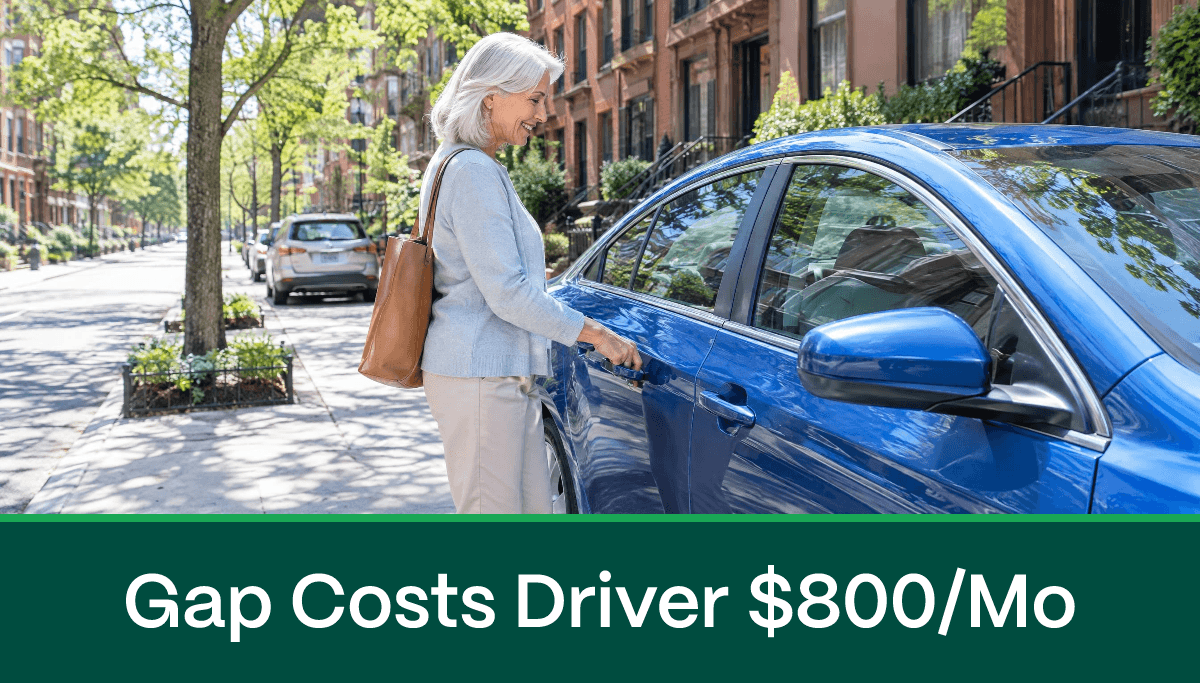
Wayne Schneider did everything right, surrendered his plates, canceled his policy legally, stayed ticket-free, and still watched his monthly premium quote jump from just over $200 to more than $1,000.
News 12 - Long Island broke the story of Wayne Schneider, a 66-year-old Freeport resident whose insurance coverage lapse penalty erased decades of safe-driving goodwill in a single quote. The insurance coverage lapse penalty he faced was not the result of an accident, a ticket, or a fraud claim. It was the result of going 10 months without a policy while he had no vehicle to insure. The case, reported by News 12 - Long Island, is a warning for millions of drivers who assume a "responsible pause" in coverage will be treated neutrally by insurers.
From $200 to $1,000 a Month, With No Car and No Tickets
Schneider spent most of his life driving and maintaining affordable auto insurance. His monthly premium for his Ford Ranger sat at just over $200. When transmission problems made the truck too costly to repair, he made what seemed like a sensible series of decisions: he surrendered his license plates to the Department of Motor Vehicles, canceled his Liberty Mutual policy, and stopped paying for coverage on a vehicle he no longer owned.
Ten months later, he went to get a new quote. What came back stunned him.
"I've had a car my whole life. Insurance has always been inexpensive. I have no tickets on my license. This is something really wrong."
The quote he received exceeded $1,000 per month, more than a 400 percent increase from his prior premium. No accidents. No violations. Just a gap.
"I'm stuck. I don't know what to do," Schneider said.
For drivers in New York, where premiums are already among the highest in the nation, that kind of surcharge can be financially catastrophic. Schneider's story illustrates how a coverage gap, even a fully explainable one, can effectively price a person off the road.
Why Insurers Penalize You for a Coverage Gap, Even When You're Not Driving
The logic behind the insurance coverage lapse penalty is actuarial, not punitive, at least from the insurer's perspective. Carriers feed your coverage history into pricing algorithms that treat any gap as a risk signal, regardless of the reason behind it.
Chuck Bell, a financial policy advocate with Consumer Reports, explained the mechanism plainly:
"Unfortunately, auto insurance companies have algorithms that evaluate your lapse in coverage for any reason, and they typically are going to charge you more if you don't have auto insurance coverage."
Notice the phrase "for any reason." The algorithm does not distinguish between a driver who let coverage lapse because they were uninsured and reckless and a driver like Schneider who legally surrendered his plates. The gap itself is the flag.
This matters for anyone who has sold a car, traveled abroad for an extended period, relied on public transit, or simply could not afford premiums for a stretch of time. The system penalizes the gap, not the behavior that caused it.
How Much More a Lapse Can Cost: Penalty Ranges by Gap Length
The Save Max Quote Index tracks pricing patterns across a broad range of consumer insurance profiles. Based on what the SMQI shows about how carriers tier lapse risk, the surcharge you face generally scales with how long your coverage has been inactive. The table below reflects qualitative ranges consistent with the patterns the Save Max Quote Index, drawn from 3.3 million+ real quote requests, identifies across carrier tiers.
| Up to 30 days | Minimal to none | Minimal to none |
| 31 to 90 days | 10% to 25% above baseline | 20% to 40% above baseline |
| 3 to 6 months | 25% to 60% above baseline | 50% to 100% above baseline |
| 6 to 12 months | 60% to 150% above baseline | 100% to 300% or denial |
| 12+ months | Often pushed to non-standard market | May face outright denial from standard carriers |
Schneider's 10-month gap falls in that second-to-last row, the range where standard carriers frequently push applicants toward the non-standard, high-risk pool. That pool carries dramatically higher premiums by design.
Drivers in states with competitive markets, like Ohio or Virginia, may find that shopping aggressively across carriers yields more variance. But in higher-cost markets, the non-standard tier can feel like a wall.
Seniors and Low-Income Drivers Face the Steepest Climb Back
Schneider's situation is not unusual among older adults on fixed incomes. When a vehicle becomes unaffordable to maintain, due to costly repairs like the transmission failure that ended his Ford Ranger's road life, the logical response is to surrender it. That logical response then triggers an illogical financial penalty when the driver tries to re-enter the market.
Seniors face a compounding problem. Many have decades of continuous coverage history, but a single gap late in their driving life can override much of that goodwill in an insurer's algorithm. The system weights recency heavily.
Low-income drivers face similar barriers. A coverage gap is often the result of a financial hardship, a layoff, a medical bill, a car that broke down. The penalty for that gap then makes re-entry more expensive at precisely the moment when affordability is most strained.
For drivers in states like New Jersey or Michigan, where baseline premiums are already high, a lapse surcharge layered on top can push monthly costs beyond $1,000, exactly the number Schneider encountered.
Schneider's case is a concrete example of a feedback loop: financial hardship creates the gap, and the gap creates deeper financial hardship.
Where Regulators Stand, and Where the Gaps in Protection Are
Schneider did not give up quietly. He contacted elected officials and government agencies, eventually landing at the New York State Department of Financial Services (DFS), the state body that regulates insurance companies.
The response he received disappointed him. When he asked what he was supposed to do as a 66-year-old who could not reach a grocery store, he said a DFS representative suggested he take an Uber.
"She says, 'Why don't you take an Uber?' I said, 'Take an Uber?'"
A DFS spokesperson did not address the alleged Uber comment when contacted by News 12. The agency said Schneider was provided with information, resources, and options that could potentially reduce the cost of coverage. It did not specify what those options were.
This response highlights a structural gap. New York DFS has authority to regulate insurer conduct, but lapse-penalty pricing is not explicitly prohibited under current state law. Carriers are permitted to use coverage continuity as a rating factor. The regulation exists; the protection for lapse-penalized drivers largely does not.
Liberty Mutual, Schneider's former insurer, declined to comment on the specifics of his policy.
What this means for you
If you are planning to sell your vehicle, take a coverage break, or simply cannot afford your current premium, act before you cancel. Contact your insurer about a non-owner auto policy, which keeps continuous coverage on your record even without a vehicle. Shop across multiple carriers immediately after any lapse using a comparison tool, because surcharge levels vary significantly between standard and non-standard markets. Contact your state's department of financial services or insurance commissioner to ask about rate assistance programs before assuming the first quote you receive is your only option.
FAQ
Does a coverage lapse affect my rate even if I didn't own a car during that time?
Yes. As Consumer Reports advocate Chuck Bell confirmed, insurers use algorithms that penalize any gap in coverage regardless of the reason. Not owning a vehicle during the lapse period does not exempt you from the surcharge in most states.
What is a non-owner auto insurance policy and how does it help?
A non-owner policy provides liability coverage for drivers who do not own a vehicle but want to maintain continuous coverage. Keeping that coverage active prevents the gap that triggers lapse penalties when you eventually return to the standard market.
How long does a coverage lapse affect my insurance rates?
The length of the impact varies by carrier and state, but surcharges associated with a lapse are generally most severe in the first 12 to 24 months after re-entry. The longer the original gap, the longer the elevated rate tends to persist.
Can my state's insurance regulator force a carrier to lower my rate after a lapse?
State regulators like New York DFS can investigate carrier conduct and provide resources, but they generally cannot override a carrier's rate-filing methodology if lapse penalties are permitted under state law. Filing a formal complaint is still worth doing, as it creates a record and may prompt review.
What should I do if my new quote after a lapse is unaffordable?
Get quotes from multiple carriers, including non-standard insurers, and ask specifically about programs for drivers re-entering after a lapse. Some carriers weigh continuous-coverage history more favorably than others, and the spread between the highest and lowest quotes can be substantial.
About Kyle Greenwood
Kyle Greenwood is a Writer and Researcher at Save Max Auto with a decade of consumer-content experience. He specializes in explainers, longer-form features, and Q&A guides on the topics auto drivers actually search for. Read more from Kyle Greenwood →
Edited by Cassidy Richey.
Methodology
This article is grounded in the source linked above. Save Max Auto data points referenced here are drawn from the Save Max Quote Index (SMQI), a proprietary instrument reflecting 3,364,317 real consumer quote requests submitted to savemaxauto.com. State and carrier rankings reflect the lifetime dataset; year-over-year shifts reflect a rolling 12-month window. The index is refreshed monthly. External authority figures referenced (NAIC, NHTSA, state regulators) reflect the most recent public data releases available at time of writing.
Sources
- Primary source: News 12 - Long Island, "Freeport senior shocked by insurance rate hike after coverage lapse"