
Insurance Claim Fraud's Hidden Victim: The Injured Person Who Never Fully Recovers
Most people picture insurance claim fraud as a financial crime, but the real damage is physical, and it's happening to people who were genuinely hurt in the first place. Risk & Insurance recently spotlighted a scenario that rarely makes headlines: a legitimately injured person seeks medical care after a crash, and the very provider meant to…


Published: Oct 12, 2026
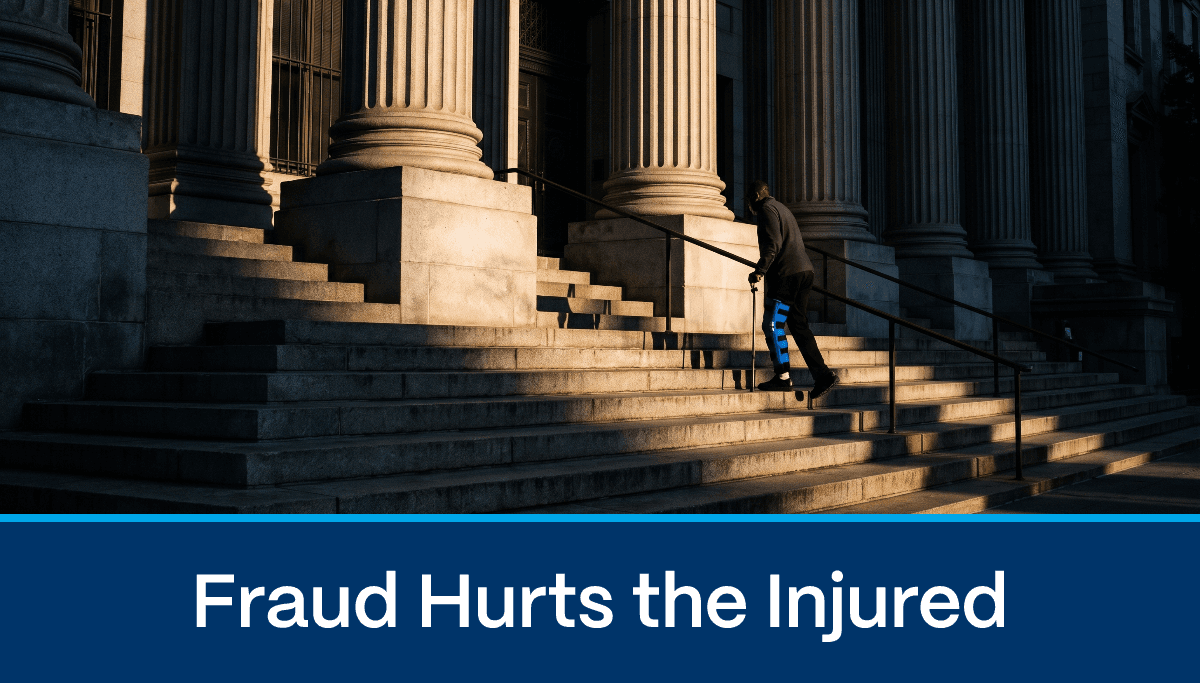
Most people picture insurance claim fraud as a financial crime, but the real damage is physical, and it's happening to people who were genuinely hurt in the first place.
Risk & Insurance recently spotlighted a scenario that rarely makes headlines: a legitimately injured person seeks medical care after a crash, and the very provider meant to help them recommends unnecessary surgery to inflate the claim's value. Months pass. The person hasn't recovered. They may be worse off, both physically and financially. That is the human cost of insurance claim fraud, and as Risk & Insurance frames it, the fraud doesn't just steal money, it steals a person's recovery.
When the System Meant to Help Becomes the Harm
Here is the central paradox: the insurance system exists to make injured people whole, yet certain actors inside that system exploit the injured to enrich themselves.
Consider the scenario laid out in the source reporting. Someone is hurt in an accident that was not their fault. The injury is real. The pain is real. Their need for care is real. They enter the medical system in good faith, trusting that their provider will act in their interest.
Instead, a fraudulent provider sees a billing opportunity. An unnecessary surgical procedure gets recommended, not because the patient needs it, but because it inflates the claim's dollar value. The patient undergoes a procedure they didn't need. Recovery stalls or reverses. And the fraud has claimed its most important victim: not an insurer's balance sheet, but a human being's health.
This is where the conversation about insurance claim fraud must start. The financial losses are real, but framing fraud purely as a dollars-and-cents problem obscures the physical harm done to real claimants.
"Behind those numbers, there are real victims, and in this case the fraud costs a person their recovery."
That quote, from the Risk & Insurance report, reframes the entire problem. Fraud isn't victimless white-collar crime. In its most dangerous form, it is a medical harm imposed on someone already vulnerable.
How Provider-Driven Fraud Differs From Classic Scams
When most people hear "insurance fraud," they imagine a policyholder staging a car accident or exaggerating a minor fender-bender into a major claim. That kind of policyholder fraud is real and costly.
But provider-driven fraud operates differently and, in many ways, more dangerously.
In the scenario described by Risk & Insurance, the claimant is not the perpetrator. They are the target. A medical provider, someone the patient is supposed to trust, deliberately steers treatment decisions toward unnecessary procedures. The goal is to inflate the claim's value, not to heal the patient.
The distinction matters enormously for how carriers, regulators, and consumers think about the problem. Policyholder fraud is often caught at the point of claim submission. Provider fraud can go undetected for months, sometimes until the unnecessary treatment has already been performed and the damage is done.
That is a fundamentally different risk profile, and it demands a fundamentally different detection strategy.
The Scope: What the Numbers Actually Reveal
The Risk & Insurance report focuses on the qualitative human harm rather than citing a specific fraud-cost figure, so the numbers below reflect what the source does establish alongside broader industry context.
| Nature of harm | Physical and financial |
| Primary perpetrator type described | Medical providers recommending unnecessary surgery |
| Claimant status | Genuinely injured, not a willing participant in fraud |
| Carrier's role | Key line of defense between fraudulent provider and targeted claimant |
| Company cited as example defender | The Travelers Companies, Inc. (NYSE: TRV) |
| Travelers employee count (2016) | Approximately 30,000 |
| Travelers revenues (2016) | Approximately $28 billion |
Travelers is described in the source as a leading provider of property casualty insurance for auto, home, and business, and a component of the Dow Jones Industrial Average. Those figures place the scale of a major carrier's stake in fraud prevention in concrete terms: a company generating roughly $28 billion in annual revenue has both the resources and the financial incentive to build serious anti-fraud infrastructure.
The Save Max Quote Index, drawn from 3.3 million or more real quote requests, consistently shows that drivers in high-litigation states face steeper premiums than comparable drivers in lower-litigation environments. That spread is one of the clearest consumer-facing signals that fraud-related costs are being priced into everyday policies. The SMQI does not identify fraud directly, but it reflects the downstream pricing pressure that fraud imposes on honest policyholders.
Why Auto Insurance Claims Are a Prime Target
Auto accidents create a nearly perfect environment for provider-driven fraud, and several structural factors explain why.
First, soft-tissue injuries. Whiplash, back strain, and similar injuries are genuinely painful and genuinely common after car crashes. They are also difficult to verify objectively. There is no X-ray that definitively confirms or rules out a soft-tissue injury, which gives dishonest providers room to recommend treatments that are hard to challenge.
Second, the litigation environment in many states rewards high medical bills. In states where auto injury settlements are negotiated against a backdrop of documented medical expenses, inflating treatment costs directly inflates settlement value. Providers and, in some cases, attorneys who work with them have a financial incentive to run up the bill.
Third, the claimant's own vulnerability. Someone injured in a crash, in pain, and unfamiliar with medical billing is poorly positioned to question a provider's recommendation. The power imbalance is significant.
Drivers in states with heavy litigation exposure, such as those in Florida's complex auto insurance market or Louisiana's high-premium environment, often see this dynamic priced into their rates before they ever file a claim.
The Ripple Effect: Higher Premiums, Fewer Payouts, Delayed Care
Fraud's costs do not stay contained to the fraudulent transaction. They spread outward to every honest policyholder in the market.
"Insurance fraud is usually framed in terms of numbers, inflated claims, fraudulent billing, dollars lost. But behind those numbers, there are real victims."
When providers systematically inflate claims through unnecessary procedures, carriers respond by tightening the overall claims process. That means longer review periods, more documentation requirements, and greater skepticism applied to every claim, including legitimate ones. The honest claimant with a real injury faces more hurdles because fraudulent providers have poisoned the well.
Premium increases follow. Carriers must price for the fraud they expect to encounter, and those costs flow directly to policyholders at renewal. Drivers who have never filed a fraudulent claim pay higher rates because others in their market have exploited the system.
For states already under premium pressure, this feedback loop is punishing. New York drivers navigating one of the country's most expensive auto insurance markets and New Jersey policyholders facing their own high-cost environment are among those who feel the cumulative weight of fraud-inflated premiums year after year.
How Carriers Are Closing the Gap
The Risk & Insurance source is direct on one point: insurance carriers can be a key line of defense between a fraudulent provider and the claimant they're targeting.
That framing positions carriers not just as financial gatekeepers, but as active protectors of their own policyholders' physical wellbeing. It is a meaningful reframing of the carrier's role in the fraud ecosystem.
In practice, carrier defenses typically operate across several layers. Special Investigations Units, commonly called SIUs, are dedicated teams that review claims flagged for potential fraud. These units look for patterns that human adjusters might miss in routine claim handling: providers who bill unusually high volumes of the same procedure, treatment plans that escalate faster than the documented injury severity would suggest, or referral networks that consistently send patients to the same specialists.
Data analytics has become central to this work. Carriers processing large volumes of claims can use algorithmic pattern detection to surface anomalies that human review alone would miss. A provider who performs a statistically improbable number of surgeries on auto-accident patients, for example, becomes visible in the data in ways that individual claim review cannot capture.
Provider credentialing is a third layer. Carriers and the networks they work with can monitor provider behavior over time and flag or exclude providers whose billing patterns suggest systematic fraud.
Travelers, cited in the source, represents the scale at which a major carrier can bring these tools to bear: approximately 30,000 employees and the organizational depth to sustain serious fraud-detection infrastructure.
Companies like Michigan-based policyholders who operate under that state's unique no-fault framework know firsthand how consequential carrier-level fraud detection can be in a high-exposure market.
What this means for you
If you're injured in an accident, vet every provider recommendation before agreeing to any procedure. Ask for a second opinion when surgery is suggested, document every interaction with your medical team, and report any provider who pressures you toward treatments that don't match your symptoms to your state's insurance fraud bureau. Review your policy annually to understand your coverage structure, because knowing what your insurer will and won't pay for is your first line of defense against being steered into unnecessary care.
FAQ
What is provider-driven insurance claim fraud?
Provider-driven fraud occurs when a medical professional, rather than a policyholder, is the primary perpetrator. As described by Risk & Insurance, this can involve a provider recommending unnecessary surgery specifically to inflate the value of an insurance claim, with the genuine claimant as an unwitting and harmed participant.
How does insurance claim fraud raise my premiums?
When carriers absorb inflated claim costs from fraudulent providers, they adjust their pricing models to account for the expected level of fraud in a given market. Those adjustments show up as higher premiums for all policyholders in that market, including drivers who have never been involved in any fraudulent activity.
How can I tell if a provider is steering me toward unnecessary treatment?
Red flags include pressure to undergo surgery quickly after an accident without thorough diagnostic workup, referrals that come through an attorney rather than a treating physician, and treatment plans that seem disproportionate to your documented injuries. Seeking an independent second opinion is always within your rights as a patient.
What role do insurance carriers play in stopping fraud?
According to Risk & Insurance, carriers can serve as a key line of defense between a fraudulent provider and the claimant being targeted. This happens through Special Investigations Units, data analytics, and provider credentialing, all of which help identify suspicious billing patterns before or after payment.
Is it only major accidents that attract fraudulent providers?
Not necessarily. Even moderate collisions can attract provider-driven fraud, particularly in states with litigation environments that reward high documented medical expenses. Soft-tissue injuries from relatively minor crashes are especially vulnerable because they are difficult to verify objectively, making them a frequent target.
About Brooke Grissom
Brooke Grissom is an Independent Insurance Analyst at Save Max Auto, licensed in Property & Casualty and Health insurance. She covers data-driven market trends, cross-state premium comparisons, and carrier financial analysis. Read more from Brooke Grissom →
Edited by Taleah McGuire.
Methodology
This article is grounded in the source linked above. Save Max Auto data points referenced here are drawn from the Save Max Quote Index (SMQI), a proprietary instrument reflecting 3,364,317 real consumer quote requests submitted to savemaxauto.com. State and carrier rankings reflect the lifetime dataset; year-over-year shifts reflect a rolling 12-month window. The index is refreshed monthly. External authority figures referenced (NAIC, NHTSA, state regulators) reflect the most recent public data releases available at time of writing.
Sources
- Primary source: Risk & Insurance, "The Human Cost of Insurance Claim Fraud"