
Allstate Pays $400 Weekly Benefit But Denies All Three Treatment Plans
A tractor-trailer collision on January 25, 2022 left a Canada Post mail carrier fighting for benefits for more than two years, and a split ruling shows exactly how thin the line between winning and losing can be in Ontario accident benefit disputes.


Published: Sep 17, 2026
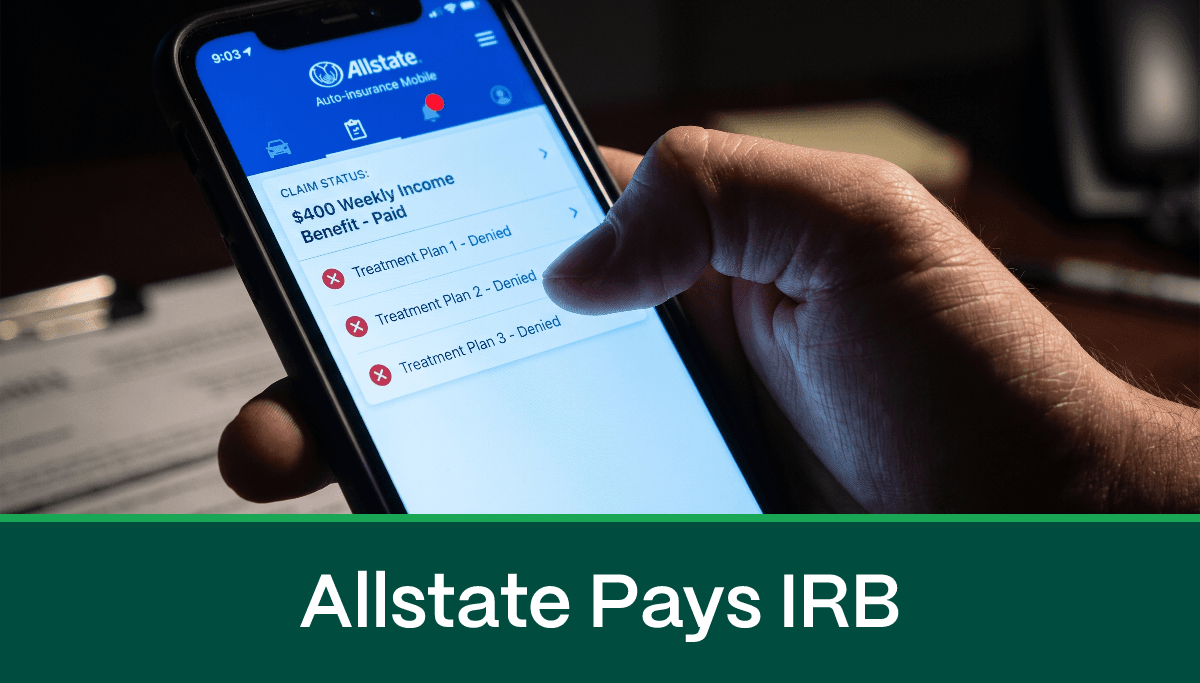
A tractor-trailer collision on January 25, 2022 left a Canada Post mail carrier fighting for benefits for more than two years, and a split ruling shows exactly how thin the line between winning and losing can be in Ontario accident benefit disputes.
Insurance Business reported on September 16, 2026 that a Licence Appeal Tribunal adjudicator ordered Allstate to pay income replacement benefits to the applicant, who had worked as a mail carrier since 2017. The decision, released September 3, 2026, awarded the $400 per week the claimant sought from July 15, 2024, but denied all three treatment plans he had submitted. Insurance Business notes the Tribunal also declined to issue a special award, finding Allstate's conduct did not cross the threshold required.
For Ontario drivers wondering where income replacement benefits denial fits into the broader picture of auto insurance disputes, this ruling offers a detailed roadmap.
Allstate Ordered to Pay, But Only Part of What the Claimant Sought
The Tribunal's decision was genuinely split. Adjudicator Bernard Trottier ruled in the claimant's favour on the core income replacement question, affirming that the applicant's chronic pain and psychological impairments left him completely unable to work in any job suited to his education, training and experience.
That victory came with significant limits. Every treatment plan the claimant submitted was rejected. And while interest was ordered on the overdue income replacement benefits, calculated at 1 per cent per month, compounded monthly from the date each payment became overdue, there was no special award attached.
The ruling is a reminder that succeeding on an income replacement claim does not automatically unlock treatment funding. Those are evaluated on separate tracks, under separate evidentiary standards.
How a Mail Carrier's Crash Case Reached the Licence Appeal Tribunal
The applicant had been employed as a mail carrier since 2017. On January 25, 2022, a tractor-trailer struck his vehicle, causing injuries he described as chronic pain and psychological impairments severe enough to prevent him from working in any capacity.
He sought $400 per week in income replacement benefits starting July 15, 2024. When Allstate denied the claim, he brought the dispute to the Licence Appeal Tribunal, where Adjudicator Trottier heard competing expert evidence about his functional and vocational capacity.
The road from collision to arbitration spanned more than two years, a timeline familiar to anyone who has navigated Ontario's Statutory Accident Benefits Schedule system. For context on how claims management timelines vary by jurisdiction, Ontario policyholders can compare their situation with how Michigan's no-fault system handles long-tail injury claims.
The Legal Test That Decided the Income Replacement Question
Post-104-week income replacement benefits carry a higher burden than early-stage claims. After 104 weeks, a claimant must show they are completely unable to engage in any employment for which they are reasonably suited by education, training or experience.
Adjudicator Trottier applied the Ontario Court of Appeal's framework from Traders General Insurance Company v Rumball, which requires assessing whether alternative employment exists in a real-world, competitive setting, not a theoretical one.
"Adjudicator Bernard Trottier found the applicant met that test, citing the Ontario Court of Appeal's framework in Traders General Insurance Company v Rumball for assessing whether alternative employment exists in a real-world, competitive setting."
Trottier preferred the evidence of a psycho-vocational assessment finding the claimant's cognitive and vocational abilities were significantly limited. He rejected the insurer's expert opinions that the applicant's symptoms did not preclude sedentary work.
One detail from the hearing stands out. Allstate pointed to the applicant's reported ability to take long-haul flights as evidence that he could tolerate sitting for extended periods, a line of argument that would suggest sedentary work was possible. Trottier dismissed it. The adjudicator found the claimant's pain was tied mainly to lifting and physical movement rather than sitting, making the flight evidence immaterial.
Why the Three Treatment Plans Were Rejected
All three treatment-related submissions failed, but for distinct reasons. The table below summarizes each denial.
| Occupational therapy assessment | OT assessment | A similar assessment had already been completed by an OT of the applicant's own choosing in 2023 |
| First OT services plan | OT services | Goals were identical to the second plan, differing only in the inclusion of assistive devices, with no explanation offered for the difference |
| Second OT services plan | OT services | Same as above, stated goals matched the first plan with no justification for the distinction |
| Physical therapy plan | Physiotherapy | Insurer's orthopaedic expert testified the applicant would not benefit from further physiotherapy following extensive prior sessions |
The pattern across all three denials is notable. Two were rejected because the claimant's own submissions lacked internal coherence, the two OT services plans were effectively duplicates with no rationale for their differences. The physiotherapy plan fell on expert testimony that more treatment was simply not clinically indicated.
Consumers often assume that winning on income replacement automatically strengthens treatment plan claims. This ruling demonstrates that assumption is wrong.
Pre-Existing Conditions, CPP Denials, and What the Tribunal Dismissed
Allstate raised the applicant's pre-existing thyroid, cholesterol and gout conditions as possible alternative explanations for his impairments. Adjudicator Trottier rejected that argument. He found the accident, not the pre-existing conditions, was the direct cause of the claimant's current impairments, satisfying the "but for" causation test used in Ontario accident benefit proceedings.
Two additional pieces of adverse evidence were placed before the Tribunal and given little weight. First, the applicant had been denied short-term disability benefits. Trottier found this denial stemmed from a missed medical documentation deadline, not from any finding on the merits of the claim. That procedural failure, in other words, said nothing about whether the injuries were real.
"A denial of short-term disability benefits was given little weight, since it stemmed from a missed medical documentation deadline rather than a finding on the merits."
Second, the applicant had been denied Canada Pension Plan disability benefits. Trottier also discounted this, noting that the CPP disability program applies a different eligibility test than the Statutory Accident Benefits Schedule. The two programs are not measuring the same thing, so a denial under one does not dictate the outcome under the other.
On the special award, Trottier declined to order one under section 10 of Regulation 664. The threshold requires conduct described as "excessive, imprudent, stubborn, inflexible, unyielding and immoderate." Allstate's denials, whatever their impact on the claimant, did not meet that standard.
What this means for you
If you are pursuing income replacement benefits after a serious collision, document the specific physical demands your injuries prevent, and make sure that documentation distinguishes between activities like sitting and activities like lifting. Build a coherent paper trail for every treatment plan you submit, and never assume a parallel benefits denial (whether CPP or short-term disability) will be held against you if you can show it was procedurally rather than medically motivated.
The Save Max Quote Index, drawn from 3.3 million+ real quote requests, consistently shows that policyholders who understand their benefit structures before a claim arises are better positioned to challenge denials. Review your Statutory Accident Benefits Schedule coverage now, not after a collision. Drivers in neighboring provinces and states can benchmark their own coverage by reviewing guides for New York auto insurance or Pennsylvania car insurance, where income-replacement-style benefits operate under different statutory frameworks.
Key Takeaways From the Ruling
The Allstate ruling shows that income replacement benefits and treatment plan funding are evaluated on separate evidentiary tracks, winning one does not guarantee the other.
Several principles from this decision will carry forward into future Ontario accident benefit arbitrations:
- The Rumball framework requires a real-world employment assessment, not a theoretical one
- Pre-existing conditions must be distinguished from accident-caused impairments using the "but for" causation test
- A missed documentation deadline does not constitute a merits-based finding against a claimant
- CPP disability eligibility and SABS eligibility are governed by different legal tests
- Treatment plans must demonstrate internal clinical logic, duplicate goals without explanation will be rejected
- The special award threshold under section 10 of Regulation 664 is high and requires conduct described as "excessive, imprudent, stubborn, inflexible, unyielding and immoderate"
- Interest on overdue income replacement benefits is calculated at 1 per cent per month, compounded monthly
For Ontario policyholders, the SMQI data reinforces a broader pattern: understanding the specific legal tests that govern your claim category is the single most important step you can take before entering a dispute with your insurer.
FAQ
Can Allstate deny treatment plans even if a claimant wins income replacement benefits?
Yes. As this ruling confirms, the Licence Appeal Tribunal evaluates income replacement benefits and treatment plan funding separately. Winning on income replacement does not compel the Tribunal to approve any particular treatment submission. Each plan is assessed on its own clinical and evidentiary merits.
What is the post-104-week income replacement benefit test in Ontario?
After 104 weeks of disability, a claimant must show they are completely unable to perform any employment for which they are reasonably suited by education, training or experience. Adjudicator Trottier applied the Rumball framework, which requires the assessment to reflect real-world, competitive employment conditions rather than hypothetical job categories.
Does a CPP disability denial hurt an Ontario accident benefits claim?
Not necessarily. Adjudicator Trottier gave the CPP denial in this case little weight because the CPP disability program applies a different eligibility test than the Statutory Accident Benefits Schedule. A denial under one program does not automatically translate into a denial under the other.
What does it take to get a special award against an insurer in Ontario?
Under section 10 of Regulation 664, a special award requires the insurer's conduct to meet the standard of being "excessive, imprudent, stubborn, inflexible, unyielding and immoderate." The Tribunal declined to make that finding against Allstate in this case, even though the income replacement denial was ultimately overturned.
How is interest calculated on overdue accident benefits in Ontario?
In this ruling, Trottier ordered interest calculated at 1 per cent per month, compounded monthly, from the date each income replacement payment became overdue. That rate applies to the income replacement benefits awarded, not to the denied treatment plans.
About Brooke Grissom
Brooke Grissom is an Independent Insurance Analyst at Save Max Auto, licensed in Property & Casualty and Health insurance. She covers data-driven market trends, cross-state premium comparisons, and carrier financial analysis. Read more from Brooke Grissom →
Edited by Cassidy Richey.
Methodology
This article is grounded in the source linked above. Save Max Auto data points referenced here are drawn from the Save Max Quote Index (SMQI), a proprietary instrument reflecting 3,364,317 real consumer quote requests submitted to savemaxauto.com. State and carrier rankings reflect the lifetime dataset; year-over-year shifts reflect a rolling 12-month window. The index is refreshed monthly. External authority figures referenced (NAIC, NHTSA, state regulators) reflect the most recent public data releases available at time of writing.
Sources
- Primary source: Insurance Business, "Allstate must pay income replacement benefits despite treatment plans denial"