
41 Carriers Cut Georgia Insurance Rates Saving 3.6 Million Policyholders
Could your next renewal notice actually bring good news for once? For millions of Georgia drivers, homeowners, and business owners, the answer is yes, according to a James Magazine report published October 27, 2026.


Published: Oct 27, 2026
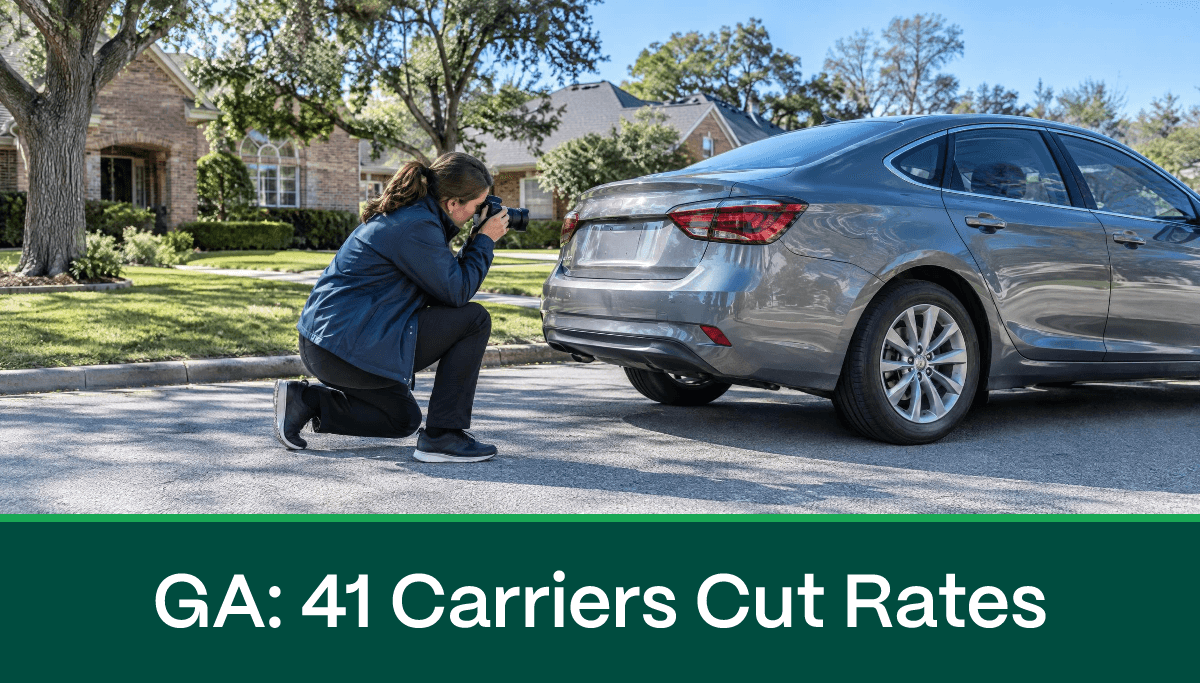
Could your next renewal notice actually bring good news for once? For millions of Georgia drivers, homeowners, and business owners, the answer is yes, according to a James Magazine report published October 27, 2026.
Forty-one insurance companies have reduced rates in Georgia this year, covering over 3.6 million policyholders and generating an estimated half a billion dollars in savings, James Magazine reports. That makes Georgia an outright outlier at a moment when premiums are climbing nearly everywhere else in the country.
41 Carriers Cut Rates as Georgia Bucks the National Trend
While drivers in most states are bracing for higher renewal bills, Georgia is moving in the opposite direction. House Speaker Jon Burns (R-Newington) and state Representative Matt Reeves (R-Duluth) distributed a media release confirming that 41 insurance companies have voluntarily reduced rates inside the state this year.
The savings are not trivial. An estimated half a billion dollars in total relief has been delivered, or is expected to be delivered, to Georgia auto, home, and business insurance consumers in 2026 alone.
Representative Reeves offered a direct reason to pay attention:
"I heard from a young, single driver that he is saving $1,200 per year and from a family that they are saving $6,000 a year in their recent policy renewal. Georgians can now shop around and save money, while rates are still going up in other states."
That contrast with other states is the headline. Georgia is not just slowing rate growth; it is actively reversing it.
The Legislation Behind the Reductions: HB 1344 and the Blue-Ribbon Committee
The rate cuts did not happen by accident. They are the product of two coordinated policy efforts: House Bill 1344, formally titled the Insurance Affordability Act, and the work of the state House Blue-Ribbon Study Committee on Insurance Rates.
Speaker Burns was direct about who deserves credit:
"Thanks to the work of the House Blue-Ribbon Study Committee on Insurance Rates, Rep. Matt Reeves and Insurance Commissioner John King, Georgia is leading to drive down insurance rates for hardworking families, drivers and businesses across the state."
The committee operated across party lines, according to Reeves, who described it as working "across the state and across the aisle to make insurance more affordable for hardworking Georgians." That bipartisan cooperation appears to have been central to the bill's success in translating legislative intent into real-world carrier behavior.
Insurance Commissioner John King is also cited as a key figure in the outcome. The combination of legislative pressure, a formal study process, and active regulatory engagement appears to have moved 41 carriers to act.
How Much Are Policyholders Actually Saving?
The aggregate number is striking, but the per-policyholder examples are where the savings become real.
Representative Reeves shared two specific cases from constituents who had recently renewed their policies:
- A young, single driver is saving $1,200 per year
- A family is saving $6,000 per year
Those figures span a wide range, which makes sense. Premium levels vary by coverage type, driving history, location within the state, and the number of vehicles or properties on a policy. A family with multiple cars, a home, and a business policy could realistically see outsized savings if their carrier is among the 41 that cut rates.
The 3.6 million covered policyholders figure is also worth contextualizing. Georgia's population is roughly concentrated in metro Atlanta and surrounding counties, meaning these cuts are likely touching urban, suburban, and rural households alike.
The Save Max Quote Index, drawn from 3.3 million+ real quote requests, consistently shows that Georgia car insurance shoppers are among the most price-sensitive in the Southeast, making a reduction of this scale particularly meaningful to the state's drivers.
Georgia vs. Other States: A Rate Environment Comparison
Representative Reeves was explicit: "rates are still going up in other states." That single sentence frames Georgia's achievement as genuinely unusual in the current environment.
To understand the contrast, consider how neighboring and comparable states are faring. Drivers in Florida, where full-coverage premiums have been among the highest in the nation, have not seen the kind of coordinated legislative intervention that Georgia just executed. South Carolina auto insurance shoppers and Tennessee drivers face their own upward rate pressures without an equivalent of HB 1344 on the books.
Here is a simplified snapshot of the directional rate environment based on available reporting:
| Georgia | Decreasing | HB 1344 + Blue-Ribbon Committee |
| Florida | Increasing | No comparable mechanism reported |
| South Carolina | Increasing | No comparable mechanism reported |
| Tennessee | Increasing | No comparable mechanism reported |
| National Average | Increasing | Varies by state |
Georgia's ability to move 41 carriers simultaneously is what separates it from states that have passed insurance-related legislation without achieving measurable rate reductions.
Which Lines of Insurance Are Affected: Auto, Home, and Business
One of the most important aspects of Georgia's rate reductions is their breadth. This is not a narrow auto-only story.
The savings apply across three distinct lines of coverage:
- Auto insurance, which affects every licensed driver in the state
- Home insurance, which affects Georgia homeowners and renters who carry property coverage
- Business insurance, which affects small and large commercial policyholders statewide
Speaker Burns specifically referenced "hardworking families, drivers and businesses across the state" in his statement, signaling that all three groups are intended beneficiaries of the legislation. The estimated half-billion-dollar savings figure therefore spans personal and commercial lines combined.
If you carry more than one type of policy, and your carrier is among the 41 that reduced rates, you may be eligible for reductions across multiple accounts. That is where a family-level savings figure like $6,000 per year becomes plausible.
What this means for you
Check whether your current insurer is among the 41 companies that have reduced rates, and if so, request a breakdown of your new premium before your next renewal date. If your carrier is not on the list, use this moment to shop competing quotes aggressively. Reeves' point that "Georgians can now shop around and save money" is a direct invitation to do exactly that. Contact your agent, visit your insurer's website, or compare multiple carriers to make sure you are capturing the savings the legislation was designed to deliver.
What to Watch Next in Georgia's Insurance Market
The Blue-Ribbon Study Committee on Insurance Rates has not been dissolved. Its continued existence signals that Georgia's legislative focus on affordability is not a one-cycle event. The committee's cross-aisle structure suggests it has political durability regardless of which party holds the majority after the next election cycle.
Representative Reeves himself is described as being in "a tight re-election fight in his Gwinnett County district," which means the political champion most closely associated with HB 1344 faces an uncertain future in the legislature. If Reeves loses his seat, advocacy for additional rate actions could shift to other members.
The more immediate question is whether the remaining insurers operating in Georgia will follow the 41 that already reduced rates. Legislative and regulatory pressure from Commissioner John King and Speaker Burns suggests the environment favors further reductions rather than reversals. Whether more carriers join the list before the year ends is the next metric to watch.
The SMQI will continue tracking quote activity from Georgia shoppers to measure whether consumer behavior reflects awareness of these reductions or whether many policyholders remain unaware of the savings available to them.
FAQ
Does the Georgia rate reduction apply to my auto insurance specifically?
Yes. The savings apply to auto, home, and business insurance. The 41 carriers that reduced rates cover all three lines. Whether your specific policy is reduced depends on which carrier you use and whether it is among the 41 companies named in the media release distributed by Speaker Burns and Representative Reeves.
How do I find out if my insurer is one of the 41 that cut rates?
Contact your insurer or agent directly and ask whether your carrier filed a rate reduction under or following HB 1344. You can also review your renewal declaration page for a premium comparison against your prior term. If your premium dropped, your carrier likely participated.
Will Georgia insurance rates stay low, or is this a temporary reduction?
The reductions are tied to formal carrier rate filings, which means they reflect actuarial commitments rather than one-time discounts. However, future rate changes depend on claims activity, weather events, and ongoing regulatory conditions. The Blue-Ribbon Study Committee's continued role suggests some institutional support for maintaining downward pressure on rates.
How does Georgia's situation compare to Florida or South Carolina?
Georgia has achieved coordinated rate reductions across 41 carriers through legislation and regulatory engagement. Neighboring states like Florida and South Carolina have not reported equivalent reductions at this scale. Consumers in those states should actively compare quotes to find the best available rate in their market.
Is the $6,000 annual savings figure realistic for my family?
It reflects a real constituent case shared by Representative Reeves. Families carrying multiple vehicles, a home, and business coverage through one of the 41 carriers that reduced rates could realistically see combined savings in that range. Single-policy households are more likely to fall closer to the $1,200 figure cited for an individual driver.
About Aaren Ramon
Aaren Ramon is a Senior Analyst at Save Max Auto and owner of Elite Shield Agency. He covers carrier moves, regional insurance markets, and consumer-impact reporting from the agency-owner perspective. Read more from Aaren Ramon →
Edited by Kyle Greenwood.
Methodology
This article is grounded in the source linked above. Save Max Auto data points referenced here are drawn from the Save Max Quote Index (SMQI), a proprietary instrument reflecting 3,364,317 real consumer quote requests submitted to savemaxauto.com. State and carrier rankings reflect the lifetime dataset; year-over-year shifts reflect a rolling 12-month window. The index is refreshed monthly. External authority figures referenced (NAIC, NHTSA, state regulators) reflect the most recent public data releases available at time of writing.
Sources
- Primary source: James Magazine, "Ga. auto, home & business insurance rate reductions"