
Allstate Now Appears as the Default Insurance Inside CarEdge's Car-Buying Tool
More than 2,000 paying customers signed up for CarEdge's AI negotiator within two months of its July 2025 launch, and now the same platform is quietly routing every one of those car buyers toward a single insurer at the moment they pick a vehicle.


Published: Jul 22, 2026
More than 2,000 paying customers signed up for CarEdge's AI negotiator within two months of its July 2025 launch, and now the same platform is quietly routing every one of those car buyers toward a single insurer at the moment they pick a vehicle.
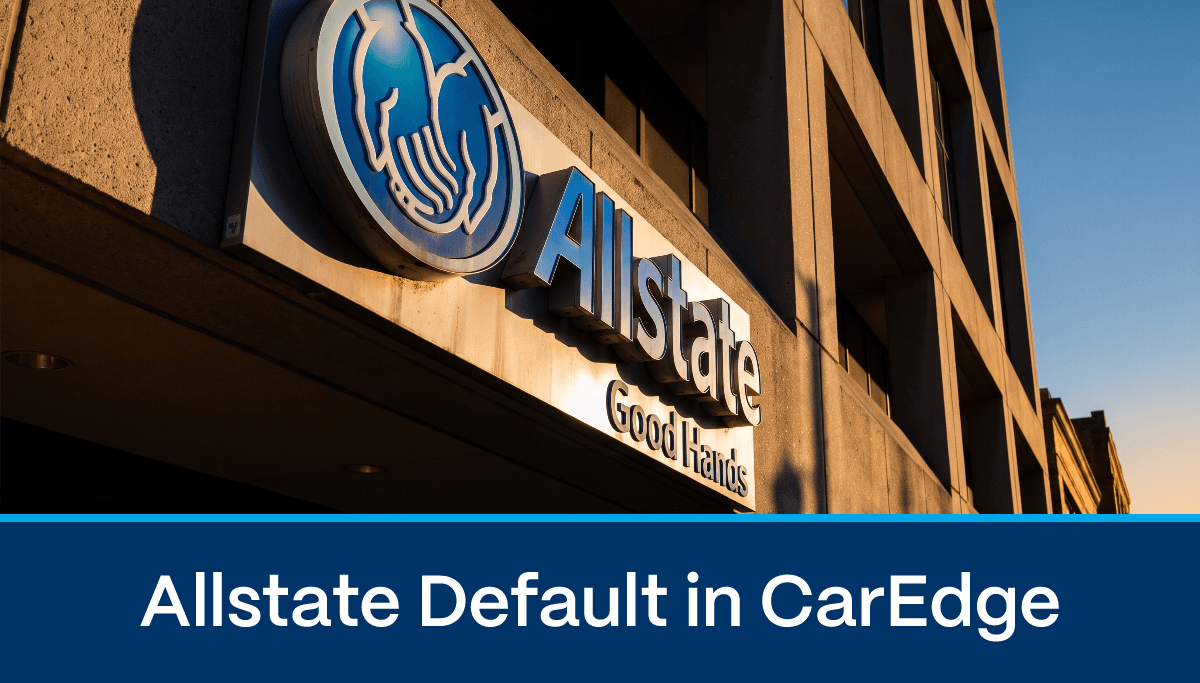
Coverager first reported that CarEdge, the car-buying advice startup founded by Zach Shefska and his father Ray, has embedded Allstate directly into its vehicle detail pages, with insurance selected by default. This is the clearest example yet of embedded auto insurance distribution moving from a background feature to a front-and-center default inside consumer car-buying tools. According to Coverager, clicking through the CarEdge integration takes users to customeronline.allstate.com, Allstate's own quoting site, carrying no CarEdge branding, where they receive a live quote ID and a bindable premium.
How car-buying platforms became insurance distribution channels
Car-buying advice platforms started as a corrective to the dealership experience. CarEdge, built by Ray Shefska after 43 years in the auto industry, and his son Zach, grew an audience on YouTube before developing software. Their positioning was always consumer-first: help buyers understand what a car is worth before they walk onto a lot.
But distribution follows attention. Once a platform earns a seat at the table during one of the largest purchase decisions a household makes, every adjacent financial product becomes a placement opportunity. Insurance is the most natural fit.
The mechanics make sense for both sides. A buyer who has just selected a specific vehicle, at a specific trim, at a specific price point, is the most qualified insurance prospect imaginable. Carriers know the asset, the buyer's decision timeline, and the geographic market, all before a single form field is filled.
That precision is exactly why embedded auto insurance distribution has accelerated across car-buying and dealer-adjacent platforms. CarEdge is the most transparent current example, but the shift is systemic.
CarEdge's three insurance models in three years
The speed of CarEdge's pivot through three different insurance structures tells you how quickly this space is still evolving.
In June 2023, CarEdge's car insurance shopping experience was powered by Bindable through an embedded, white-label model. The Bindable relationship is no longer active.
In December 2025, CarEdge began directing insurance shoppers to Insurify under an affinity arrangement, a handoff to a comparison marketplace where consumers could see multiple carriers. Insurify remains a partner.
The current Allstate integration introduces a third structure entirely. Rather than a white-label wrapper or a multi-carrier marketplace, a single carrier is now embedded at the point of vehicle selection, with the insurance option selected by default.
"Allstate becomes the checkout lane at CarEdge", Coverager
Each iteration has compressed consumer choice further. The white-label model at least surfaced multiple options inside a branded experience. The Insurify affinity model handed buyers to a comparison marketplace. The Allstate embed skips comparison entirely: one carrier, pre-selected, at the moment of maximum buying intent.
Why single-carrier embeds differ from comparison marketplaces
The structural differences between these three models matter enormously for what you actually experience as a consumer. Here is how they compare:
| White-label embed | Bindable (June 2023) | CarEdge branding | Multiple, behind wrapper | No |
| Affinity marketplace handoff | Insurify (December 2025) | Insurify marketplace | Multiple carriers | No |
| Single-carrier direct embed | Allstate (2026) | Allstate's own site | One carrier only | Yes |
The default-selected column is the critical variable. When an option is pre-selected, behavioral economics works against the consumer. Most people do not uncheck defaults, especially during a cognitively demanding purchase like buying a car.
"Clicking through takes users to customeronline.allstate.com, Allstate's own quoting site, with no CarEdge branding, where they receive a live quote ID and a bindable premium.", Coverager
A bindable premium at that stage feels like a solved problem. It is not. It is one carrier's price with no comparative context. Whether that price is competitive depends entirely on your state, your driving history, and your vehicle, factors that require a broader market check to evaluate.
The Save Max Quote Index, drawn from 3.3 million or more real quote requests, consistently shows that the spread between the lowest and highest quotes for the same driver profile can run hundreds of dollars annually. A default-selected single-carrier quote captures none of that spread.
The economics driving carriers toward point-of-sale placement
Why would Allstate accept placement inside a car-buying tool as a single embedded option, rather than competing in a broader marketplace?
The answer is acquisition cost. Traditional insurance distribution, paid search, TV advertising, direct mail, requires reaching consumers who may or may not be shopping. Point-of-sale placement inside a vehicle detail page reaches a consumer who has already selected a specific car and is in active buying mode.
That intent signal is worth a significant premium in customer acquisition terms. A carrier willing to appear as the default option inside a high-intent funnel is effectively paying for certainty of shopping moment, not just reach.
CarEdge's trajectory accelerates this logic. The platform launched an AI negotiator in July 2025 that creates a dedicated email address and phone number for each user and contacts dealers on the customer's behalf. Shefska told Fortune that the product attracted more than 2,000 paying customers within two months. A conversational product called Ask CarEdge is now in beta.
As CarEdge moves deeper into the transaction, not just advising, but actively negotiating, each step brings it closer to being a full purchase funnel. Insurance at the vehicle detail page is a natural extension of that funnel logic.
Members of CarEdge's platform are told, through onboarding emails from Ray Shefska, that they save an average of $2,487 on their vehicle purchase. A buyer who believes they saved thousands on the car may feel less urgency to scrutinize the insurance option that appears alongside it.
Where else this pattern is appearing across the auto retail landscape
CarEdge is the most detailed current case study, but the underlying dynamic, car-buying platforms layering insurance into the purchase funnel, is not unique to one startup.
The pattern follows a consistent logic: build trust with car buyers at the research or negotiation stage, then monetize the insurance moment when purchase intent peaks. The CarEdge model shows how rapidly a platform can cycle through insurance partnership structures as it searches for the highest-value arrangement.
What makes the current phase distinct is the move toward single-carrier defaults rather than comparison experiences. Comparison marketplaces like the Insurify model CarEdge used in December 2025 at least preserve the appearance of consumer choice. Single-carrier embeds do not.
For consumers shopping in states with particularly wide rate variance, the stakes of skipping comparison are higher. Texas auto insurance markets, for example, span a significant range between carriers for identical coverage profiles, as do Florida auto insurance markets and California auto insurance markets. Accepting a default single-carrier quote in any of these states without comparison leaves real money on the table.
The dealer-adjacent and car-buying platform space is large enough that as one platform demonstrates a working embedded insurance model, others follow. The CarEdge-Allstate integration is a signal, not an outlier.
What this means for you
When you shop for a car on any platform that surfaces an insurance option alongside the vehicle, treat that option as a starting point, not a conclusion. A default-selected single-carrier quote like the Allstate embed on CarEdge is one data point in a market that rewards comparison.
Run a parallel quote on at least one other carrier before accepting any embedded offer. The SMQI shows that quote spreads for the same driver and vehicle can be substantial, and the carrier surfaced by a car-buying platform may not be the one that prices your specific risk profile most competitively.
Check your state's rate environment independently. New York auto insurance shoppers and Michigan auto insurance shoppers, for instance, face structurally different regulatory and pricing conditions than buyers in lower-cost states, making independent comparison especially valuable.
Default selections inside purchase funnels are designed to convert, not to optimize for your budget. Uncheck, compare, then decide.
The road ahead for embedded auto insurance
CarEdge's AI negotiator is the most important signal for where this goes next. A product that creates a dedicated email address and phone number for each user and contacts dealers autonomously is no longer a passive advice tool. It is an agent acting on the buyer's behalf.
Once an AI agent is managing the negotiation, the next logical step is for it to manage adjacent decisions including insurance. Ask CarEdge, the conversational product currently in beta, could eventually surface insurance options within the same dialogue in which a buyer is finalizing a purchase price.
At that point, the insurance decision stops being a separate tab or a widget on a vehicle detail page. It becomes part of a single AI-mediated transaction. The carrier that is embedded in that AI's default recommendation logic holds enormous distribution advantage.
That is why the structural shift from comparison marketplace to single-carrier default matters so much right now. The current CarEdge-Allstate integration is relatively visible and easy to opt around. Future AI-native implementations may make the default far harder to identify, let alone override.
Consumers who understand that embedded auto insurance distribution is a carrier acquisition strategy, not a consumer convenience, are better positioned to treat any embedded offer appropriately, as one option among many, evaluated on price and coverage terms, not on the convenience of its placement inside a checkout flow.
FAQ
Is the insurance CarEdge shows me competitive with other carriers?
There is no way to know without comparing. The current CarEdge integration routes users to Allstate's own quoting site with the insurance option selected by default. Allstate is one carrier in a market with many. Whether their quote is competitive depends on your driver profile, vehicle, and state. Running quotes on additional carriers before accepting any embedded offer is the only way to verify.
What does "default selected" mean when I see insurance on a car-buying site?
It means the insurance option has been pre-checked or pre-loaded for you, requiring active effort on your part to remove or replace it. Default selections are a standard conversion technique. In the CarEdge-Allstate integration described by Coverager, the insurance option appears selected by default at the point of vehicle selection, before you have had any opportunity to compare.
How is CarEdge's Allstate embed different from using an insurance comparison site?
A comparison site shows quotes from multiple carriers simultaneously, letting you evaluate price and coverage across the market. The Allstate embed on CarEdge sends you directly to customeronline.allstate.com, Allstate's own quoting platform, with no CarEdge branding and no competing quotes visible. You receive a bindable premium from one carrier only.
Has CarEdge always shown insurance this way?
No. According to Coverager, this is CarEdge's third insurance arrangement in three years. In June 2023 it used a Bindable white-label model. In December 2025 it shifted to an Insurify affinity arrangement connecting buyers to a comparison marketplace. The current Allstate single-carrier default embed is the most recent structure, and the one that most limits consumer choice at the point of selection.
What is the AI negotiator CarEdge launched, and does it affect insurance?
CarEdge launched an AI negotiator in July 2025 that creates a dedicated email address and phone number for each user and contacts dealers on the customer's behalf. It attracted more than 2,000 paying customers within two months, according to Shefska's comments to Fortune. A conversational product called Ask CarEdge is in beta. Neither product currently automates insurance selection, but as these tools deepen their role in the transaction, the possibility of AI-mediated insurance defaults embedded inside negotiation flows is a meaningful near-term development to watch.
About Brooke Grissom
Brooke Grissom is an Independent Insurance Analyst at Save Max Auto, licensed in Property & Casualty and Health insurance. She covers data-driven market trends, cross-state premium comparisons, and carrier financial analysis. Read more from Brooke Grissom →
Edited by Cassidy Richey.
Methodology
This article is grounded in the source linked above. Save Max Auto data points referenced here are drawn from the Save Max Quote Index (SMQI), a proprietary instrument reflecting 3,364,317 real consumer quote requests submitted to savemaxauto.com. State and carrier rankings reflect the lifetime dataset; year-over-year shifts reflect a rolling 12-month window. The index is refreshed monthly. External authority figures referenced (NAIC, NHTSA, state regulators) reflect the most recent public data releases available at time of writing.
Sources
- Primary source: Coverager, "Allstate becomes the checkout lane at CarEdge"