
State Farm and MIT AgeLab Launch Distracted Driving Research Initiative
Dr. Pnina Gershon, director of the MIT AWARE initiative, has spent more than two decades studying the intersection of driving safety and human behavior, and her latest project may reshape how the entire insurance industry thinks about distraction behind the wheel.


Published: Oct 20, 2026
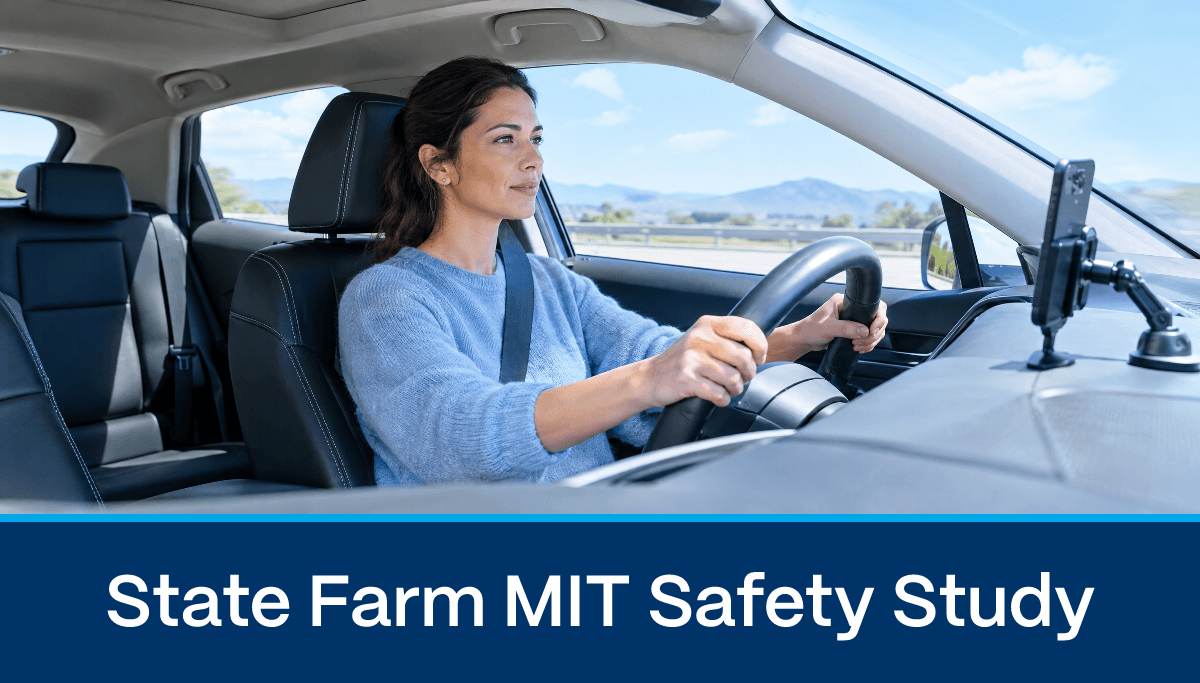
Dr. Pnina Gershon, director of the MIT AWARE initiative, has spent more than two decades studying the intersection of driving safety and human behavior, and her latest project may reshape how the entire insurance industry thinks about distraction behind the wheel.
State Farm and the MIT AgeLab announced a formal research collaboration on October 20, 2026, according to PR Newswire, aimed at decoding why drivers make risky choices even when they know better. The partnership dives into the behavioral science of distracted driving research, a topic with consequences measured not just in dollars but in lives. PR Newswire reports that the collaboration pairs State Farm's real-world crash risk data with MIT AgeLab's multidisciplinary expertise in human factors, transportation safety, and how people interact with technology.
Here is what consumers need to understand right now: 68% of drivers admit to engaging in distracting behaviors behind the wheel, and 44% of those drivers say they have already crashed or experienced a near-crash because of it.
State Farm and MIT AgeLab Team Up to Decode Distracted Driving
The collaboration is not a casual research agreement. It connects State Farm's decades of crash-risk and driver-behavior knowledge with the MIT AWARE initiative's work in behavioral science, advanced simulation, and naturalistic driving research.
State Farm is already embedded in this academic ecosystem. The company participates in the MIT Advanced Vehicle Technology Consortium, which studies how drivers interact with increasingly automated and technology-enabled vehicles. That existing relationship gave both parties a foundation to build something more focused: a structured, phased research program designed to move beyond surface-level distraction data.
Jeff Legner, technology executive at State Farm, explained the company's motivation clearly.
"Technology is changing the driving experience, creating new opportunities to better understand and support drivers. The more we learn about how people interact with technology behind the wheel, the better positioned we are to anticipate evolving risks, improve driver experiences and explore new approaches to accident prevention."
The timing is deliberate. As vehicles grow more connected, the nature of distraction itself is changing. The question is no longer simply what pulls a driver's eyes away from the road, it is why drivers make those choices, and how technology either amplifies or reduces that risk.
What 'Drivefulness' Actually Means, and Why It Matters
Researchers on this project have introduced a new term to the road-safety conversation: "drivefulness."
The concept describes a state in which a driver is safe, aware, appropriately engaged, and ready to respond to the road, while also being supported in having the best possible driving experience for them. It is a behavioral science framework, not a marketing phrase. It reframes the goal from simply "not distracted" to actively, appropriately present.
Dr. Gershon articulated why that distinction matters.
"Distracted driving is not simply about whether a driver knows what is safe or unsafe. It reflects a much more complex interaction between the driver's state, the demands of the driving environment, and the technologies that compete for or support their attention."
That complexity is the core of the drivefulness concept. A driver who is technically looking at the road but mentally overloaded is not "driveful." A driver who uses a well-designed heads-up display to receive navigation cues may be more driveful than one squinting at a mounted phone. The framework invites automakers, insurers, and regulators to ask better questions about what safe engagement actually looks like.
The Distraction Gap: What Drivers Know vs. What They Do
State Farm's own survey data, cited as part of the study's foundation, reveals a startling disconnect between driver knowledge and driver behavior.
Consider these figures from the research:
- 68% of drivers admit to engaging in distracting behaviors while driving
- 44% say they have crashed or experienced a near-crash while distracted
- 62% of drivers believe taking their eyes off the road for two or more seconds is safe
That last number is especially troubling. A two-second glance away from the road actually doubles crash risk. Yet nearly two-thirds of drivers consider that window acceptable. This is not ignorance about distraction in general, it is a miscalibration of personal risk assessment.
The Save Max Quote Index, drawn from 3.3 million+ real quote requests, consistently shows that drivers in states with high distracted-driving incident rates face elevated premiums, a market signal that insurers are already pricing this behavioral gap into everyday policies. The SMQI tracks these patterns across states, helping consumers understand why their zip code and driving profile affect what they pay.
For drivers in states where distracted driving is prevalent, understanding this gap has real financial consequences. Illinois drivers, for example, navigate some of the country's most congested urban corridors, conditions where distraction risks compound quickly and where telematics-based pricing tools are gaining traction.
The Human and Economic Toll of Distracted Driving
The stakes of this research are not abstract.
According to U.S. Department of Transportation research cited in the study, distraction was involved in 29% of motor vehicle crashes studied. The consequences of those crashes include:
| Deaths linked to distraction | More than 10,000 |
| Injuries linked to distraction | 1.3 million |
| Estimated economic cost | $98.2 billion |
| Share of crashes involving distraction | 29% |
Those economic costs ripple outward. They absorb emergency response resources, inflate medical costs, raise insurance loss ratios, and ultimately pass through to consumer premiums. When insurers pay out more in distraction-related claims, every policyholder eventually feels it.
The DOT figures also underscore why this research initiative carries urgency beyond academic interest. A $98.2 billion economic cost signals a systemic problem, one that cannot be solved by awareness campaigns alone. Structural, technology-driven, and behavioral interventions are needed. That is precisely what the drivefulness framework is designed to support.
Drivers in high-cost states feel this pressure acutely. Georgia car insurance costs are shaped in part by crash frequency and injury severity, metrics directly tied to distracted driving rates in metro areas like Atlanta.
How the Research Will Unfold: Phase One and Beyond
The study is structured in phases, with a clear timeline already in place.
Phase one focuses on establishing a deeper understanding of how people perceive and manage attention behind the wheel. The first findings, drawn from consumer survey data, are expected later in October 2026. These early results will offer an initial look at driver attention, distraction patterns, and behavior as self-reported and studied by the research team.
Those findings will then inform the next phase of drivefulness research, which is scheduled to begin in January 2027. That phase will examine how people, technology, and the driving environment can work together to support safer driving, moving from diagnosis to potential intervention.
Dr. Gershon framed the research's longer-term ambition this way: the goal is to think differently about safety and about how technology, information, and interventions can support drivers before, during, and after the drive.
State Farm is also bringing existing infrastructure to this effort. The company has worked with Cambridge Mobile Telematics to explore how technology and data can help reduce roadway risk, and has advocated for stronger hands-free laws across the country. These parallel efforts give the drivefulness research a practical application pipeline, findings will not sit in academic journals but feed directly into how State Farm approaches driver support tools.
What this means for you
If you use a telematics-based discount program through your insurer, the drivefulness research could directly influence how those programs evolve and what behaviors they reward. Review your current policy's safe-driver or usage-based features and compare them against competing options using tools that draw on real market data. Check Ohio car insurance or Texas auto insurance guides for state-specific context on how distracted driving laws affect what you pay. As this research matures through January 2027 and beyond, expect insurers to refine how they define and price attentive driving, staying informed now gives you a head start on the savings.
FAQ
What is "drivefulness" and who coined the term?
Drivefulness is a research term introduced by State Farm and MIT AgeLab researchers to describe a state in which a driver is safe, aware, appropriately engaged, and ready to respond to the road. The concept goes beyond simple distraction avoidance to define what optimal, supported driver engagement looks like.
What does U.S. Department of Transportation data say about distracted driving costs?
According to DOT research cited in the study, distraction was involved in 29% of motor vehicle crashes studied, resulting in more than 10,000 deaths, 1.3 million injuries, and an estimated $98.2 billion in economic costs. These figures make distracted driving one of the most costly and preventable safety issues on U.S. roads.
When will the first results from the State Farm and MIT AgeLab study be released?
The first phase findings from the drivefulness study are expected in October 2026, based on consumer survey data about how drivers perceive and manage attention. The second phase of the research is scheduled to begin in January 2027.
Why do so many drivers underestimate distraction risk?
State Farm's survey data found that 62% of drivers believe taking their eyes off the road for two or more seconds is safe, even though that glance actually doubles crash risk. This gap between perceived and actual risk is a central focus of the drivefulness research, which examines the behavioral and environmental factors that shape driver decision-making.
Could this research change what I pay for car insurance?
Potentially, yes. As the drivefulness research informs how insurers understand attentive versus distracted driving, it could influence the design of telematics programs, safe-driver discounts, and risk pricing models. Drivers who actively engage with usage-based insurance tools may benefit most from the next generation of interventions this research is designed to support.
About Aaren Ramon
Aaren Ramon is a Senior Analyst at Save Max Auto and owner of Elite Shield Agency. He covers carrier moves, regional insurance markets, and consumer-impact reporting from the agency-owner perspective. Read more from Aaren Ramon →
Edited by Brooke Grissom.
Methodology
This article is grounded in the source linked above. Save Max Auto data points referenced here are drawn from the Save Max Quote Index (SMQI), a proprietary instrument reflecting 3,364,317 real consumer quote requests submitted to savemaxauto.com. State and carrier rankings reflect the lifetime dataset; year-over-year shifts reflect a rolling 12-month window. The index is refreshed monthly. External authority figures referenced (NAIC, NHTSA, state regulators) reflect the most recent public data releases available at time of writing.
Sources
- Primary source: PR Newswire, "State Farm® and MIT AgeLab Collaborate to Study What's Driving Distraction Behind the Wheel"