
Loss Control Now Leads Commercial Auto Telematics, 63% of Insurers Confirm
For years, telematics in commercial auto insurance was treated as a pricing instrument, but a landmark 2026 survey of 740 fleets, insurers, and brokers has flipped that assumption entirely, with loss control now the dominant use case.


Published: Nov 4, 2026
For years, telematics in commercial auto insurance was treated as a pricing instrument, but a landmark 2026 survey of 740 fleets, insurers, and brokers has flipped that assumption entirely, with loss control now the dominant use case.
Insurance Journal recently covered findings from SambaSafety's 2026 Telematics Report, now in its fourth edition, showing that commercial auto telematics loss control has surpassed both claims applications and risk segmentation as the primary focus of insurers. The report, developed in partnership with the Risk & Insurance Education Alliance, signals a fundamental repositioning of what telematics is for. Insurance Journal frames this shift not as incremental evolution but as a structural change in how the industry thinks about driver risk.
The question for fleet operators is no longer whether to adopt telematics. It is whether the people around you, insurers, brokers, risk managers, are equipped to turn that data into fewer accidents before they happen.
Telematics Shifts from Pricing Tool to Prevention Engine
For most of telematics' commercial life, the value proposition was backward-looking in a subtle way. Insurers collected driving data, used it to understand risk profiles, and priced policies accordingly. The insured got a rate. The insurer got visibility. Everyone moved on.
That model still exists. Better visibility into driver behavior continues to help insurers price risk more accurately, and that benefit is not disappearing. What has changed is the direction of the value flow.
The emerging model is forward-looking. Rather than using telematics to explain what a driver has done, insurers are now asking what the data predicts about what a driver is about to do, and whether intervention can prevent the next claim. That pivot, from pricing to prevention, is redefining the role telematics plays across the entire commercial auto ecosystem.
Brokers are being recognized as strategic risk partners in this framework, not simply distribution intermediaries. And insurers are repositioning themselves as active participants in fleet safety rather than passive scorekeepers of loss history.
The commercial pressure behind this shift is real. Claims remain costly, loss severity is elevated, and the industry is confronting a distracted driving crisis it cannot price its way out of.
Why Loss Control Now Leads All Telematics Use Cases
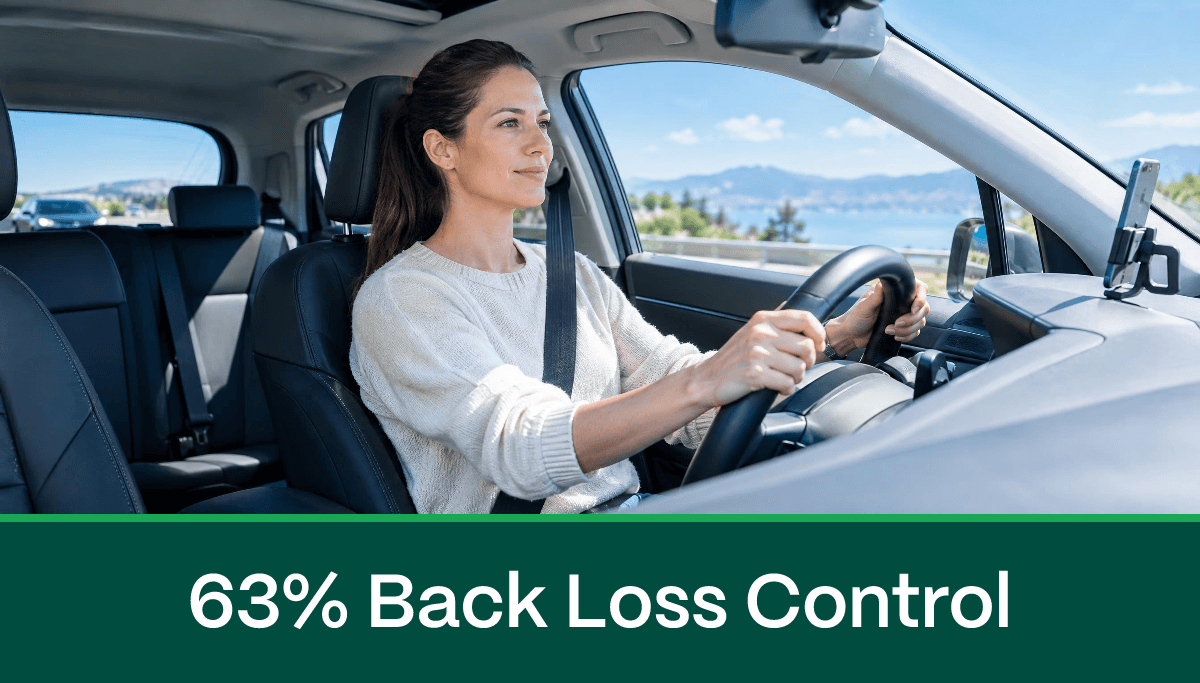
The 2026 SambaSafety Telematics Report places a single statistic at the center of everything: 63% of commercial auto insurers now cite loss control as their primary telematics application, according to Insurance Journal.
That figure matters because it represents a majority position, not a fringe trend.
"The value of telematics isn't the data itself. It's what you do with it. When insurers and brokers can turn risk insights into meaningful action, they move beyond simply pricing risk and become partners in helping clients reduce it.", William J. Hold, CRM, CISR, President and CEO of the Risk & Insurance Education Alliance
Claims applications and risk segmentation remain important functions within the telematics toolkit. But their secondary status in the survey results reveals something significant: insurers are increasingly interested in what happens before a claim occurs.
This is the competitive logic driving the shift. Pricing a risk accurately after losses accumulate is a reactive strategy. Reducing the frequency of those losses in the first place changes the economics of a commercial auto book entirely.
"When insurers and brokers can turn risk insights into meaningful action, they move beyond simply pricing risk and become partners in helping clients reduce it.", William J. Hold, CRM, CISR, President and CEO, Risk & Insurance Education Alliance
For fleet managers in high-cost commercial auto states, including those in Louisiana, where commercial and personal auto rates alike reflect elevated loss severity and in Texas, where large fleets face some of the nation's most significant exposure, this shift from reactive to proactive telematics use represents meaningful relief potential.
The Distracted Driving Crisis Fueling the Shift
The numbers behind industry anxiety are not abstract.
A striking 82% of commercial auto insurers identified distracted driving as a direct threat to profitability, according to the SambaSafety 2026 Telematics Report. That is not a narrow majority. It is near-consensus among the people writing commercial auto policies.
Distracted driving contributes to loss severity in ways that pricing adjustments cannot easily offset. When a loss occurs because a driver looked away at the wrong moment, no amount of actuarial sophistication after the fact changes the outcome.
This is exactly why loss control has taken center stage. Telematics provides a window into driver behavior that may contribute to future losses. If that behavioral data can be translated into targeted driver training or other interventions before a crash occurs, the industry's distracted driving problem becomes a solvable operational challenge rather than a permanent line item on the loss run.
The pressure on commercial auto lines explains why telematics is evolving beyond the single-use pricing investment it was originally designed to be. The same data infrastructure built to support underwriting now supports something more valuable: pre-loss engagement.
Fleets Have the Data. Using It Is the Problem.
Here is where the story gets complicated.
| Fleets using telematics across most operations | 90% |
| Fleets that struggle to interpret or act on telematics data | More than half |
The gap between those two figures is the central operational problem facing commercial auto risk management today. Adoption is effectively universal among the fleets surveyed. Understanding is not.
More than half of the 740 surveyed fleets report that interpreting or acting on telematics data remains a meaningful challenge. This barrier extends beyond the fleets themselves. Insurers that can access telematics data are not automatically equipped to use it in ways that improve loss performance.
Access alone does not move the needle. The value emerges specifically when risk signals are translated into actionable recommendations, interventions like driver training programs tied directly to behavioral patterns identified in the data.
The bottleneck, in other words, is not collection. It is interpretation and action. Fleets are generating enormous volumes of telematics data. The question is who is equipped to convert that raw signal into a loss reduction outcome.
The Save Max Quote Index, drawn from 3.3 million+ real quote requests, consistently shows that commercial auto insurance shoppers cite cost as their primary concern, but the SMQI also reflects that buyers increasingly ask questions about value-added services, including risk management support, suggesting that the industry's insight gap is becoming visible to the buyers themselves.
How Insurers and Brokers Are Bridging the Insight Gap
The SambaSafety report signals that the industry is already moving toward a solution, with brokers increasingly recognized as strategic risk partners rather than transactional intermediaries.
What does that look like in practice?
It looks like a broker who does not simply present a commercial auto policy renewal but brings a report on fleet telematics patterns and recommends a targeted driver coaching program for the top 10% of highest-risk drivers. It looks like an insurer whose loss control team engages proactively with a fleet's safety director, translating raw telematics signals into a 90-day risk reduction plan.
This is a meaningful shift in the insurer-insured relationship. The traditional model positioned the insurer as a financial backstop: collect premiums, pay claims. The emerging model positions the insurer as an active participant in preventing those claims from occurring.
For fleet operators in states with elevated commercial auto costs, like those managing operations across Florida's high-density corridors or through Illinois' commercial freight corridors, an insurer or broker who can deliver this kind of proactive engagement is offering something meaningfully different from a carrier who simply re-prices at renewal.
The gap in data interpretation is a service opportunity. Insurers and brokers who build the internal capability to close that gap will not simply retain clients. They will help those clients become measurably safer.
What this means for you
If you manage a commercial fleet, ask your broker directly whether your telematics data is being used for loss control, not just pricing. Push your insurer to translate your behavioral data into a driver training or intervention program tied to your actual risk signals. Review whether your current carrier treats telematics as a pricing input or as a tool for pre-loss engagement, and use that answer to benchmark whether your risk partner is offering competitive value. If you are shopping coverage, ask prospective brokers how they use telematics insights to reduce losses for their commercial clients, not just to quote them, and compare those answers alongside Ohio's commercial auto market or Michigan's unique fleet insurance environment as regional context.
FAQ
What is commercial auto telematics loss control?
Commercial auto telematics loss control refers to using telematics data, information collected from GPS and vehicle monitoring systems, to proactively reduce the risk of accidents and claims rather than simply using that data to price insurance policies. According to SambaSafety's 2026 Telematics Report, this application is now cited by 63% of commercial auto insurers as their primary telematics use case.
Why has loss control surpassed claims and pricing as the top telematics use?
The shift reflects mounting pressure from elevated loss severity and the distracted driving crisis, with 82% of commercial auto insurers identifying distracted driving as a profitability threat. Because pricing cannot fully offset the cost of preventable accidents, insurers are increasingly interested in intervening before losses occur rather than simply reflecting them in premiums at renewal.
My fleet already uses telematics. Why aren't we seeing loss improvements?
Having access to telematics data is not the same as using it effectively. The 2026 SambaSafety Telematics Report found that more than half of surveyed fleets struggle to interpret or act on their telematics data. The key step is working with an insurer or broker capable of translating raw behavioral signals into specific interventions like targeted driver training programs.
How can I tell if my broker is acting as a strategic risk partner?
Ask directly whether your telematics data informs any loss control recommendations, not just your renewal premium. A broker functioning as a strategic risk partner, as the SambaSafety report describes, will bring proactive analysis of your fleet's behavioral data and connect you with driver improvement resources, not simply present a new rate.
Is distracted driving really that serious a threat to commercial auto profitability?
According to the SambaSafety 2026 Telematics Report, 82% of commercial auto insurers identified distracted driving as a threat to profitability, making it among the most widely cited concerns in the industry. The issue contributes directly to loss severity, which is why the pivot toward pre-loss telematics intervention is accelerating.
About Brooke Grissom
Brooke Grissom is an Independent Insurance Analyst at Save Max Auto, licensed in Property & Casualty and Health insurance. She covers data-driven market trends, cross-state premium comparisons, and carrier financial analysis. Read more from Brooke Grissom →
Edited by Kyle Greenwood.
Methodology
This article is grounded in the source linked above. Save Max Auto data points referenced here are drawn from the Save Max Quote Index (SMQI), a proprietary instrument reflecting 3,364,317 real consumer quote requests submitted to savemaxauto.com. State and carrier rankings reflect the lifetime dataset; year-over-year shifts reflect a rolling 12-month window. The index is refreshed monthly. External authority figures referenced (NAIC, NHTSA, state regulators) reflect the most recent public data releases available at time of writing.
Sources
- Primary source: Insurance Journal, "How Telematics Is Expanding the Role of Loss Control in Commercial Auto"