
Why Did My Car Insurance Go Up When National Rates Fell 5%
The Bureau of Labor Statistics reported a 5.0% decline in the government's measure of car insurance prices for the 12 months through September. Over that same period, vehicle maintenance and repair costs rose 5.8%.


Published: Oct 23, 2026
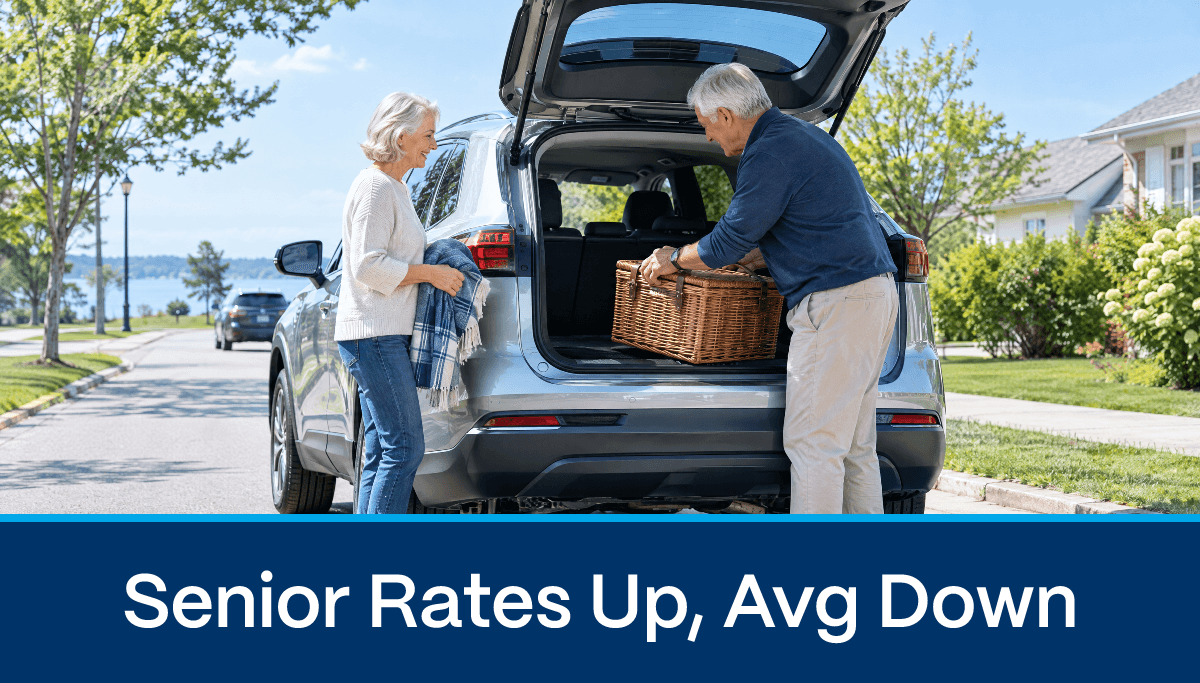
When National Averages Drop But Your Bill Climbs
The Bureau of Labor Statistics reported a 5.0% decline in the government's measure of car insurance prices for the 12 months through September. Over that same period, vehicle maintenance and repair costs rose 5.8%. Those two numbers moving in opposite directions tell you something important: the factors that shape your renewal premium are not the same ones that shape a headline index.
The National Association of Insurance Commissioners reminds consumers directly: "It pays to shop around before buying insurance, since prices can differ among companies." The NAIC also notes that factors such as the number of miles you drive can affect your premium, which means two neighbors with identical driving records can receive very different bills.
So if your renewal climbed while the national average fell, you are not imagining things, and you are far from alone.
How Age Factors Into Your Premium Calculation
Age is a legitimate actuarial input for insurers, but the data is more nuanced than a simple "older equals riskier" formula.
According to the Insurance Institute for Highway Safety, drivers 70 and older have higher fatal crash rates per mile traveled than middle-aged drivers. That statistic is the one insurers lean on when setting rates for older age bands.
Here is the counterweight, though. The same IIHS research shows that fatal crash involvement rates per licensed driver for people in their 70s actually dipped below those of drivers ages 35 to 54. Older drivers tend to self-regulate, driving fewer miles and avoiding high-risk conditions.
What that means practically: your insurer may price based on per-mile crash exposure rather than overall involvement rates. A clean record helps, but it is only one variable in a multi-factor equation that also includes your age bracket, your ZIP code, your coverage selections, and any discounts that may have quietly expired.
Other Hidden Triggers Behind a Higher Renewal
Age often gets the blame, but several non-age factors can push a renewal higher without any actuarial connection to your birthday.
Discounts that dropped off. Many carriers apply introductory or time-limited discounts that expire silently. If a loyalty or bundling discount quietly aged off your policy, your base rate did not change, but your bill did.
ZIP-code shifts. Even a move within the same metro area can recalibrate your territory rating. Florida drivers already navigate some of the country's highest geographic rate variation, and California drivers face their own regional pricing complexity.
Coverage creep. If your vehicle was financed or leased at some point, a lender may have required specific coverage levels. Those requirements sometimes outlast the loan itself if no one reviews the policy.
Stale mileage estimates. Retirement typically means no commute. If your insurer still has a pre-retirement mileage estimate on file, you may be paying for miles you no longer drive.
The first move, as Money Talks News recommends, is simply to call and ask: "What changed on this renewal?"
Senior Discount Programs State by State
State law shapes how much leverage an older driver has to reduce their premium through a safety course. The rules vary meaningfully.
| Florida | Principal operator 55 or older | State law requires insurers to provide "an appropriate reduction in premium charges" on certain coverages after completing an approved accident prevention course | 3 years |
| California | Drivers 55 and older | The DMV lists mature driver improvement courses designed for drivers 55 and older; discount is insurer-dependent | Varies by insurer |
| Other states | Rules vary | Call your insurer before enrolling to confirm eligibility and the discount amount | Varies by state |
"Some states, including Florida and California, encourage safety courses for older drivers." , Money Talks News
The Florida guarantee is particularly strong: the premium reduction is a legal requirement, not a carrier's optional courtesy. California's framework is real but less prescriptive, so the discount amount depends on your insurer. If your state is not Florida or California, call your insurer before you sign up for any course, because the course itself costs time and money, and you want to confirm the payoff first.
Five Moves That Can Lower the Bill Right Now
These are the five actions Money Talks News recommends, translated into what each one actually accomplishes.
- Call and ask what changed. Identify whether the increase came from your rate, your coverage, an expired discount, or a vehicle or ZIP-code factor. You cannot negotiate what you have not diagnosed.
- Compare quotes from several companies. The NAIC is explicit that prices differ among companies. Shopping takes minutes with modern comparison tools and costs nothing.
- Take a mature-driver course, then ask for the discount. In Florida the discount is mandated by state law and lasts three years. In other states, confirm the benefit before enrolling.
- Right-size coverage on an older car. The NAIC suggests raising deductibles on physical damage coverage or eliminating physical damage coverage on older vehicles where a lender does not require it. If your car is worth a few thousand dollars and you could handle replacing it, carrying full physical damage coverage may not pencil out.
- Report lower mileage. Retirement eliminates the commute. Make sure your insurer's mileage estimate reflects your actual driving, because mileage is an explicit premium factor.
"An hour of homework once a year is one of the easiest raises a retiree can give themselves." , Money Talks News
According to the SMQI, quote shoppers who return annually after a renewal increase consistently find competitive alternatives, even when their prior insurer's rate held firm.
What this means for you
Call your insurer this week and ask one direct question: what changed on this renewal? Then pull competing quotes, confirm whether a mature-driver course earns you a discount in your state, and verify that your mileage estimate reflects your actual post-retirement driving. Treat the annual renewal as a negotiation, not a fixed bill, because the Save Max Quote Index data shows that drivers who shop actively pay less than those who renew on autopilot.
Coverage You Should Never Cut to Save Money
There is a meaningful difference between trimming waste and creating risk.
Safe reductions include raising your deductible on physical damage coverage or dropping collision and comprehensive on an older vehicle you could afford to replace. If a car is worth a few thousand dollars and no lender requires full coverage, carrying it is optional.
What you should not cut is liability coverage. If you are retired, you likely have savings, a home, and other assets. Liability coverage is what stands between a serious at-fault accident and a judgment against those assets. Pennsylvania drivers and Texas drivers alike face minimum liability requirements that are often far below what a financially settled retiree actually needs.
Dropping liability limits to save a few dollars per month is the one trade-off that almost never makes sense, regardless of how clean your driving record is.
FAQ
Why did my car insurance go up when national rates fell?
National averages, including the Bureau of Labor Statistics figure showing a 5.0% decline through September, reflect a broad index that does not map to individual policies. Your premium is shaped by your specific age band, ZIP code, coverage selections, mileage estimate, and any discounts that may have expired. Any one of those factors can push your bill higher even in a year when the average falls.
At what age do car insurance rates start increasing again for older drivers?
The Insurance Institute for Highway Safety data that insurers reference focuses on drivers 70 and older, who show higher fatal crash rates per mile traveled than middle-aged drivers. Pricing adjustments tied to age typically begin to appear somewhere in the late-60s to early-70s range, though exact thresholds vary by carrier and state.
Does taking a defensive driving course actually lower my premium as a senior?
In Florida, state law requires insurers to provide a premium reduction on certain coverages when the principal operator is 55 or older and completes an approved accident prevention course, and that reduction lasts three years. California's DMV lists qualifying mature driver improvement courses for drivers 55 and older, but the discount amount is insurer-dependent. Always call your insurer before enrolling to confirm the benefit.
What coverage can I safely reduce to lower my premium?
The NAIC suggests raising deductibles on physical damage coverage or eliminating physical damage coverage on older vehicles when no lender requires it. What you should not reduce is liability coverage, particularly if you are retired with savings or other assets to protect.
How do I know if my mileage estimate is affecting my rate?
Ask your insurer what annual mileage figure is on your current policy. If retirement eliminated your commute and that estimate has not been updated, you may be rated for significantly more miles than you drive. Correcting the estimate is free and can lower your premium.
About Kyle Greenwood
Kyle Greenwood is a Writer and Researcher at Save Max Auto with a decade of consumer-content experience. He specializes in explainers, longer-form features, and Q&A guides on the topics auto drivers actually search for. Read more from Kyle Greenwood →
Edited by Cassidy Richey.
Methodology
This article is grounded in the source linked above. Save Max Auto data points referenced here are drawn from the Save Max Quote Index (SMQI), a proprietary instrument reflecting 3,364,317 real consumer quote requests submitted to savemaxauto.com. State and carrier rankings reflect the lifetime dataset; year-over-year shifts reflect a rolling 12-month window. The index is refreshed monthly. External authority figures referenced (NAIC, NHTSA, state regulators) reflect the most recent public data releases available at time of writing.
Sources
- Primary source: Money Talks News, "Car Insurance Rates Nationwide Fell, But Ours Went Up. Is It Because of Our Ages? A CPA Explains"
- Bureau of Labor Statistics, Consumer Price Index data cited in source
- Insurance Institute for Highway Safety, older driver crash rate data