
What Actually Controls Your Car Insurance Costs and Discounts
When White Plains insurance agent Mike O'Boyle breaks down what actually drives your premium, the answer isn't what most drivers expect. A new feature published on PR Newswire highlights a HelloNation article in which O'Boyle explains how insurers calculate car insurance costs and discounts for New York drivers.


Published: Nov 25, 2026
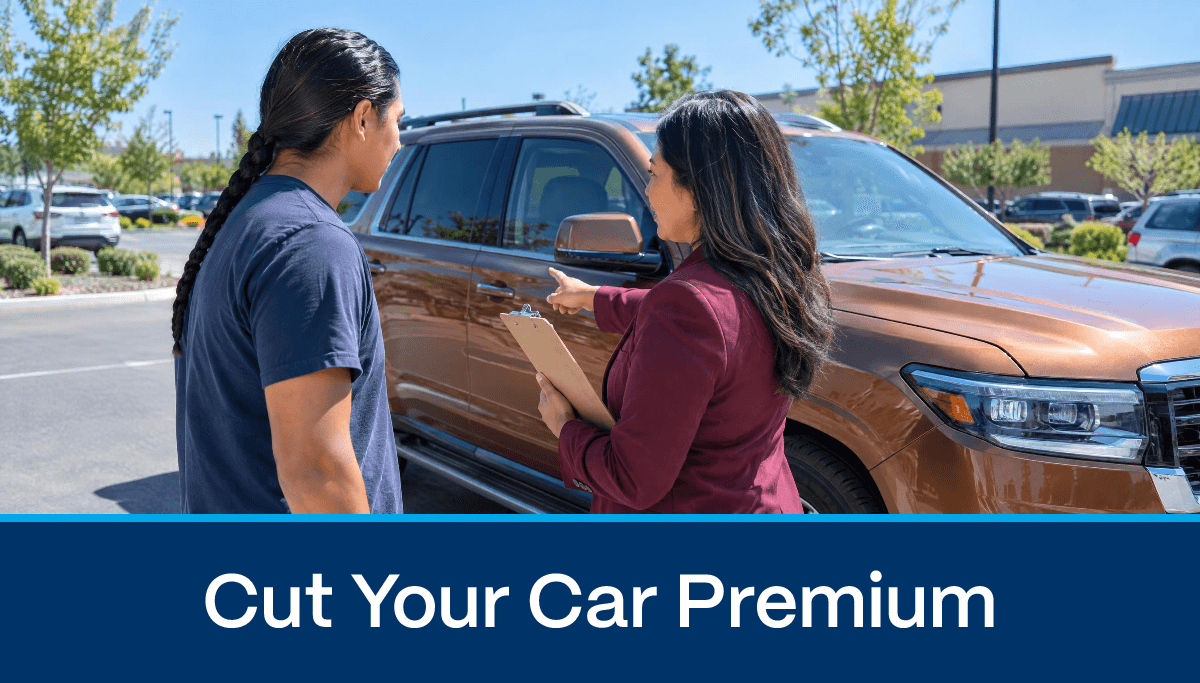
When White Plains insurance agent Mike O'Boyle breaks down what actually drives your premium, the answer isn't what most drivers expect.
A new feature published on PR Newswire highlights a HelloNation article in which O'Boyle explains how insurers calculate car insurance costs and discounts for New York drivers. The piece covers everything from driving records and vehicle type to ZIP code effects and actionable savings strategies. According to the SaveMaxAuto Quote Index, drawn from 3.3 million+ real quote requests, the factors O'Boyle describes align closely with the variables that move premiums most dramatically across the country. If you've ever wondered why your rate changed without warning, this Q&A guide has your answers.
Why Does Your Car Insurance Premium Keep Changing?
Picture a driver in White Plains, New York, opening a renewal notice and finding a higher rate despite a clean record. No accidents. No tickets. So what happened?
This is the scenario that PR Newswire coverage of the HelloNation article addresses directly. Insurance agent Mike O'Boyle explains that premiums are calculated using a combination of factors that assess your overall risk profile as a policyholder. That profile feeds directly into the number on your bill.
"Car insurance premiums are calculated using several key factors. Insurers evaluate elements such as a driver's record, the type of vehicle insured, the driver's location, annual mileage, and the coverage limits selected."
The critical insight here: some of those factors are within your control, and some are not. The ones you can't control, like where you live, can still be offset by the ones you can, like the discounts you claim.
Your premium isn't a fixed penalty. It's a moving calculation, and understanding its inputs is the first step toward influencing its output.
Which Factors Do Insurers Use to Calculate Your Rate?
Insurers don't guess. They score you against a set of well-established rating variables, each one representing a measurable slice of risk.
According to the HelloNation article featuring Mike O'Boyle, the primary factors include:
- Driving record: Accidents, traffic violations, and previous insurance claims can increase rates significantly. A clean record, maintained over time, typically earns lower premiums.
- Vehicle type and age: Cars with high repair costs or elevated theft rates cost more to insure. Luxury vehicles, sports cars, and models with complex electronic systems carry higher premiums. Older vehicles with lower replacement values may result in more affordable coverage.
- Annual mileage: More time on the road means a higher statistical chance of an accident. Higher mileage can translate directly into a higher rate.
- Coverage limits selected: The more financial protection you choose, the more you pay each month.
- Location: Where you live and park your car feeds into a localized risk assessment that varies by ZIP code.
Each variable adds or subtracts from your risk score. The final score becomes your premium. For New York drivers navigating one of the country's more expensive insurance markets, understanding this calculation is essential. You can explore how these factors play out specifically in our New York auto insurance guide.
How Do Location and ZIP Code Affect What You Pay?
Here's the uncomfortable truth: your address is a rating factor, and you cannot negotiate it.
Insurance companies analyze local traffic patterns, accident statistics, and crime rates when calculating premiums for specific ZIP codes. The HelloNation article uses a concrete example to illustrate this point. Communities such as White Plains and other parts of Westchester County may experience higher premiums compared with rural locations because of denser traffic and more frequent claims.
That means two drivers with identical records and identical vehicles can pay meaningfully different rates simply because of where they live.
This isn't arbitrary. Insurers are pricing the statistical reality of your environment. Denser traffic means more accidents. Higher crime rates mean more theft claims. Both push premiums upward.
Drivers in neighboring states with different traffic profiles often see dramatically different rates. For context, New Jersey auto insurance and Connecticut auto insurance markets face similar urban-density pressures that affect premiums in ways rural drivers rarely encounter.
If you live in a high-rate ZIP code, you can't move your address on your policy. But you can focus energy on every factor you do control.
Deductibles vs. Coverage Limits: What Is the Real Trade-Off?
This is where most drivers make expensive mistakes. They confuse two distinct levers, deductibles and coverage limits, and adjust the wrong one.
The table below shows how each lever works and what it costs you:
| Raise your deductible | Decreases your premium | Increases what you pay after a claim |
| Lower your deductible | Increases your premium | Decreases what you pay after a claim |
| Raise your liability limit | Increases your premium | Decreases your financial exposure in a serious accident |
| Lower your liability limit | Decreases your premium | Increases your financial exposure in a serious accident |
The HelloNation article explains the deductible trade-off clearly: selecting a higher deductible can lower a driver's premium because the policyholder agrees to pay more out of pocket before coverage applies.
"Insurance Agents often advise drivers to evaluate their financial comfort with different deductible levels before selecting a policy. Balancing deductibles with appropriate coverage limits helps ensure both affordability and protection."
The key question is: how much can you realistically afford to pay out of pocket if something goes wrong tomorrow? Set your deductible at a number that answers that question honestly, then work your coverage limits around it.
Cutting liability limits to save a few dollars per month can expose you to tens of thousands in financial liability after a serious incident. That trade-off rarely makes sense.
Which Discounts Can Actually Lower Your Bill?
This is where car insurance costs and discounts meet in a way that actually puts money back in your pocket.
The HelloNation article notes that many insurers offer savings across four primary categories:
- Policy bundling: Combining your auto policy with home or renters insurance can generate meaningful savings.
- Clean driving record rewards: Maintaining a record free of accidents and violations earns lower rates over time. Some insurers formalize this through accident forgiveness programs.
- Defensive driving courses: Completing a qualifying course can unlock a discount with many carriers.
- Anti-theft devices: Installing approved devices in your vehicle reduces the insurer's theft risk and can lower your premium accordingly.
The article makes an important point about the strategic value of discounts: they can sometimes offset factors that drivers cannot control, such as location or vehicle type. If you live in a high-traffic area like Westchester County, stacking multiple discounts becomes your most effective tool for managing costs.
The SMQI consistently shows that drivers who actively apply discount combinations pay less than those who accept the default rate offered at initial quote. Reviewing your discount eligibility at every renewal is one of the highest-return actions you can take.
What this means for you
Review your current policy today and ask your insurer to list every discount you currently receive, then ask which ones you don't qualify for yet and what it would take to earn them. Adjust your deductible to a level that reflects your actual emergency savings, not an arbitrary round number. If you're in a high-traffic area like White Plains or Westchester County, focus on the controllable variables: a clean record, bundled policies, and anti-theft devices can collectively push your premium lower even when geography works against you.
FAQ
How much can a traffic violation raise my car insurance premium?
The HelloNation article notes that accidents, traffic violations, and previous insurance claims can increase rates significantly, though it does not specify an exact percentage. The impact varies by insurer and by the severity of the violation. Maintaining a clean record over time is the most reliable way to bring rates back down.
Does the type of car I drive really affect my insurance rate?
Yes, substantially. Luxury vehicles, sports cars, and models with complex electronic systems tend to carry higher premiums because repair costs and replacement values are higher. Older vehicles with lower replacement values may result in more affordable coverage, according to the HelloNation article featuring Mike O'Boyle.
What is accident forgiveness, and how does it help?
Accident forgiveness is a program offered by many insurers that prevents your premium from increasing after your first at-fault accident. The HelloNation article identifies it as one of the ways insurers reward safe drivers. It is often available as either a built-in benefit for long-term policyholders or as an optional add-on.
Can bundling policies really lower my car insurance bill?
Yes. Bundling, combining your auto policy with home, renters, or other coverage under one insurer, is listed in the HelloNation article as one of the primary discount categories available to drivers. It reduces administrative costs for the insurer, and those savings are typically passed on to the policyholder.
Why do drivers in the same city pay different rates?
Insurers calculate premiums at the ZIP code level, analyzing local traffic patterns, accident statistics, and crime rates. The HelloNation article explains that even within a single region like Westchester County, rates can vary based on the specific density and claims history of a given ZIP code.
Key Terms Every Driver Should Know
Understanding the vocabulary of insurance lets you shop confidently instead of accepting whatever rate you're handed.
- Premium: The amount you pay, typically monthly or semi-annually, to maintain your insurance coverage.
- Deductible: The amount you agree to pay out of pocket before your insurer covers the remainder of a claim. Higher deductibles mean lower premiums and more personal financial exposure.
- Liability limit: The maximum dollar amount your policy will pay to cover damages or injuries you cause to others. Higher limits cost more but provide significantly greater protection.
- Accident forgiveness: A program, available through many insurers, that prevents your first at-fault accident from raising your premium. It rewards consistent safe driving behavior.
- Coverage limit: The ceiling on what your insurer will pay for a covered loss. Choosing appropriate limits is a balance between monthly cost and financial protection.
About Cassidy Richey
Cassidy Richey is a Content Writer at SaveMaxAuto with a research background in behavioral psychology. She focuses on the consumer side of insurance shopping, fraud and protection coverage, and Q&A guides. Read more from Cassidy Richey →
Edited by Kyle Greenwood.
Methodology
This article is grounded in the source linked above. SaveMaxAuto data points referenced here are drawn from the SaveMaxAuto Quote Index (SMQI), a proprietary instrument reflecting 3,364,317 real consumer quote requests submitted to savemaxauto.com. State and carrier rankings reflect the lifetime dataset; year-over-year shifts reflect a rolling 12-month window. The index is refreshed monthly. External authority figures referenced (NAIC, NHTSA, state regulators) reflect the most recent public data releases available at time of writing.
Sources
- Primary source: PR Newswire, "Car Insurance Costs and Discounts Explained in HelloNation Featuring Insurance Agent Mike O'Boyle"