
Amarillo Drivers Can Cut Car Insurance Costs Without Losing Hail Protection
While most cost-cutting guides tell you to slash coverage first and ask questions later, Amarillo drivers face a very different calculus, one where a single June hailstorm once caused an estimated $100 million in damage in a single evening.


Published: Sep 22, 2026
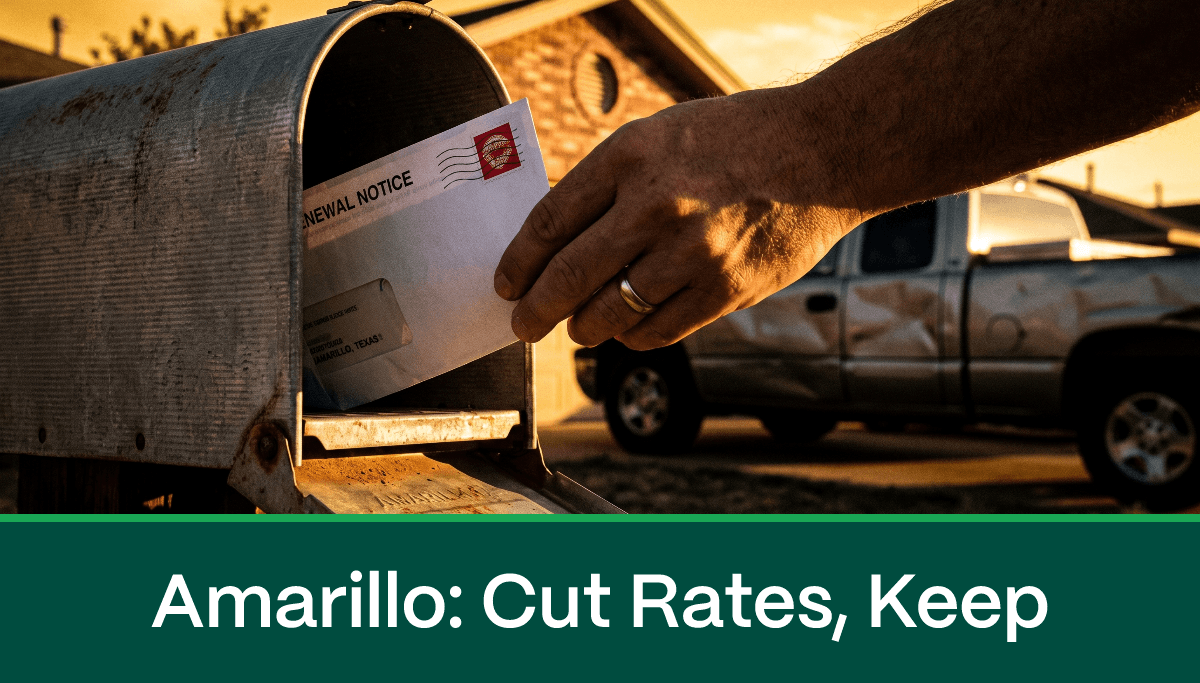
While most cost-cutting guides tell you to slash coverage first and ask questions later, Amarillo drivers face a very different calculus, one where a single June hailstorm once caused an estimated $100 million in damage in a single evening.
That number reframes the entire conversation. Tycoonstory Media recently published a detailed breakdown of how Panhandle drivers can reduce car insurance costs Amarillo without stripping away the coverage that actually matches local risk. The core finding, confirmed by the Save Max Quote Index drawn from 3.3 million+ real quote requests, is that the order in which you make cuts matters as much as the cuts themselves. Tycoonstory Media frames it plainly: there is a real difference between cutting cost and cutting coverage you actually need.
Why Amarillo Drivers Face a Unique Cost-vs-Coverage Dilemma
Amarillo sits in a severe weather corridor that does not behave like the rest of Texas. Hail is a recurring threat. Dust storms strong enough to trigger highway advisories are not rare. Farm-to-market roads outside town bring their own hazard: livestock on the roadway, which no traffic app will warn you about in time.
Standard cost-cutting advice is usually written for urban Texas drivers worried about fender-benders and parking-lot dings. Apply that advice wholesale in the Panhandle and you may find yourself holding a $1,200 bodywork bill on a vehicle that was hit by hail you cannot file a claim for because you dropped the one coverage that would have paid it.
The weather risk here is also not distributed evenly across coverage types. Hail damage, dust-storm debris, and wandering livestock are all comprehensive claims, not liability claims. That distinction shapes every savings decision a local driver should make.
For context on how neighboring states structure their minimum requirements and risk profiles, Oklahoma auto insurance rules offer a useful point of comparison, given that Panhandle drivers frequently cross that border.
What Texas Law Actually Requires, and Where the Gaps Are
Texas sets its liability floor at 30/60/25 under Tex. Transp. Code §601.072. That means $30,000 per person and $60,000 per accident for bodily injury, plus $25,000 for property damage. Every insured driver in Amarillo must carry at least that much.
The problem is what those numbers actually buy in a real crash. A single emergency room visit after an at-fault accident can approach $30,000 before ongoing treatment even begins. That exhausts your per-person bodily injury limit before physical therapy, specialist visits, or follow-up surgery enters the picture.
The property damage gap is equally exposed. A lot of trucks and SUVs on Amarillo roads are worth more than the $25,000 property damage cap. Hit one of those vehicles at fault and anything above your limit comes out of your own pocket.
Dropping to the bare legal minimum saves money on paper. It also means you are personally responsible for any judgment above those limits in a serious crash. That is not a theoretical risk in a city where oversized pickups and commercial vehicles share every major road.
"Dropping to bare minimum liability saves money on paper. It also means you're personally on the hook for anything above those limits if you cause a serious crash."
New Mexico auto insurance carries a similarly modest liability floor, and drivers just across the state line face the same exposure gap when they travel into Potter or Randall County.
The Safest First Cut: Shopping Competing Quotes at Identical Coverage
Before you change a single coverage level, get quotes from multiple insurers using your exact current limits. Same driver, same vehicle, same liability numbers, same comprehensive and collision deductibles. Do not adjust anything yet.
Why does this matter? Each insurer weights Texas's broad range of allowed rating factors differently. Credit history, occupation, marital status, and driving record can all legally influence your rate in Texas, and two companies can look at an identical applicant and price them hundreds of dollars apart annually.
This is the lowest-risk savings move available because you are not giving anything up. You are simply finding out whether your current insurer is actually competitive for your specific profile before you start trading away protection.
The SMQI consistently shows meaningful rate dispersion for the same driver profile across competing carriers in Texas markets. That spread represents real money recoverable without any coverage change at all.
"Comparing cheap car insurance quotes in Amarillo, Texas against your current policy, using the same liability and comprehensive limits across every quote, tells you whether you're overpaying before you touch anything else."
Start here. Every other decision on this list comes after you know whether a quote comparison alone closes the gap.
Hail, Dust, and the Case for Keeping Comprehensive
The June 2004 hailstorm in Amarillo caused an estimated $100 million in damage to homes, vehicles, and property in a single evening. That figure, cited by Tycoonstory Media, is not an outlier in the Panhandle's weather history, it is a benchmark.
Comprehensive coverage is not required by Texas law unless your car is financed or leased. That optional status makes it an easy target when your renewal notice looks too high. But dropping it means hail damage, dust-storm debris impacts, and animal strikes are entirely your expense.
None of those events are liability claims. None of them trigger collision coverage either. Comprehensive is the only coverage that pays for them.
If you own your vehicle outright and feel pressure to cut costs, raise your comprehensive deductible rather than eliminating the coverage entirely. A higher deductible reduces your premium while keeping the protection in place for the large-loss events that define Amarillo's actual risk profile.
Drivers in Kansas, another hail-active corridor just north of the Panhandle, face nearly identical comprehensive coverage decisions for the same meteorological reasons.
Deductible Levels, Glass Endorsements, and Uninsured Motorist: A Local Cost-Benefit Breakdown
These three levers each involve a real tradeoff. Here is how they compare for an Amarillo driver:
| Raise deductible $500 to $1,000 | 10% to 15% reduction on comp/collision portion | You absorb first $1,000 of any comp or collision claim |
| Raise deductible to $1,500 | Higher reduction | Risk: $1,200 hail repair wipes out months of savings |
| Add glass endorsement ($20 to $50/year) | Small premium addition | Waives deductible entirely for windshield repair/replacement |
| Drop uninsured motorist coverage | Small premium reduction | You pay your own bills if an uninsured driver hits you |
| Keep UM/UIM at current limits | No reduction | Covered: roughly 1 in 7 Texas drivers is uninsured per Insurance Research Council estimates |
The math on deductibles is straightforward: moving from $500 to $1,000 typically cuts the comprehensive and collision portion of your premium by 10% to 15%. That savings only works in your favor if you have the deductible amount sitting in accessible savings when you need it.
A reasonable middle ground for most Amarillo drivers is a $500 to $750 deductible, enough to lower the premium without leaving you unable to pay after a storm.
The glass endorsement, at $20 to $50 per year, waives your deductible specifically for windshield repairs and replacement. Texas has no law requiring free windshield replacement, so without this endorsement, a cracked windshield is billed against your regular comprehensive deductible. Given how often hail and highway debris damage windshields in this part of the state, this add-on tends to pay for itself quickly.
Uninsured motorist coverage is the cut that looks cheap but carries real consequences. Texas insurers must offer it, but you can decline it in writing. With roughly one in seven Texas drivers uninsured, skipping this coverage means you absorb your own medical bills and repair costs when an uninsured driver hits you and it is their fault.
Five Low-Risk Ways to Trim Your Premium Without Touching Coverage
These adjustments lower your bill without changing what your policy actually covers:
- Update your annual mileage if it has dropped. If you are driving less than before, working from home more, or running fewer errands, your insurer may not know unless you report the change. Lower mileage can mean a lower rate.
- Bundle with renters or homeowners insurance. Many insurers discount auto coverage when paired with another policy. Your actual protection does not change.
- Enroll in a telematics or usage-based program. If you drive carefully and infrequently, a program that tracks real behavior can price you on how you actually drive rather than broader risk assumptions.
- Check your credit report for errors. Texas allows insurers to use credit-based scoring. A corrected reporting error can lower your premium without any change to your driving record or coverage levels.
- Ask about a defensive driving course discount. Texas insurers commonly offer a discount for completing an approved course. It is one of the few savings levers you fully control.
None of these require you to reduce limits, raise deductibles beyond a reasonable level, or drop any coverage category.
What this means for you
Start by pulling competing quotes at your exact current coverage levels using the Texas auto insurance market as your benchmark, and do not change a single limit until you know whether a carrier switch alone closes the gap. If quotes confirm your current insurer is competitive, move to a moderate deductible increase in the $500 to $750 range as your second step, then add a glass endorsement for $20 to $50 per year before considering any other adjustment. Keep comprehensive and uninsured motorist coverage in place: in a city where a single hailstorm can generate $100 million in vehicle damage and one in seven fellow drivers is uninsured, those are the two lines of your policy doing the most real work.
FAQ
How much does car insurance typically cost in Amarillo, Texas?
The source does not cite a specific average premium figure for Amarillo. Rates vary based on insurer, driver profile, credit history, and coverage levels. The most reliable way to establish your baseline is to compare quotes from multiple carriers at identical coverage limits before making any changes.
Is comprehensive coverage required in Texas?
Comprehensive coverage is not required by Texas law unless your vehicle is financed or leased, in which case your lender typically mandates it. However, given Amarillo's documented hail history and dust-storm frequency, dropping comprehensive on an owned vehicle carries significant out-of-pocket risk specific to this region.
What is the minimum car insurance required in Texas?
Texas requires 30/60/25 liability coverage under Tex. Transp. Code §601.072: $30,000 per person and $60,000 per accident for bodily injury, and $25,000 for property damage. This is a legal floor, not a recommended coverage level, especially for drivers in markets where trucks and SUVs routinely exceed the property damage cap in value.
Should I drop uninsured motorist coverage to save money in Amarillo?
The Insurance Research Council estimates roughly one in seven Texas drivers is uninsured. Dropping uninsured motorist coverage means you personally absorb medical and repair costs when an uninsured at-fault driver hits you. The premium savings are typically small relative to that exposure.
What is the safest way to lower my Amarillo car insurance premium?
Compare quotes from multiple insurers at your exact current coverage levels before changing anything. Rate variation between carriers can be meaningful for identical coverage, and this approach carries zero coverage risk. A moderate deductible increase and a glass endorsement are the next safest steps after confirming your carrier is not competitive.
About Taleah McGuire
Taleah McGuire is a Regional Analyst at Save Max Auto with 11+ years of insurance experience including senior roles at Kentucky Farm Bureau. She covers regulatory news, state-specific reform legislation, and traditional carrier coverage. Read more from Taleah McGuire →
Edited by Aaren Ramon.
Methodology
This article is grounded in the source linked above. Save Max Auto data points referenced here are drawn from the Save Max Quote Index (SMQI), a proprietary instrument reflecting 3,364,317 real consumer quote requests submitted to savemaxauto.com. State and carrier rankings reflect the lifetime dataset; year-over-year shifts reflect a rolling 12-month window. The index is refreshed monthly. External authority figures referenced (NAIC, NHTSA, state regulators) reflect the most recent public data releases available at time of writing.
Sources
- Primary source: Tycoonstory Media, "Cutting Car Insurance Costs in Amarillo Without Going Underinsured"