
California Insurance Commissioner Election 2026: What Every Driver and Homeowner Needs to Know Before June 2
Could the outcome of a single statewide race reshape how millions of Californians buy, keep, and pay for insurance? According to LAist, the California insurance commissioner election is shaping up to be one of the most consequential races on the June 2 primary ballot.


Published: Aug 28, 2026
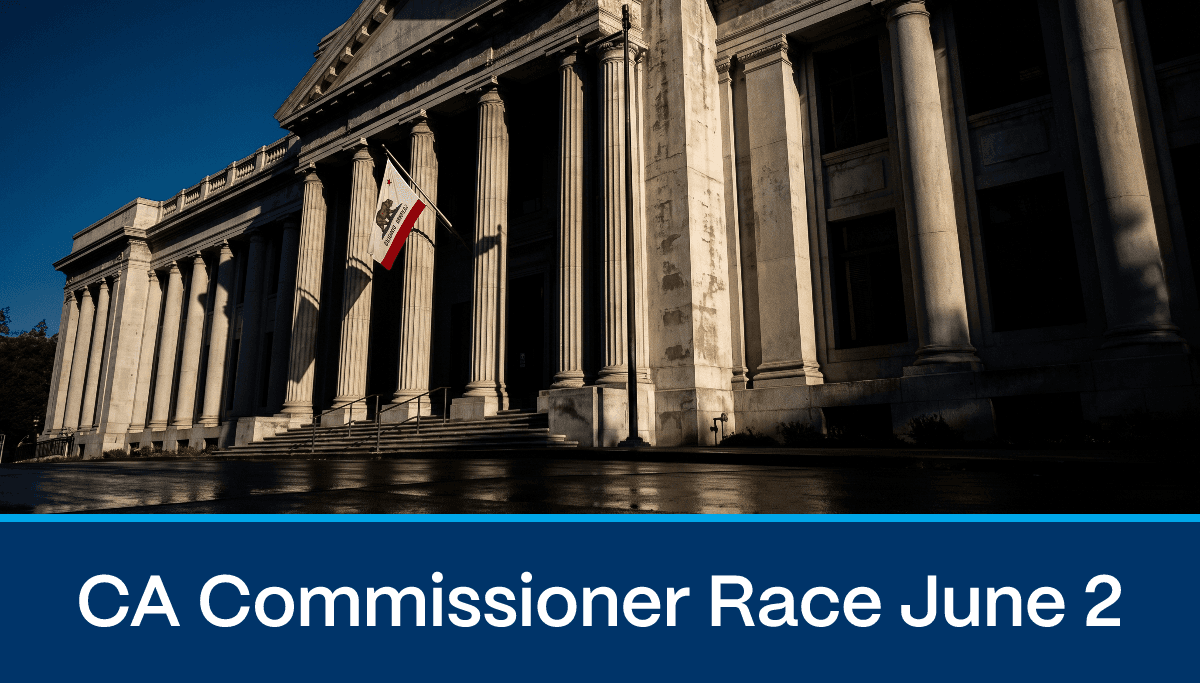
Could the outcome of a single statewide race reshape how millions of Californians buy, keep, and pay for insurance?
According to LAist, the California insurance commissioner election is shaping up to be one of the most consequential races on the June 2 primary ballot. The commissioner oversees the largest property and casualty insurance market in the nation, covering everything from homeowners policies to California auto insurance, and the market has been in serious distress for years. LAist reports that one former commissioner described the role as the "second-hardest job in the state behind the governor" given the current crisis.
Why California's insurance commissioner race matters more than ever
The California insurance commissioner election is not an obscure down-ballot contest. The person who wins this race holds regulatory authority over homeowners, auto, business, and rental insurance across the most populous state in the country.
That authority has never mattered more. Wildfire risk has grown dramatically, insurers have retreated from writing new policies, and the aftermath of devastating Los Angeles-area wildfires has left communities scrambling for coverage. Whoever steps into this office inherits a market under enormous strain.
The stakes extend well beyond property insurance. Auto insurance availability and pricing in California are also under the commissioner's jurisdiction. The Save Max Quote Index, drawn from 3.3 million+ real quote requests, consistently shows California among the states where consumers report the steepest rate increases and the most difficulty finding competitive quotes. The policy direction set by the next commissioner could directly influence what drivers pay at renewal.
The crisis driving the campaign: wildfires, pullbacks, and the FAIR Plan
California's insurance market did not arrive at this crisis overnight. Wildfire risk has expanded, and major insurers have responded by pulling back from writing policies in the state.
When private insurers exit or limit coverage, homeowners often turn to the FAIR Plan, California's insurer of last resort. That plan was designed as a temporary safety net, not a primary market. As more policyholders have been pushed onto it, the FAIR Plan itself has come under financial stress.
The availability of affordable insurance, as LAist notes, "affects homeowners, businesses, landlords and their renters, local communities and the state's economy." That is the backdrop every candidate is running against.
Candidate Merritt Farren has personal experience with the crisis. The Palisades fire destroyed his home, which led him to become involved in State Farm's rate proceedings before deciding to run for commissioner.
Where the leading candidates stand on homeowners and auto insurance
Seven major candidates have declared, spanning three parties. Here is where each stands on the core issues:
| Ben Allen | Democratic | Insurer transparency; consumer advocate appointment; ban on post-office industry employment |
| Steven Craig Bradford | Democratic | Public-private risk-sharing partnership; link insurance to land use; voluntary buyout program for high-risk areas |
| Merritt Farren | Republican | Create CAL Reinsure as a wildfire-risk backstop; eliminate the FAIR Plan |
| Robert Howell | Republican | Watchdog approach; tie homeowners insurance participation to broader market access; Insurance payers bill of rights |
| Jane Kim | Democratic | Natural Disaster Insurance for All; state-run fund for wildfire and flood; public option for auto insurance |
| Stacy A. Korsgaden | Republican | New insurance products; new business division in first 100 days; consumer advocacy hub; fraud crackdown |
| Patrick Wolff | Democratic | Insurer report card on claims handling; auto insurer behavior tracking for underwriting; public dashboard for life insurance |
Three additional candidates are also on the ballot: Eric Thor Aarnio (Republican, Contractor), Sean Lee (Republican, Financial Services Executive), and Eduardo "Lalo" Vargas (Peace and Freedom, Science Teacher).
The sharpest policy divides: public options, reinsurance backstops, and market exits
The most dramatic policy contrasts sit between three candidates whose proposals could not be more different in philosophy.
Jane Kim's proposal is the most sweeping. She would establish Natural Disaster Insurance for All, a state-run fund financed by a portion of policyholders' premiums. Customers would remain with their private insurers, but the state fund would guarantee coverage for wildfire and flood damage. On top of that, she would create a public option for auto insurance, a proposal with no parallel among the other candidates.
"Natural Disaster Insurance for All" would be funded by a portion of policyholders' premiums.
Merritt Farren takes a market-structuring approach. His CAL Reinsure proposal would create a wildfire-risk backstop funded by fees charged by insurers. His argument is direct: he says CAL Reinsure would eliminate the need for the FAIR Plan entirely.
Steven Craig Bradford lands in different territory. He would create a public-private partnership that shares risk with insurers specifically to keep them operating in California, paired with a voluntary buyout program to encourage residents to move away from high-risk areas.
These three proposals represent three entirely different theories of how the state should respond to market failure: a public guarantee fund, a reinsurance vehicle, or a risk-sharing partnership designed to retain private carriers.
Bradford would "link insurance to land use and planning" as part of his broader market-stability strategy.
How the primary works and what comes next
California uses a top-two primary system. On June 2, all registered voters regardless of party affiliation can vote for any candidate in the commissioner's race. The two candidates who receive the most votes advance to the November general election, even if both finishers belong to the same party.
That structure matters here. With seven major candidates and three additional names on the ballot, the vote could split in ways that produce unexpected top-two results. A Democrat and a Republican could advance, or two Democrats, or two Republicans, depending entirely on how the vote distributes.
The November general election would then be a head-to-head race between those two finishers, and the winner takes the commissioner's office.
What this means for you
If you are a California driver or homeowner, monitor this race closely because the next commissioner will directly shape premium rules, coverage mandates, and insurer behavior in the state. Compare your current auto rates now using the SMQI as a benchmark, and check whether your California auto insurance options have narrowed recently. If you live near a high-risk area, pay close attention to each candidate's FAIR Plan and wildfire coverage proposals, since the next commissioner could restructure or eliminate the program entirely. Register or confirm your registration before the deadline so your vote counts on June 2.
FAQ
Who is currently the California insurance commissioner?
The source references incumbent Commissioner Ricardo Lara, whom Robert Howell ran against in the 2022 general election. The 2026 race will determine who succeeds in leading the department going forward.
What does the California insurance commissioner actually regulate?
The commissioner regulates the largest property and casualty insurance market in the nation, which includes homeowners, auto, business, and rental insurance. The office sets rules on rates, coverage availability, and insurer conduct across the state.
What is the FAIR Plan and why does it keep coming up?
The FAIR Plan is California's insurer of last resort, designed to provide coverage when private insurers decline to write policies. As major carriers have pulled back due to wildfire risk, more homeowners have been pushed onto the FAIR Plan, creating financial stress on the program. Several candidates propose either replacing or restructuring it.
Could this election affect my auto insurance rates?
Yes. The commissioner has authority over auto insurance as well as homeowners policies. Jane Kim's proposal for a public auto insurance option and Patrick Wolff's idea to allow behavior-based underwriting are two examples of how the next commissioner's agenda could directly affect what drivers pay and how their rates are calculated.
When is the June 2 primary and how do I find my ballot?
The primary election is June 2, 2026. California offers online ballot lookup through the Secretary of State's website at sos.ca.gov, where you can also verify your registration status and find your polling location or vote-by-mail information.
About Taleah McGuire
Taleah McGuire is a Regional Analyst at Save Max Auto with 11+ years of insurance experience including senior roles at Kentucky Farm Bureau. She covers regulatory news, state-specific reform legislation, and traditional carrier coverage. Read more from Taleah McGuire →
Edited by Brooke Grissom.
Methodology
This article is grounded in the source linked above. Save Max Auto data points referenced here are drawn from the Save Max Quote Index (SMQI), a proprietary instrument reflecting 3,364,317 real consumer quote requests submitted to savemaxauto.com. State and carrier rankings reflect the lifetime dataset; year-over-year shifts reflect a rolling 12-month window. The index is refreshed monthly. External authority figures referenced (NAIC, NHTSA, state regulators) reflect the most recent public data releases available at time of writing.
Sources
- Primary source: LAist, "California Insurance Commissioner: Who's running in the June 2 primary and why it matters"