
Kansas Woman Pleads Guilty to Felony After Backdating Auto Insurance Claim
Jennifer Walker's plan seemed straightforward: get into a collision, purchase a new auto insurance policy, then simply claim the crash happened after coverage began. It did not work. MSC News reported that the 48-year-old Leavenworth County resident pleaded guilty on July 29 in Leavenworth County District Court to one felony count of attempted...


Published: Sep 29, 2026
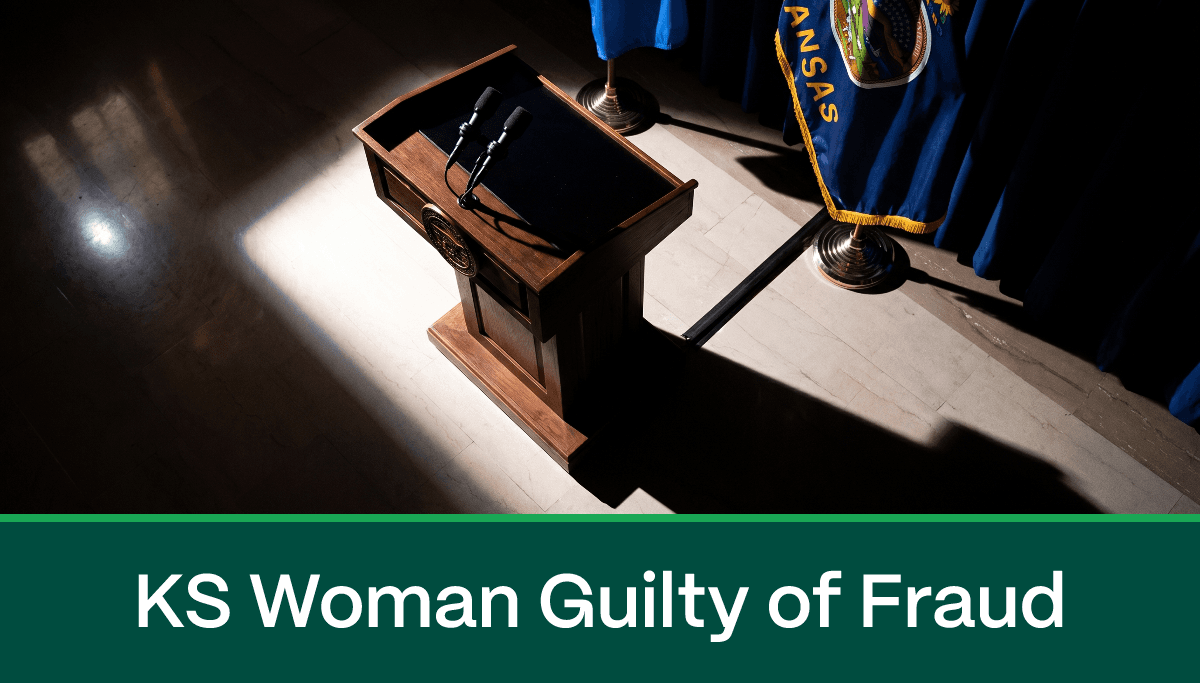
Jennifer Walker's plan seemed straightforward: get into a collision, purchase a new auto insurance policy, then simply claim the crash happened after coverage began. It did not work.
MSC News reported that the 48-year-old Leavenworth County resident pleaded guilty on July 29 in Leavenworth County District Court to one felony count of attempted auto insurance fraud. As MSC News detailed, Walker was sentenced on September 9 to 12 months of probation, but the conviction itself carries consequences that stretch far beyond her sentence. Here is exactly how the scheme worked, what investigators caught, and what it means for honest Kansas drivers paying their premiums every month.
A Kansas Woman's Scheme Unraveled, and Cost Her a Felony
Jennifer Walker did not walk into an insurance office and invent a fictional crash. She had a real collision. The problem was timing: the damage happened before she had any active policy in place.
Her solution was to buy coverage after the fact, then report a false date of loss, making it appear the collision occurred while the policy was already active. Investigators with the Kansas Department of Insurance uncovered the misrepresentation, and the Kansas Attorney General's Office prosecuted the case.
Walker pleaded guilty on July 29 in Leavenworth County District Court. The charge: one felony count of attempted insurance fraud. On September 9, a judge sentenced her to 12 months of probation.
The case closed quickly once investigators identified the date discrepancy. But Walker's story is not unique. It represents one of the most common forms of property and casualty fraud in the country, a tactic insurers and state regulators have a name for.
How 'Post-Collision Backdating' Fraud Actually Works
The mechanics are deceptively simple. A driver crashes their vehicle while uninsured, or while carrying a policy that does not cover the type of damage involved. Rather than absorbing the cost, they purchase a new policy and then submit a claim using a fabricated loss date that falls within the new coverage period.
Insurers call this "post-loss policy procurement" or post-collision backdating. The fraud hinges entirely on the insurer not knowing when the damage actually occurred.
It sounds plausible on the surface. Policies go into effect quickly, sometimes within hours of purchase. A damaged car sitting in a driveway does not automatically signal that the crash predated coverage. From the outside, the timeline can look clean.
What breaks the scheme open is the paper trail. Every collision generates data: police reports with timestamps, emergency dispatch logs, body shop intake records, vehicle telematics, and witness accounts. That information rarely aligns with a fabricated date, and investigators know exactly where to look.
What Investigators and Prosecutors Look For
The Kansas Department of Insurance's fraud investigation unit handled Walker's case before handing it to the Kansas Attorney General's Office for prosecution. That two-agency structure is deliberate and common across most states.
Insurance department investigators focus on the civil and regulatory side: pulling policy inception dates, cross-referencing claim submissions, and comparing loss dates against any available third-party records. When the numbers do not line up, they build a referral package for prosecution.
Prosecutors then pursue the criminal angle. In Kansas, that means charging under the state's insurance fraud statutes, which can elevate the offense to a felony depending on the dollar amount involved and the intent demonstrated.
Here is what investigators typically examine in a backdating case:
- Policy purchase timestamp relative to the reported loss date
- Body shop or repair facility intake records
- Law enforcement or accident report filings (if any exist)
- Vehicle telematics or GPS data from the car itself
- Social media posts, photos, or communications that establish a different timeline
- Prior claims history showing patterns of similar behavior
Any single one of these can unravel a false date of loss. Together, they make conviction straightforward.
The Real Price Tag: How Fraud Raises Premiums for Honest Drivers
Walker's probation sentence may seem light. The cost she and others like her impose on the market is not.
Kansas Insurance Commissioner Vicki Schmidt stated directly that "insurance fraud increases costs for Kansas families and businesses." That connection between individual fraud cases and broader premium pressure is real and measurable.
The Save Max Quote Index, drawn from 3.3 million+ real quote requests, consistently shows that drivers in states with higher fraud rates receive elevated base quotes even when their own driving records are clean. Fraud losses are priced into the risk pool, meaning honest policyholders subsidize dishonest ones through higher premiums.
The table below illustrates how fraud-related cost pressures compare across a sample of Midwestern states where the SMQI tracks quote activity:
| Kansas | Active, AG prosecutes felony cases | Moderate upward rate pressure |
| Missouri | Active, dedicated fraud unit | Moderate to high pressure |
| Nebraska | Active, insurance department referrals | Moderate pressure |
| Oklahoma | Active, multi-agency coordination | Moderate to high pressure |
Drivers shopping for Kansas auto insurance often ask why their rates vary significantly from one carrier to the next. A meaningful part of that variance reflects each insurer's internal fraud loss experience in a given zip code or region.
Neighboring states feel the same pressure. Missouri car insurance shoppers and Nebraska car insurance buyers face comparable dynamics, because fraudulent claims do not respect state lines when regional patterns develop.
Penalties on the Books: What a Fraud Conviction Can Mean
Walker received 12 months of probation. That outcome sits on the more lenient end of what Kansas law allows, and what other states impose.
"Insurance fraud increases costs for Kansas families and businesses and the department will continue holding offenders accountable.", Kansas Insurance Commissioner Vicki Schmidt, via MSC News
A felony conviction for attempted insurance fraud in Kansas carries consequences beyond the sentence itself. Consider what a conviction can trigger:
- Immediate cancellation of any active policies with the insurer involved
- Placement on insurance fraud databases shared among carriers, making future coverage harder and more expensive to obtain
- A felony record that affects employment, housing applications, and professional licensing
- Civil liability exposure if the insurer pursues recovery of investigation costs
- Ongoing probation compliance requirements, including potential monitoring
The guilty plea on July 29 and sentencing on September 9 moved through the Leavenworth County District Court system relatively quickly, a sign that the evidence was not in dispute.
Other states have pursued similar cases with steeper criminal penalties, including incarceration, depending on the claimed dollar amount and the defendant's prior record.
What this means for you
If you are filing any auto insurance claim, document the loss date accurately and completely, even a minor inaccuracy can trigger a fraud referral. Report suspected fraud through your state insurance department's tip line; the Kansas Department of Insurance actively investigates these referrals. Review your policy's effective date before submitting any claim to confirm coverage was in force at the time of the loss. If you are shopping for coverage, use a comparison tool to find accurate rates before a loss occurs, not after.
Kansas Insurance Department's Fraud Enforcement Outlook
Commissioner Schmidt's statement was not a one-case acknowledgment. It was a policy signal.
"The department will continue holding offenders accountable.", Kansas Insurance Commissioner Vicki Schmidt, via MSC News
That kind of public language from a state insurance commissioner typically precedes increased enforcement activity, more referrals to the Attorney General's Office, more public case disclosures, and tighter scrutiny of claims patterns that match known fraud typologies.
The Walker case also demonstrates the effectiveness of the two-agency model. The Kansas Department of Insurance identified the fraud. The Kansas Attorney General's Office prosecuted it to a felony conviction. That coordination reduces the evidentiary gaps that allow fraud cases to collapse before reaching a courtroom.
For honest Kansas drivers, increased enforcement is unambiguously good news. Every successful prosecution removes a cost-shifting fraudster from the risk pool, and over time, that kind of accountability creates modest downward pressure on premiums for everyone else.
The broader market signal: state insurance departments are not treating fraud as a low-priority regulatory footnote. They are building cases, partnering with prosecutors, and publicizing outcomes. Walker's case is one data point in what Commissioner Schmidt has made clear is an ongoing enforcement posture.
FAQ
What is post-collision backdating fraud?
Post-collision backdating fraud occurs when a driver purchases an auto insurance policy after a crash has already happened, then submits a claim using a false loss date to make it appear the damage occurred while coverage was active. It is one of the most common forms of auto insurance fraud and is detectable through timestamps, repair records, and law enforcement reports.
Can I accidentally commit insurance fraud by misremembering a date?
Intent matters in fraud prosecution. A genuinely mistaken date is different from a deliberately falsified one. However, any inaccuracy in a claim submission can trigger an investigation, so it is important to verify the exact date and circumstances of any loss before filing. If you realize you made an error, contact your insurer immediately to correct the record.
How does insurance fraud affect my premium if I have never committed it?
Fraud losses are distributed across an insurer's entire policyholder base through higher base rates. If the insurer pays out fraudulent claims in your region or state, those losses are factored into pricing for all customers in that risk pool, including drivers with clean records. This is precisely what Kansas Insurance Commissioner Vicki Schmidt referenced when she said fraud "increases costs for Kansas families and businesses."
What should I do if I suspect someone I know is committing auto insurance fraud?
Contact your state insurance department's fraud tip line. In Kansas, the Kansas Department of Insurance investigates fraud referrals and coordinates with the Attorney General's Office for prosecution. Most states offer anonymous reporting options. Reporting fraud helps protect honest policyholders from carrying the cost of other people's dishonesty.
Does a fraud conviction affect future insurability?
Yes. A fraud conviction typically results in immediate policy cancellation and placement on shared industry databases that flag individuals with fraud histories. Future coverage becomes significantly harder and more expensive to obtain. In some cases, carriers may decline to write a policy at all, leaving the convicted individual dependent on high-risk insurance markets.
About Aaren Ramon
Aaren Ramon is a Senior Analyst at Save Max Auto and owner of Elite Shield Agency. He covers carrier moves, regional insurance markets, and consumer-impact reporting from the agency-owner perspective. Read more from Aaren Ramon →
Edited by Taleah McGuire.
Methodology
This article is grounded in the source linked above. Save Max Auto data points referenced here are drawn from the Save Max Quote Index (SMQI), a proprietary instrument reflecting 3,364,317 real consumer quote requests submitted to savemaxauto.com. State and carrier rankings reflect the lifetime dataset; year-over-year shifts reflect a rolling 12-month window. The index is refreshed monthly. External authority figures referenced (NAIC, NHTSA, state regulators) reflect the most recent public data releases available at time of writing.
Sources
- Primary source: MSC News, "Leavenworth Co woman earns probation for insurance fraud conviction"