
Most-Advertised Auto Insurers Score Worst on Customer Satisfaction in 36-Brand Survey
State Farm holds 18.6% of the auto insurance market yet ranks only 19th out of 36 insurers in Consumer Reports' customer satisfaction survey, and that is actually the best result among the industry's most-advertised brands.


Published: Sep 29, 2026
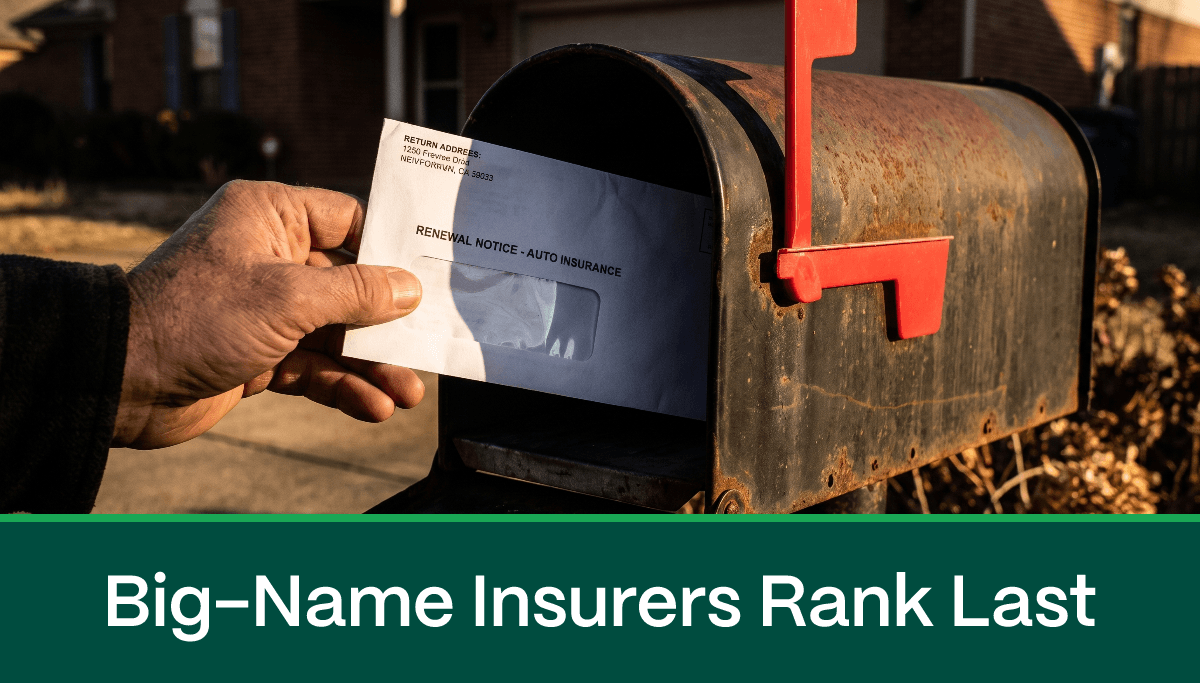
State Farm holds 18.6% of the auto insurance market yet ranks only 19th out of 36 insurers in Consumer Reports' customer satisfaction survey, and that is actually the best result among the industry's most-advertised brands.
The gap between advertising dominance and real-world satisfaction is wider than most drivers realize. MediaPost reported on Consumer Reports' annual auto issue findings, which drew on 50,129 survey responses from 40,566 U.S. adult insurance policyholders. The results reveal a striking pattern: the six carriers you recognize instantly from television, State Farm, Allstate, Geico, Progressive, Liberty Mutual, and Farmers, cluster near the bottom of the auto insurance customer satisfaction rankings. According to the Save Max Quote Index, drawn from 3.3 million+ real quote requests, shoppers consistently search for exactly these brand names first, which makes the satisfaction gap especially consequential for everyday consumers.
Famous Faces, Forgettable Service: The Ad-Satisfaction Gap
Here is the central irony of modern auto insurance marketing. The carriers who have spent the most building iconic characters, the Geico Gecko, Flo, Mayhem, Limu the Emu, are the same carriers whose policyholders report the lowest satisfaction with their actual experience.
This is not a fringe finding. It comes from one of the most trusted consumer advocacy organizations in the United States, and as MediaPost noted, the irony is pointed: humorous commercials have propelled these companies to the top of their industry, yet their customers are among the least satisfied.
The lesson is uncomfortable but simple. Name recognition and service quality are not the same thing.
How Consumer Reports Scored 36 Auto Insurers
Consumer Reports' methodology is rigorous enough to take seriously. The overall satisfaction score reflects responses from 50,129 surveys submitted by 40,566 U.S. adult insurance policyholders who answered questions about their current and previous auto insurance companies.
The scoring is not a single number pulled from one question. As CR explained, the Overall Satisfaction Score "reflects weighted ratings on multiple measures, including prices paid for premiums, claims settlements, breadth of coverage, the contract's policy, clarity, help and advice regarding policy choices, the thoroughness of information provided during policy review, and customer service that isn't related to claims."
That is a comprehensive look at the full customer lifecycle, from buying a policy to filing a claim to renewing coverage. With 36 insurers evaluated, there is plenty of room for meaningful separation between the best and worst performers. And the separation, it turns out, is dramatic.
Where the Big Six Brands Actually Landed in the Rankings
Walk through the rankings and the pattern becomes impossible to ignore.
State Farm, the nation's largest auto insurer by market share, came in 19th out of 36. That is middle of the pack, not a disaster, but not a recommendation either. Every other major advertiser fared worse.
Allstate, whose "Mayhem" character played by Dean Winters has become a pop culture fixture, ranked 26th. Geico, home of the famous Gecko, landed at 29th. Progressive, which runs two separate commercial series, one featuring "Flo" (played by Stephanie Courtney) and another featuring self-help counselor "Dr. Rick" (played by Bill Glass), ranked 30th.
Liberty Mutual, branded as "Limu" with the Limu Emu and Doug (David Hoffman), ranked 32nd out of 36. Farmers, famous for its "We are Farmers..." jingle, came in 34th, last among the major advertisers and dangerously close to the bottom of the entire 36-insurer list.
That is a lineup of household names stacked in the lower third of a consumer satisfaction survey. The entertainment value of their ads did not translate into satisfied policyholders.
Satisfaction Scores vs. Market Share: A Side-by-Side Look
The contrast between market dominance and customer satisfaction scores is where the data becomes most striking. Here is how the big carriers stack up across both dimensions:
| State Farm | 19th | 18.6% |
| Progressive | 30th | 18% |
| Geico | 29th | 11.56% |
| Allstate | 26th | 10.15% |
| USAA | 5th | 6.19% |
| Farmers | 34th | 3.57% |
| Liberty Mutual | 32nd | 2.81% |
The numbers tell a clear story. Four of the five largest auto insurers by market share rank in the bottom half of CR's satisfaction survey. USAA is the lone exception among the top seven, ranking 5th overall while holding 6.19% market share.
Worth noting: USAA's policies are available only to members of the military, veterans, and their families, which limits its market reach regardless of satisfaction performance. For everyone else, the dominant carriers by market share are largely the same ones that consumers rate poorly on service.
If you are shopping for Ohio car insurance or Pennsylvania car insurance, this table is a useful gut-check before defaulting to the carrier whose ads you see most often.
The Quiet Winners: Carriers With No Mascots, High Marks
None of Consumer Reports' top-rated insurers have a famous gecko or a jingle burned into your memory. That may not be a coincidence.
CR's top six recommended carriers are:
- Erie Insurance Group (ranked 1st)
- NJM Insurance Group (ranked 2nd)
- Amica Mutual Group (ranked 3rd)
- NYCM Insurance Group (ranked 4th)
- USAA (ranked 5th)
- The Cincinnati Insurance Companies (ranked 6th)
All six earned CR's coveted "recommended" designation. For context, CR's recommendation represents what the publication calls the holy grail for any product or company across all industries it covers.
What do these carriers share? They are not running two simultaneous commercial series. They are not building animated mascots. They are regional or membership-based carriers with reputations built largely on word of mouth and policyholder retention.
"Their commercials are entertaining, but the customer experience is not, according to CR's survey."
That quote, from the MediaPost report, captures the dynamic as efficiently as possible. If you are in New Jersey and NJM is available to you, or in New York where NYCM operates, the CR rankings suggest these lesser-known carriers deserve serious consideration.
Why Premiums Drew the Worst Ratings Across the Board
Price satisfaction is where every major insurer failed, without exception.
All of the big car insurers received the survey's worst ratings specifically on the subject of premiums. This is a signal worth paying attention to, because premium dissatisfaction does not occur in a vacuum. It tracks directly with the sustained rate increases consumers have absorbed in recent years.
Beyond price, the damage varied by carrier. Customer service drew negative ratings from four of the six major advertisers: Geico, Progressive, Liberty Mutual, and Farmers. Coverage quality fell short for Liberty Mutual and Farmers. Both of those carriers also received negative ratings for help and advice, and for thoroughness during policy review.
"All of the big car insurers got the survey's worst ratings on the subject of premiums."
That is a unanimous verdict on price from tens of thousands of policyholders. For drivers in high-rate states like Florida or Michigan, where premiums are already elevated, a carrier that rates poorly on price satisfaction is a compounding problem.
The SMQI consistently shows that premium cost is the primary driver of quote-shopping behavior, when policyholders feel their price is unfair, they start comparing. CR's data confirms they have good reason to.
What this means for you
Check the CR rankings before renewing with your current carrier, especially if it appears in the bottom half of the 36-insurer list. Use the Save Max Quote Index to compare real quotes against the carriers CR actually recommends, including regional options like Erie, Amica, and NJM that may be available in your state. If your current insurer scored poorly on premiums, claims, or customer service, treat renewal time as an active decision, not a default.
FAQ
Why do the most advertised auto insurers rank so low in customer satisfaction?
Consumer Reports' survey of 50,129 policyholders found that carriers like Farmers (34th), Liberty Mutual (32nd), and Progressive (30th) ranked near the bottom across multiple satisfaction measures. High advertising spend builds name recognition but does not guarantee quality claims handling, fair premiums, or responsive customer service.
Which auto insurers did Consumer Reports actually recommend?
CR's six recommended carriers were Erie Insurance Group, NJM Insurance Group, Amica Mutual Group, NYCM Insurance Group, USAA, and The Cincinnati Insurance Companies. USAA limits membership to military personnel, veterans, and their families, but the others may be available depending on your state.
Does market share tell you anything about insurance quality?
Not much, based on this data. State Farm holds 18.6% market share, the largest in the industry, yet ranks only 19th in CR satisfaction. Progressive holds 18% market share and ranks 30th. Market share reflects advertising effectiveness and distribution scale, not policyholder experience.
What satisfaction factors did Consumer Reports measure?
CR weighted responses across premiums, claims settlements, breadth of coverage, policy clarity, help and advice on policy choices, thoroughness during policy review, and non-claims customer service. All major advertised carriers scored worst specifically on premiums.
Should I switch insurers based on these rankings?
The CR rankings are a strong starting signal, but your personal rate and coverage needs matter too. Cross-reference satisfaction rankings with actual quotes from CR-recommended carriers in your area before making a switch.
About Kyle Greenwood
Kyle Greenwood is a Writer and Researcher at Save Max Auto with a decade of consumer-content experience. He specializes in explainers, longer-form features, and Q&A guides on the topics auto drivers actually search for. Read more from Kyle Greenwood →
Edited by Aaren Ramon.
Methodology
This article is grounded in the source linked above. Save Max Auto data points referenced here are drawn from the Save Max Quote Index (SMQI), a proprietary instrument reflecting 3,364,317 real consumer quote requests submitted to savemaxauto.com. State and carrier rankings reflect the lifetime dataset; year-over-year shifts reflect a rolling 12-month window. The index is refreshed monthly. External authority figures referenced (NAIC, NHTSA, state regulators) reflect the most recent public data releases available at time of writing.
Sources
- Primary source: MediaPost, "Known For Humorous Spots, Insurers Are Low-Rated By 'CR'"