
Allstate Drivewise Rewards Safe Drivers With Score-Based Premium Discounts
A thin blue bar pulses on the Allstate mobile app the moment you start your car, quietly logging speed, hard braking, and the time of day before you have even clicked your seatbelt open. That real-time tracking is the engine behind Allstate Drivewise, Allstate's telematics program that links auto insurance discounts to actual driving behavior...


Published: Jul 5, 2026
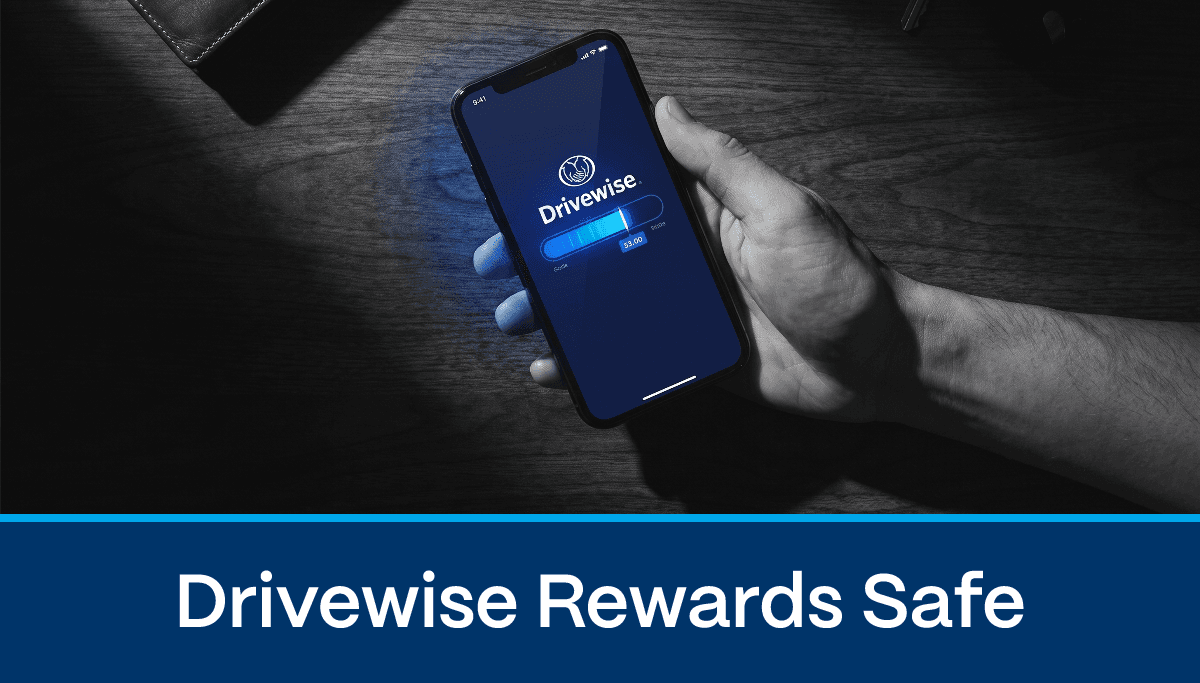
A thin blue bar pulses on the Allstate mobile app the moment you start your car, quietly logging speed, hard braking, and the time of day before you have even clicked your seatbelt open.
That real-time tracking is the engine behind Allstate Drivewise, Allstate's telematics program that links auto insurance discounts to actual driving behavior rather than traditional rating factors alone. According to a detailed program overview published by ad-hoc-news.de, Drivewise is available to eligible Allstate auto policyholders across many U.S. states, collecting trip-level data such as mileage, time of day, sudden stops, and speeds relative to posted limits. The Save Max Quote Index, drawn from 3.3 million+ real quote requests, consistently shows that drivers who actively manage their risk profile through programs like telematics can outperform peers who rely solely on passive rating factors. The ad-hoc-news.de overview makes clear this program has been running for several years, with ongoing updates to the app rather than a single recent launch date.
Here is exactly how the program works, what it pays out, and whether sharing your driving data is worth it.
How Allstate Drivewise tracks your driving in real time
Drivewise lives as a dedicated module inside the broader Allstate mobile app, the same app that handles digital ID cards, claims, and billing. Once you enroll and grant location permissions, the app uses your phone's GPS and motion sensors to detect automatically when a drive begins and ends. No plug-in OBD device is required.
Every trip generates a summary card. During a test drive through suburban Chicago documented in the source reporting, a bold trip card appeared before the driver's seatbelt clicked closed, showing total miles, trip duration, and an icon confirming no hard braking events. That kind of immediate, concrete feedback is central to what Drivewise is designed to do.
The data points collected on each trip include:
- Speed relative to posted limits
- Time of day (late-night driving is flagged as higher risk)
- Hard braking events
- Mileage driven per trip
Allstate then processes this trip-level data to calculate driving scores that feed into potential discounts and rewards. The scoring is ongoing, meaning your habits over many trips shape your standing, not just a single commute.
"Allstate then uses this data to calculate driving scores and potential discounts."
That quote from the source captures how the program converts raw sensor readings into a financial outcome. Importantly, the program can also use connected car data where available, not just smartphone GPS.
What discounts and rewards safe drivers can actually earn
Enrollment itself carries an immediate benefit. According to Allstate, customers who sign up for Drivewise may receive an initial participation discount on their auto premiums, separate from anything they earn through driving performance.
After that, ongoing savings are tied to demonstrated behavior. Safer habits earn higher rewards. The two driving patterns most clearly rewarded are avoiding late-night trips and minimizing hard braking events.
The app reinforces this feedback loop in near real time. Open it in the parking lot after your commute and you can see exactly how a sudden stop from last night affected your score. That running tally of potential cash back or premium credits turns the app into something closer to a fitness tracker for your driving.
"In practice, that means a commuter can open the app in the parking lot and see exactly how last night's sudden stop affected the score."
Drivers in states where performance-based pricing is permitted can earn both the participation discount and additional savings from their score. States with tighter telematics regulations may cap the benefit at participation-only discounts, a distinction covered in more detail below.
For Illinois drivers and others in markets where Allstate is actively competing on digital tools, this structure means the savings potential compounds over time as safe habits become consistent ones.
Drivewise vs. Snapshot vs. Drive Safe & Save: how the programs compare
Drivewise competes directly with usage-based programs from Progressive and State Farm. The source names all three programs explicitly. Here is how their core features stack up based on the sourced information:
| Tracking method | Smartphone app / connected car | App or OBD plug-in | App / connected car |
| Data collected | Speed, hard braking, time of day, mileage | Hard braking, speed, time of day, mileage | Speed, mileage, hard braking, acceleration |
| Participation discount | Yes, upfront on enrollment | Yes | Yes |
| Performance savings | Yes, score-based | Yes, score-based | Yes, score-based |
| Penalty risk midterm | No midterm rate increase for participation | Rates can increase at renewal | No midterm rate increase stated |
| Program history | Long-running, multi-year | Long-running | Available for several years |
| App integration | Full Allstate app module | Standalone + main app | State Farm main app |
The no-midterm-surcharge structure at Allstate is a meaningful consumer protection. Risky patterns detected by Drivewise can reduce your potential savings, but Allstate states that participation alone does not raise base rates midterm.
Texas drivers shopping across multiple carriers will find that program rules, especially around penalty exposure and data sharing, vary significantly from one insurer to the next.
Privacy, data retention, and what Allstate does with your information
Sharing driving data is the trade-off at the core of any telematics program. Allstate states that collected driving data is used primarily to evaluate driving behavior for potential rewards and discounts and to develop analytical models.
The company provides privacy disclosures explaining what is tracked, how long data is retained, and the conditions under which information may be shared. Those conditions include sharing with partners or regulatory agencies, which means your data is not siloed entirely within Allstate's systems.
Industry analysts at firms such as J.D. Power, cited in the source, note that telematics participation has increased significantly in recent years as smartphone adoption has become nearly universal. That growth has put data governance into sharper focus for regulators.
State insurance regulators have different rules about how telematics data can influence pricing. Some states prohibit certain uses of behavioral data entirely. Allstate's privacy disclosures are designed to reflect those varying legal requirements, but drivers should review the specific terms applicable in their state before enrolling. California drivers, for example, operate under a regulatory environment that places distinct limits on telematics-based pricing.
State availability and the rules that limit the program
Drivewise is not available in every U.S. state. The source is explicit on this point: program rules vary by location, and some states restrict how telematics data can be used for pricing purposes.
The practical result is a two-tier structure:
- Participation-only states: Drivers earn a discount simply for enrolling, but performance data may not be used to adjust pricing further.
- Participation plus performance states: Both the enrollment discount and ongoing score-based savings are available, giving safe drivers the most to gain.
Allstate also reinforces one key consumer protection: participation alone does not raise base rates midterm. Frequent speeding or extreme braking can reduce what you earn compared with a safer driver, but the program is structured around discounts and rewards rather than penalties applied during an active policy term.
Florida drivers and Georgia drivers shopping for usage-based programs should verify current state-specific rules directly with Allstate, since telematics regulations continue to evolve at the state level.
What this means for you
If you drive primarily during daylight hours, brake smoothly, and stay within posted speed limits, enroll in Drivewise now and let your habits do the work. Review your trip cards weekly to identify any patterns worth adjusting, particularly late-night driving and hard stops. Before enrolling, read Allstate's privacy disclosure for your state so you understand exactly how your data may be shared. Use the SMQI to benchmark competing telematics programs and make sure Drivewise is the right fit before you commit.
FAQ
Does Allstate Drivewise raise your rates if you drive poorly?
Allstate states that participation in Drivewise alone does not raise base rates midterm. Risky driving patterns, such as frequent speeding or extreme braking, can reduce the savings you earn compared with a safer driver, but the program is built around discounts and rewards rather than midterm surcharges.
Can you use Allstate Drivewise without a smartphone?
The source indicates Drivewise can operate through either the smartphone app or connected car data. Drivers whose vehicles support connected car integration may be able to participate without relying solely on a phone, though the app-based experience provides the most detailed trip feedback.
Is Drivewise available in every state?
No. The program is available in many U.S. states but not all, and rules vary significantly by location. Some states limit how telematics data can be used for pricing, which affects whether you can earn both participation and performance-based discounts or only the participation discount.
Who benefits most from enrolling in Drivewise?
Drivers who regularly travel during daylight hours, avoid hard braking, and drive relatively low annual mileage are positioned to earn the highest rewards. Commuters with predictable, cautious routines represent the program's ideal participant, since every trip generates a score that compounds over time.
How does Drivewise compare to Progressive Snapshot?
Both programs use app-based tracking and reward safe driving with discounts, but they differ on methodology and data collection tools. Progressive's Snapshot also offers an OBD plug-in option. Allstate's no-midterm-surcharge policy is a notable structural difference, since Snapshot scores can influence renewal rates.
About Aaren Ramon
Aaren Ramon is a Senior Analyst at Save Max Auto and owner of Elite Shield Agency. He covers carrier moves, regional insurance markets, and consumer-impact reporting from the agency-owner perspective. Read more from Aaren Ramon →
Edited by Taleah McGuire.
Methodology
This article is grounded in the source linked above. Save Max Auto data points referenced here are drawn from the Save Max Quote Index (SMQI), a proprietary instrument reflecting 3,364,317 real consumer quote requests submitted to savemaxauto.com. State and carrier rankings reflect the lifetime dataset; year-over-year shifts reflect a rolling 12-month window. The index is refreshed monthly. External authority figures referenced (NAIC, NHTSA, state regulators) reflect the most recent public data releases available at time of writing.
Sources
- Primary source: ad-hoc-news.de, "The Allstate Drivewise program - usage-based discounts for careful drivers"