
53% of Insurance Agents Say AI Is Reshaping How Drivers Shop for Coverage
Could AI car insurance shopping genuinely save you money, or is it just another tech trend that overpromises and underdelivers? A new survey highlighted by Money offers a clear answer: more than half of U.S. insurance agents and brokers believe AI is already reshaping how drivers find coverage.


Published: Nov 25, 2026
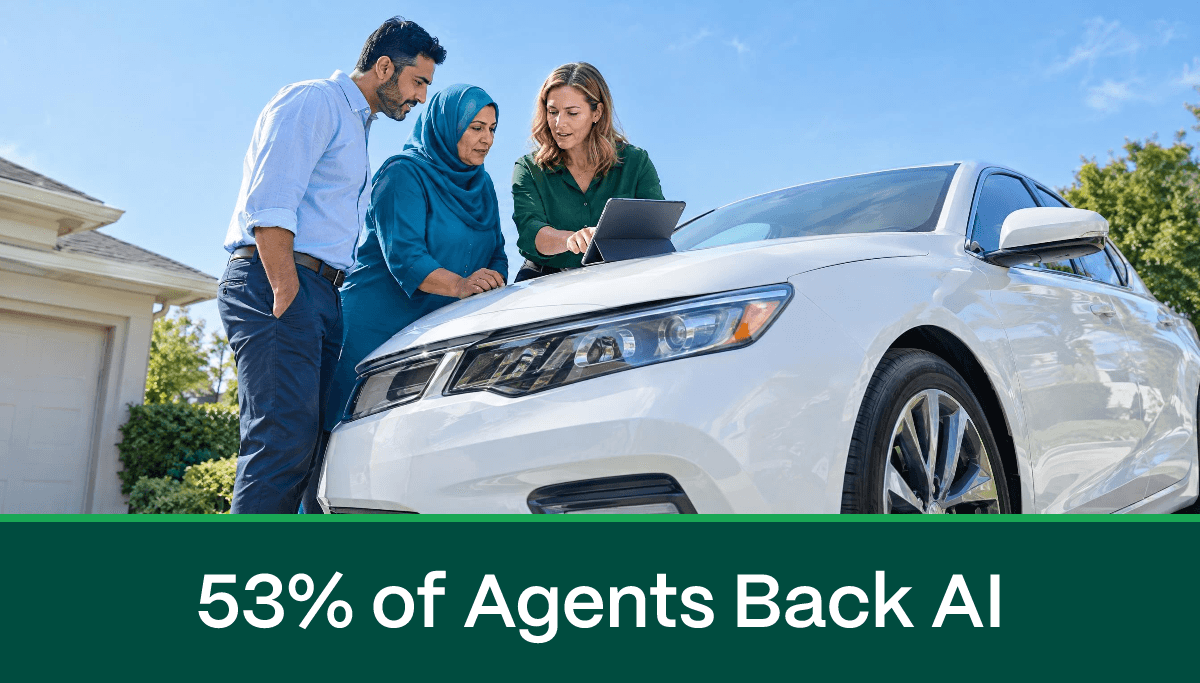
Could AI car insurance shopping genuinely save you money, or is it just another tech trend that overpromises and underdelivers?
A new survey highlighted by Money offers a clear answer: more than half of U.S. insurance agents and brokers believe AI is already reshaping how drivers find coverage. Research from AI-powered comparison platform Luva, cited by Money, found that approximately 53% of agents and brokers say AI is likely or very likely to improve the insurance shopping experience. The SaveMaxAuto Quote Index, drawn from 3.3 million+ real quote requests, reflects the same growing consumer appetite for faster, smarter insurance comparisons.
Here is what the data reveals about where AI helps, where it falls short, and what you should never type into a chatbot.
More Than Half of Insurance Agents Say AI Will Transform How Drivers Shop
The Luva survey result is striking, but it does not stand alone. According to an August survey by the U.S. Census Bureau, about 56% of workers reported using AI on the job. Roughly a third of those AI users said the technology saved them up to two hours at work.
That productivity gain is precisely why car insurance shoppers are paying attention.
Nearly half of the agents surveyed by Luva said AI already helps them spend more time advising customers rather than handling administrative tasks. They expect that trend to continue. In other words, AI is not pushing agents out of the picture; it is freeing them up to focus on the conversations that actually require human judgment.
For drivers, that shift matters. When an agent spends less time processing paperwork and more time understanding your situation, the advice you receive tends to be more tailored and actionable. The technology is quietly changing the dynamic on both sides of the transaction.
"AI can be a useful starting point for car [insurance] shopping education," says Mark Friedlander, senior director of media relations with the Insurance Information Institute. "It can explain coverage types, define terms such as uninsured motorist coverage, outline what typically affects rates and help consumers prepare questions."
The implication for everyday drivers is clear: AI is not a shortcut past the insurance process. It is a tool that makes you a more informed participant in it.
Where Agents Say AI Delivers the Most Value for Shoppers
When Luva asked agents which AI capabilities would provide the most value to shoppers, three categories rose to the top. The rankings offer a useful roadmap for how to put AI to work before your next renewal.
| 1 | Identifying savings opportunities | More than 53% |
| 2 | Policy comparisons | Ranked second |
| 3 | Coverage explanations | Ranked third |
The savings-identification function scored highest for a reason. Insurance discounts are notoriously scattered. Multi-vehicle bundles, homeowners insurance bundles, low-mileage programs, and state-mandated discounts for completing an approved defensive driving course are all real savings levers that many drivers simply never learn about.
Policy comparison ranked second because manually reviewing quotes from multiple insurers is genuinely confusing. Each company presents coverage levels and rates differently, making true apples-to-apples comparison difficult without a neutral summarizing layer.
Coverage explanations came in third, but do not underestimate this category. Terms like "personal injury protection," "comprehensive insurance," and "underinsured motorist protection" carry real financial stakes. Misunderstanding one of them can leave you exposed after an accident.
Drivers in high-cost states have the most to gain from each of these capabilities. For example, California drivers navigating some of the country's most complex insurance regulations can use AI to quickly decode mandatory coverage requirements before ever speaking to an agent.
How AI Actually Works When You're Comparing Quotes
The mechanics are simpler than you might expect.
You enter your driving history, vehicle details, and location into a chatbot like Claude or ChatGPT. The AI scans that input and flags discounts or cost-saving programs you might have overlooked. It can surface bundle opportunities, low-mileage programs, or state-specific savings tied to defensive driving courses.
For quote comparison, the process is equally practical. Upload screenshots from multiple insurers or paste in quote text, and the AI summarizes the differences in deductibles, coverage limits, and premiums side by side. It can also identify coverage gaps that might not be obvious when you are reading dense policy language on your own.
The jargon-translation function is where many drivers find the most immediate relief. Insurance documents are written for compliance, not for clarity. An AI tool can convert technical policy language into plain English, helping you understand what you are actually buying.
According to the SMQI, drivers who arrive at the quote stage with a clear understanding of their coverage needs tend to make faster, more confident decisions. That educated starting point is exactly what AI is built to provide.
Drivers shopping for coverage in states with complex minimum-coverage requirements, like New Jersey, where mandatory insurance rules differ significantly from most other states, can use AI to decode exactly what they are legally required to carry before comparing prices.
Why AI Cannot Replace a Licensed Agent or Official Quote
Here is the hard limit, and it matters.
General AI tools do not have access to live, real-time underwriting data. Insurance companies use proprietary formulas to set rates based on factors like your driving record, your vehicle identification number, and your credit score. No chatbot can replicate that calculation.
"It is not a substitute for working with a licensed agent or [getting] an insurer-issued quote," Friedlander advises.
That means any figure an AI gives you is a ballpark estimate, not a binding price. ChatGPT and Claude can give you a reasonable sense of what you might expect to pay, but final pricing depends entirely on what a licensed insurer determines after running your information through its own systems.
This is not a minor caveat. The difference between an AI estimate and an actual underwritten quote can be significant, especially for drivers with recent accidents, young drivers on a policy, or vehicles with unusual risk profiles.
The practical takeaway is this: use AI to arrive at the quote stage prepared, then get official quotes from insurers directly or through a licensed agent. Texas drivers comparing rates across a large and competitive market will find that AI narrows the field efficiently, but the final number still has to come from the carrier.
Privacy and Safety Considerations When Using AI Tools
Using general-purpose AI platforms to compare car insurance is generally safe, according to the source reporting from Money. But there is one firm boundary.
Never enter your Social Security number into a chatbot when shopping for insurance.
Your SSN is not required for the AI to help you understand coverage options, estimate rate ranges, or explain policy terms. Any platform that asks for it during a general research session should be treated with significant caution.
What is safe to share includes:
- Your vehicle make, model, and year
- Your general location or ZIP code
- Your driving history in broad terms (number of accidents, years licensed)
- Coverage levels you are currently carrying
- Screenshots or text from quotes you have already received from insurers
What you should never enter:
- Social Security number
- Full date of birth combined with your full name and address
- Driver's license number
- Financial account information
The distinction is straightforward. AI needs context to help you, not your identity. Keep the information you share functional and non-identifying, and the research process remains both useful and safe. Michigan drivers, who face some of the country's most distinctive no-fault insurance rules, should be especially cautious about which platforms they use, since the complexity of their state's system can make it tempting to over-share details chasing a precise answer.
What this means for you
Start your next insurance shopping cycle with an AI tool to decode jargon, surface discounts, and organize quotes side by side, then escalate to a licensed agent or direct insurer quote before making any binding decisions. Use the SaveMaxAuto Quote Index as a benchmark for understanding where real driver quotes land in your state. Keep sensitive identifiers like your Social Security number entirely out of any chatbot conversation.
FAQ
How many drivers are already using AI to shop for car insurance?
The Luva survey found that approximately 53% of U.S. insurance agents and brokers say AI is likely or very likely to improve the insurance shopping experience, signaling broad industry adoption. A U.S. Census Bureau survey from August found that about 56% of workers already use AI on the job, suggesting consumer comfort with these tools is high.
Can AI give me an actual car insurance quote?
No. General AI tools like ChatGPT and Claude do not have access to live underwriting data, so any figures they provide are ballpark estimates rather than official, binding quotes. Final pricing depends on proprietary insurer formulas that only licensed insurance companies can apply.
What is the safest way to use AI when comparing insurance policies?
Share functional details like your vehicle information, general location, and coverage levels, but never enter your Social Security number, driver's license number, or financial account details into a chatbot. Using AI for education and comparison preparation is generally safe; using it as a substitute for a licensed agent or insurer-issued quote is not.
What can AI do better than manually shopping for insurance?
AI excels at three tasks agents ranked highest in the Luva survey: identifying savings opportunities such as bundle and low-mileage discounts, comparing quotes from multiple insurers side by side, and translating complex insurance jargon into plain language. Each of these tasks is time-consuming to do manually.
Does using AI for insurance shopping replace talking to an agent?
No, and agents themselves do not expect it to. Nearly half of the agents in the Luva survey said AI already helps them spend more time advising customers, suggesting the technology complements rather than replaces professional guidance. Mark Friedlander of the Insurance Information Institute stated directly that AI "is not a substitute for working with a licensed agent."
About Brooke Grissom
Brooke Grissom is an Independent Insurance Analyst at SaveMaxAuto, licensed in Property & Casualty and Health insurance. She covers data-driven market trends, cross-state premium comparisons, and carrier financial analysis. Read more from Brooke Grissom →
Edited by Taleah McGuire.
Methodology
This article is grounded in the source linked above. SaveMaxAuto data points referenced here are drawn from the SaveMaxAuto Quote Index (SMQI), a proprietary instrument reflecting 3,364,317 real consumer quote requests submitted to savemaxauto.com. State and carrier rankings reflect the lifetime dataset; year-over-year shifts reflect a rolling 12-month window. The index is refreshed monthly. External authority figures referenced (NAIC, NHTSA, state regulators) reflect the most recent public data releases available at time of writing.
Sources
- Primary source: Money, "Can You Use AI to Shop for Car Insurance? Here's How Many Drivers Already Do"
- U.S. Census Bureau, August Survey on AI Use in the Workplace