

Published: Sep 30, 2026
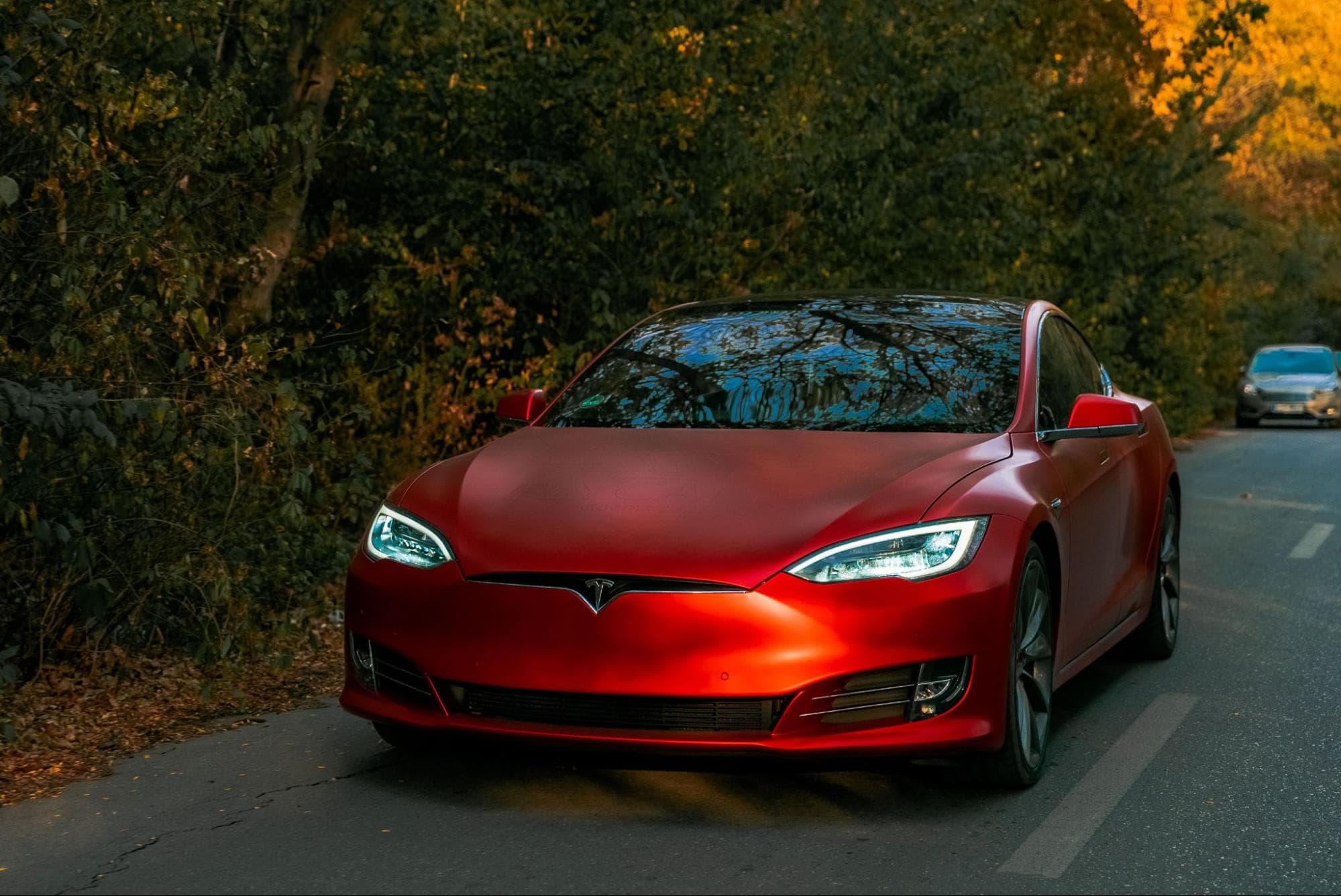
Image source: Pexels
Key Takeaways
Choosing the cheapest electric car to insure starts with looking beyond headline EV averages and comparing current, dated figures for specific models, driver profiles, and coverage levels. Insurance costs vary widely between EVs, so weigh these three things:
Compare current rankings — and check the car is still sold. The Volkswagen ID.4, Chevrolet Bolt and Ford Mustang Mach-E rank among the cheapest EVs in MoneyGeek’s August 2026 data — but only the Mach-E is still in production. Insure.com’s ranking instead puts the Hyundai Kona Electric, Nissan Leaf and Chevrolet Equinox EV near the top, and the Leaf places in the top five of four of the seven current rankings. All three are still on sale.
Look beyond the “EV insurance penalty.” EVs from legacy automakers average almost the same monthly premiums as gas cars in ValuePenguin’s analysis, suggesting brand, vehicle type, and repair costs matter more than the electric powertrain itself.
Compare insurance costs before you buy. Repair costs, OEM parts, ADAS technology, deductibles, and driver profiles all affect premiums — so quote the exact EV you’re considering rather than relying on a broad industry average.
If you drive one of America's two best-selling EVs, you're likely already paying above-average premiums for it: the Tesla Model Y and Model 3, 2026's top two sellers, both rank among the five most expensive EVs to insure. The model currently topping the cheapest-to-insure rankings, the Volkswagen ID.4, isn't much better as a recommendation — it ended US production in April 2026 and is selling through its final inventory. The Ford Mustang Mach-E — still in full production and third-cheapest on the same list — is the more realistic number to plan around. The published rankings don't even agree with each other on which EV is cheapest. Here's why and what the numbers really tell you before you buy.
The 2026 Ranking
There is no single industry-wide answer to the question, “Which EV is cheapest to insure?” The table below should be viewed as one publisher’s ranking based on one driver profile and methodology, rather than a universal list.
Cheapest electric cars to insure, 2026
MoneyGeek’s ranking of popular EVs by average annual full-coverage premium, updated August 13, 2026, shown against how many of each model Americans actually bought.
| 1 | Volkswagen ID.4 | $2,066 | $172 | $45,095 | 4.6% | Not in top 10 | US production ended Apr. 2026 | Aug. 13, 2026 |
|---|---|---|---|---|---|---|---|---|
| 2 | Chevrolet Bolt | $2,075 | $173 | $28,995 | 7.2% | Not in top 10 | Production ended 2023; 2027 model returning | Aug. 13, 2026 |
| 3 | Ford Mustang Mach-E | $2,089 | $174 | $37,795 | 5.5% | No. 5 — 7,032 sold | In production | Aug. 13, 2026 |
| 4 | Hyundai Ioniq 5 | $2,118 | $177 | $35,000 | 6.1% | No. 3 — 10,940 sold | In production | Aug. 13, 2026 |
| 5 | Hyundai Ioniq 6 | $2,245 | $187 | $37,850 | 5.9% | Not in top 10 | In production | Aug. 13, 2026 |
MoneyGeek’s figures are average annual full-coverage premiums for a 40-year-old driver with a clean record and good credit. Its data comes from Quadrant Information Services and covers all 50 states.
The Cheapest EVs to Insure Right Now
MoneyGeek’s latest ranking, updated August 13, 2026, puts the VW ID.4 at the top of its list of cheapest EVs to insure, at $2,066 a year ($172 a month). The Chevrolet Bolt follows at $2,075, then the Ford Mustang Mach-E only slightly behind at $2,089, Hyundai Ioniq 5 at $2,118, and Hyundai Ioniq 6 at $2,245. That means the difference between the cheapest and fifth-cheapest models is just $179 a year.
A second current ranking shows why EV insurance costs can look quite different from one source to another. Insure.com, updated May 22, 2026, ranks the Fiat 500e as the cheapest at $2,447 a year, followed by the Hyundai Kona Electric at $2,544, Kia Niro EV at $2,654, Nissan Leaf at $2,735, and Toyota bZ4X at $2,768. These figures come from Quadrant data covering 1,549 vehicle combinations and assume a 40-year-old male driver with 100/300/100 liability limits and a $500 deductible.
Three models on that list deserve more attention than they usually get, because all three are still in full production. The Hyundai Kona Electric is second-cheapest on Insure.com at $2,544 and sixth on Mercury’s 2025 list. The Nissan Leaf, fourth on Insure.com at $2,735, is The Zebra’s outright winner, third on Mercury’s 2025 list and fifth on MoneyGeek’s August 24 page at $2,064 — two dollars less than the ID.4 that tops MoneyGeek’s other page. The Chevrolet Equinox EV, sixth on Insure.com at $2,772, is seventh on that same MoneyGeek page at $2,137, was second on Mercury’s 2025 list and is one of only two fully electric vehicles on Mercury’s 2026 list. Only the Leaf and the Hyundai Ioniq 5 place in the top five of four of the seven current rankings, and only the Leaf tops one of them. None of the three is in MoneyGeek’s August 13 table above, which ranks ten popular EVs, and a model’s absence from one list says more about the list than about the car.
The cheapest EVs on Insure.com’s ranking — and where else they rank
Insure.com’s six cheapest electric cars to insure, updated May 22, 2026. None of the six is in MoneyGeek’s August 13 table above, but three of them — the Leaf, the bZ4X and the Equinox EV — sit in the top ten of MoneyGeek’s newer August 24 page, and the Leaf places in the top five of four of the seven current rankings.
| 1 | Fiat 500e | $2,447 | $204 | Mercury: No. 9 (Aug. 26, 2025) | Production paused repeatedly since 2024 |
|---|---|---|---|---|---|
| 2 | Hyundai Kona Electric | $2,544 | $212 | Mercury: No. 6 (Aug. 26, 2025) | In production |
| 3 | Kia Niro EV | $2,654 | $221 | Mercury: No. 4 (Aug. 26, 2025) | In production |
| 4 | Nissan Leaf | $2,735 | $228 | The Zebra: No. 1, $220/mo (May 13, 2026) MoneyGeek, Aug. 24 page: No. 5, $2,064 Mercury: No. 3 (Aug. 26, 2025) | In production — all-new 2026 model |
| 5 | Toyota bZ4X | $2,768 | $231 | The Zebra: 4th-lowest, $236/mo MoneyGeek, Aug. 24 page: No. 10, $2,197 Mercury: No. 10 (Aug. 26, 2025, shared with Solterra) | In production — renamed Toyota bZ for 2026 |
| 6 | Chevrolet Equinox EV | $2,772 | $231 | MoneyGeek, Aug. 24 page: No. 7, $2,137 Mercury: No. 2 (Aug. 26, 2025) Mercury: No. 9 (Aug. 6, 2026) | In production |
ValuePenguin’s July 2026 analysis provides another point of comparison. It ranks the VW ID.4 first at $2,892 a year ($241 a month), followed by the F-150 Lightning at $3,012 and the Bolt EUV at $3,288. However, those figures are Illinois statewide averages, as disclosed in ValuePenguin’s methodology, and the sample is limited to the 10 EVs with the highest 2023 sales volume.
Two further rankings widen the disagreement rather than settling it. Mercury Insurance’s August 26, 2025 affordability list named the Chevrolet Blazer EV the most affordable new EV to insure, ahead of the Equinox EV and the Nissan Leaf — built from Mercury’s own claims records, repair costs and safety data rather than quoted premiums, and carrying no dollar figure for any model.
That is the list currently feeding Google’s AI Overview for this search — but Mercury has since replaced it. Its August 6, 2026 update merges electric and hybrid vehicles into one top ten, led by the Hyundai Santa Fe Hybrid with the Blazer EV second. On Mercury’s current list the Blazer EV is the highest-ranked fully electric vehicle, not the outright winner.
The Zebra, updated May 13, 2026, produces a different winner again: the Nissan Leaf, at $220 a month. It publishes six-month premiums and discloses no driver age, coverage limits or deductible, so its figures cannot be lined up against the annual rankings above.
Counting MoneyGeek’s two live pages separately, that makes seven current rankings naming five different winners: the VW ID.4, the Chevrolet Silverado EV, the Fiat 500e, the Nissan Leaf and the Chevrolet Blazer EV.
The ID.4 is the one model that appears near the top of more than one ranking, topping two of them — but Volkswagen ended US production of it in April 2026, which makes it a poor thing to build a recommendation on. Counted across all seven lists, the Nissan Leaf and the Hyundai Ioniq 5 are the only models to place in the top five of four rankings, and both are still in full production. Together with the Mustang Mach-E and the Chevrolet Equinox EV, which appears on four of the seven lists, they are the closest thing to agreement these rankings offer.
Purchase price tracks the pattern closely. The models at the top of these lists are also among the cheapest to buy — the Nissan Leaf starts at $29,990, against $94,990 for a Tesla Model S and $99,900 for a Mercedes-Benz EQS (2026 base-trim MSRPs excluding destination, checked September 3, 2026). Insurers price the cost of repairing and replacing the specific car in front of them.
The Cheapest EVs to Insure Aren’t the Ones Americans Buy
Every ranking on this page answers the same question — which EV costs least to insure — and none of them asks how many of those cars are on the road. Line the two lists up and they barely overlap.
Kelley Blue Book’s second-quarter 2026 sales data, published July 10, 2026, puts the Tesla Model Y first at 84,863 units, followed by the Tesla Model 3 at 34,944, the Hyundai Ioniq 5 at 10,940, the Toyota bZ at 7,524 and the Ford Mustang Mach-E at 7,032. Electric vehicles were 5.8% of all new cars sold in the US that quarter.
Only two of those names appear on the cheapest-to-insure list. The Ioniq 5 is fourth-cheapest to insure and third best-selling; the Mustang Mach-E is third-cheapest and fifth best-selling. Everything else diverges, and it diverges in the expensive direction: the two best-selling EVs in the country, the Model Y and the Model 3, both sit in the most-expensive-to-insure list below, with Insurify’s June 2, 2026 report putting the Model 3 at $4,489 a year.
The practical version is that the cheapest EV to insure and the EV you were already considering are usually not the same car. If you are cross-shopping a Model 3 against an Ioniq 5, the insurance difference between them is larger than the trim level you are agonizing over.
Two models at the top of the cheapest list also carry an asterisk. Volkswagen ended US production of the ID.4 at its Chattanooga plant in April 2026 and is selling remaining model-year 2026 inventory. Chevrolet stopped building the Bolt in 2023; a redesigned 2027 Bolt is arriving on a short planned production run. Both still appear in current rankings, which is its own argument for checking the date on any list you read.
The Most Expensive EVs to Insure
The other end of the rankings makes the difference between EV models even clearer. Insurify's June 2, 2026 report puts the Mercedes-Benz EQS at $4,703 a year, followed by the Tesla Model S at $4,558, the BMW i5 at $4,554, the Tesla Model 3 at $4,489, and the Tesla Model X at $4,474.
Notice the pattern: every vehicle is either a luxury or performance model, and Tesla accounts for three of the five. This suggests that some of the “EVs are expensive to insure” headline is really measuring which brands and vehicles are included in the sample, rather than the electric powertrain alone.
There is a wrinkle at the top of the market. Insurify pairs each EV with a comparable gas model, and the Mercedes-Benz EQS — the most expensive EV on its list — is the only one cheaper than its gas equivalent: $4,703 against $5,101 for the S-Class. The Tesla Model X, by contrast, runs $4,474 against $3,332 for an Audi Q7. Expensive EVs are largely expensive because they are expensive cars.
Tesla’s presence at three of the five spots isn’t surprising once you factor in its repair and claims profile, which pushes premiums well above the category average. Rivian faces the same pressures as any other EV-only luxury brand, even though it doesn’t appear on this particular list.
It’s worth noting here that Insurify’s figures use a different profile from the cheapest-EV rankings, covering drivers ages 20 to 70 with $1,000 deductibles and a median vehicle age of 11.5 years. Because the underlying driver, coverage and vehicle profiles differ, these figures shouldn’t be subtracted from the cheapest-EV estimates to calculate a direct insurance “spread.”
One variable sits outside every ranking here: who writes the policy. On Insurify’s September 2026 data, full coverage on the same EV ranges from $89 to $334 a month depending only on the insurer — a wider spread than any model list above. Which company you buy from is the bigger decision, and we cover it in [INTERNAL LINK — cheapest insurance companies for electric cars].
What an EV Costs to Insure Where You Live
Every figure above is either a national average or a single state’s. In practice, where you register the car moves the number more than which car you pick.
Insurify’s June 2, 2026 analysis compares newer electric and gas vehicles — model years 2024 through 2026 — state by state, and finds a national gap of 18% between them. The table below comes from a different source — The Zebra’s state-by-state EV premiums, shown as six-month figures with the annual equivalent:
What an EV costs to insure, state by state
Average six-month full-coverage premium for an electric vehicle, with the annual equivalent. All 50 states and the District of Columbia, alphabetical. The Zebra does not disclose a driver age, coverage limits or deductible for this analysis.
- Alabama
- Average 6-month premium $1,825Annual equivalent (6-month × 2) $3,650
- Alaska
- Average 6-month premium $2,241Annual equivalent (6-month × 2) $4,482
- Arizona
- Average 6-month premium $2,188Annual equivalent (6-month × 2) $4,376
- Arkansas
- Average 6-month premium $2,278Annual equivalent (6-month × 2) $4,556
- California
- Average 6-month premium $2,067Annual equivalent (6-month × 2) $4,134
- Colorado
- Average 6-month premium $2,186Annual equivalent (6-month × 2) $4,372
- Connecticut
- Average 6-month premium $2,371Annual equivalent (6-month × 2) $4,742
- Delaware
- Average 6-month premium $3,000Annual equivalent (6-month × 2) $6,000
- District of Columbia
- Average 6-month premium $2,497Annual equivalent (6-month × 2) $4,994
- Florida
- Average 6-month premium $2,101Annual equivalent (6-month × 2) $4,202
- Georgia
- Average 6-month premium $2,020Annual equivalent (6-month × 2) $4,040
- Hawaii
- Average 6-month premium $1,570Annual equivalent (6-month × 2) $3,140
- Idaho
- Average 6-month premium $1,470Annual equivalent (6-month × 2) $2,940
- Illinois
- Average 6-month premium $2,168Annual equivalent (6-month × 2) $4,336
- Indiana
- Average 6-month premium $1,499Annual equivalent (6-month × 2) $2,998
- Iowa
- Average 6-month premium $1,577Annual equivalent (6-month × 2) $3,154
- Kansas
- Average 6-month premium $1,991Annual equivalent (6-month × 2) $3,982
- Kentucky
- Average 6-month premium $2,077Annual equivalent (6-month × 2) $4,154
- Louisiana
- Average 6-month premium $2,751Annual equivalent (6-month × 2) $5,502
- Maine
- Average 6-month premium $1,332Annual equivalent (6-month × 2) $2,664
- Maryland
- Average 6-month premium $2,037Annual equivalent (6-month × 2) $4,074
- Massachusetts
- Average 6-month premium $1,333Annual equivalent (6-month × 2) $2,666
- Michigan
- Average 6-month premium $1,988Annual equivalent (6-month × 2) $3,976
- Minnesota
- Average 6-month premium $1,991Annual equivalent (6-month × 2) $3,982
- Mississippi
- Average 6-month premium $1,589Annual equivalent (6-month × 2) $3,178
- Missouri
- Average 6-month premium $2,150Annual equivalent (6-month × 2) $4,300
- Montana
- Average 6-month premium $1,895Annual equivalent (6-month × 2) $3,790
- Nebraska
- Average 6-month premium $1,865Annual equivalent (6-month × 2) $3,730
- Nevada
- Average 6-month premium $1,906Annual equivalent (6-month × 2) $3,812
- New Hampshire
- Average 6-month premium $1,514Annual equivalent (6-month × 2) $3,028
- New Jersey
- Average 6-month premium $1,860Annual equivalent (6-month × 2) $3,720
- New Mexico
- Average 6-month premium $1,725Annual equivalent (6-month × 2) $3,450
- New York
- Average 6-month premium $1,953Annual equivalent (6-month × 2) $3,906
- North Carolina
- Average 6-month premium $1,499Annual equivalent (6-month × 2) $2,998
- North Dakota
- Average 6-month premium $1,923Annual equivalent (6-month × 2) $3,846
- Ohio
- Average 6-month premium $1,351Annual equivalent (6-month × 2) $2,702
- Oklahoma
- Average 6-month premium $2,196Annual equivalent (6-month × 2) $4,392
- Oregon
- Average 6-month premium $1,779Annual equivalent (6-month × 2) $3,558
- Pennsylvania
- Average 6-month premium $1,878Annual equivalent (6-month × 2) $3,756
- Rhode Island
- Average 6-month premium $2,890Annual equivalent (6-month × 2) $5,780
- South Carolina
- Average 6-month premium $1,811Annual equivalent (6-month × 2) $3,622
- South Dakota
- Average 6-month premium $1,832Annual equivalent (6-month × 2) $3,664
- Tennessee
- Average 6-month premium $1,729Annual equivalent (6-month × 2) $3,458
- Texas
- Average 6-month premium $1,942Annual equivalent (6-month × 2) $3,884
- Utah
- Average 6-month premium $1,661Annual equivalent (6-month × 2) $3,322
- Vermont
- Average 6-month premium $1,339Annual equivalent (6-month × 2) $2,678
- Virginia
- Average 6-month premium $1,638Annual equivalent (6-month × 2) $3,276
- Washington
- Average 6-month premium $1,560Annual equivalent (6-month × 2) $3,120
- West Virginia
- Average 6-month premium $1,863Annual equivalent (6-month × 2) $3,726
- Wisconsin
- Average 6-month premium $1,733Annual equivalent (6-month × 2) $3,466
- Wyoming
- Average 6-month premium $1,741Annual equivalent (6-month × 2) $3,482
The range is wide enough to swamp the difference between models. Delaware, at $3,000 per six-month term, costs more than twice what Ohio does at $1,351 — on The Zebra’s six-month figures, doubled to an annual equivalent. Rhode Island, Louisiana and Washington, D.C. sit near the top; Maine, Massachusetts and Ohio near the bottom.
Absolute cost is not the same as the EV penalty, and the two do not always move together. The same Insurify analysis compares newer electric and gas vehicles — model years 2024 through 2026 — and finds the national gap between them is 18%, but that it ranges from 54% in Massachusetts and 45% in New York down to below zero in Montana, West Virginia and Nebraska, where a newer EV is actually cheaper to insure than a comparable gas car.
Massachusetts is a useful illustration of the difference: it is among the cheapest states to insure an EV in absolute terms and the most punishing relative to a gas equivalent. Insurify excludes seven low-volume states from that comparison, so it covers 43 states and the District of Columbia rather than all fifty.
Why the Published Rankings Disagree
Several of the published rankings use Quadrant Information Services data and still produce different winners. That does not necessarily mean that one source is wrong. The difference comes down to methodology: which vehicles are included, where the drivers live, what deductible is used, how old the drivers are, and when the data was collected.
Six Sources, One Data Provider, Different Winners
The differences between these rankings aren’t contradictions so much as different questions. Each publisher makes five methodological choices — which cars go in the sample, where the drivers live, what deductible applies, who the driver is, and what period the premium covers — and each choice is individually defensible. Together they produce five different winners.
Same question, seven rankings, five different winners
Why the published rankings disagree — each publisher’s stated methodology, side by side.
| Publisher | Updated | Vehicle sample | Geography | Deductible | Driver profile | Their cheapest EV |
|---|---|---|---|---|---|---|
| MoneyGeek | Aug. 13, 2026 | Popular EV models | All 50 states | Not stated | 40-year-old, clean record, good credit | VW ID.4 — $2,066 |
Second page MoneyGeek | Aug. 24, 2026 | EV ownership guide | All 50 states | $500 | 40-year-old, clean record, good credit | Chevrolet Silverado EV — $1,947 |
| Insure.com | May 22, 2026 | 1,549 vehicle combinations | 29,159 cities / 34,595 ZIPs | $500 | 40-year-old male, 100/300/100 | Fiat 500e |
| ValuePenguin | Jul. 13, 2026 | Top 10 EVs by 2023 sales only | Illinois only | $500 | 40-year-old | VW ID.4 |
| Insurify | Jun. 2, 2026 | 235M+ rate observations | National | $1,000 | Ages 20–70, median vehicle age 11.5 yrs | Publishes most expensive, not cheapest |
| The Zebra | May 13, 2026 | Not disclosed | Not disclosed | Not disclosed | Not disclosed | Nissan Leaf (6-month basis) |
| Mercury Insurance | Aug. 6, 2026 | Own claims, repair and safety data | National | n/a — no premiums published | n/a | Chevrolet Blazer EV (EV + hybrid list) |
Three rows do most of the work. ValuePenguin restricts its sample to the top 10 EVs by 2023 sales volume, which means the Fiat 500e, the Silverado EV and the Niro EV cannot win regardless of what they cost — a “cheapest EV” list is partly a report on the list-maker’s inclusion rule. The Zebra discloses no driver age, coverage limits or deductible and publishes six-month premiums, so its $220 Nissan Leaf figure cannot be lined up against anything else here. And Mercury publishes no dollar figures at all, because its list is built from its own claims records, repair costs and safety data rather than from quoted premiums.
A single publisher can also disagree with itself. MoneyGeek runs two live EV pages. One, updated August 13, 2026, names the VW ID.4 the cheapest popular EV at $2,066 a year. The other, updated August 24, 2026, names the Chevrolet Silverado EV at $1,947 — a vehicle the first page does not include at all. Same publisher, same 40-year-old driver with a clean record and good credit, same $500 deductibles, eleven days apart, and a $119 gap. Neither page mentions the other.
There is one more reason a ranking goes stale: the car does. MoneyGeek’s current list still crowns the ID.4, whose US production ended in April 2026, and places the Chevrolet Bolt second, three years after Chevrolet stopped building it and a year before its redesigned 2027 replacement reaches buyers. Neither figure is wrong; both are answers about cars a reader can no longer straightforwardly buy.That’s why these rankings are best treated as snapshots rather than a single definitive league table. The winner depends not only on the vehicle, but also on the sample, location, driver, coverage, deductible, and date behind the number.
The Ranking That's Five Model Years Out of Date
Insurance rates may change, but their rankings remain online long after their underlying data has aged. Four pages still holding first-page positions for this search are quoting figures from 2021 and 2022 — and one of them carries a 2025 audit stamp on top of them.
Rankings that are still ranking on old data
Pages holding first-page positions for this search, with the vintage of the data behind them.
| Source | Date shown (on the page today) | Data vintage | Model cited | Their figure | Current figure | Gap |
|---|---|---|---|---|---|---|
| Forbes Advisor | “Audited & Verified” Jan. 3, 2025 | 2021 model year | Hyundai Kona Electric | $1,867 | $2,544 | 27% low |
| Forbes (2022 analysis) | Sept. 29, 2022 | 2022 | Hyundai Kona | $1,498 | $2,544 | ~70% low |
| Forbes (2022 analysis) | Sept. 29, 2022 | 2022 | MINI Cooper SE | $1,479 | Model withdrawn from US | — |
| Mercury (earlier list) | Jul. 31, 2025 | Not stated | Kia Soul EV | No figure published | Not returning to the US | — |
| Google AI Overview | Live, Sept. 2026 | Not stated | MINI Cooper SE | No figure published | Deferred from the US market | — |
That is why an insurance figure should always come with a date, a driver profile, a coverage level and a source. Without those four things, a number can look precise while telling you very little about what you would actually pay.

Every EV Against Its Gas Twin
Comparing an EV with its gas equivalent can be more useful than comparing average EV insurance with average gas-car insurance. Using CarEdge’s undated estimates for a 40-year-old good driver with good credit, full coverage and about 13,000 miles a year, several EVs come surprisingly close to — or even below — their gas counterparts:
EV vs. its own gas sibling — annual full-coverage premium
Same model, same methodology, two powertrains. Four of five EVs cost more, but the gaps are in the hundreds, not the thousands. Source data is undated — CarEdge does not publish a collection date.
- ElectricFord Mustang Mach-E
- Annual full-coverage premium $2,518
- EV $137 cheaper
- GasFord Mustang
- Annual full-coverage premium $2,655
- ElectricChevrolet Blazer EV
- Annual full-coverage premium $2,815
- EV $245 more
- GasChevrolet Blazer
- Annual full-coverage premium $2,570
- ElectricChevrolet Equinox EV
- Annual full-coverage premium $2,396
- EV $256 more
- GasChevrolet Equinox
- Annual full-coverage premium $2,140
- ElectricHyundai Kona Electric
- Annual full-coverage premium $2,222
- EV $262 more
- GasHyundai Kona
- Annual full-coverage premium $1,960
- ElectricFord F-150 Lightning
- Annual full-coverage premium $2,780
- EV $366 more
- GasFord F-150
- Annual full-coverage premium $2,414
The Mustang Mach-E stands out as the one pairing where the EV actually comes out ahead, but that result can vary depending on the source and methodology. For example, while this comparison shows the Mach-E costing less than its gas-powered counterpart, Insurify’s data puts the Mach-E $770 more expensive than the Mustang. The gaps on the other four models are modest enough that they’re worth a closer look, model by model.
Where the EV Is Actually Cheaper
Using CarEdge’s consistent methodology, the Mustang Mach-E actually beats its own gas sibling. Most other pairs run the other way — the Hyundai Kona Electric costs $262 more than its gas version, and the F-150 Lightning costs $366 more than the standard F-150.
The Chevrolet Blazer EV and Chevrolet Equinox EV follow the same pattern, each costing a few hundred dollars more than their gas counterparts — though the Equinox EV’s premium is closer than you might expect once you look at the full comparison.
Even the Lightning comparison isn’t settled. ValuePenguin’s Illinois data has the Lightning $6 a month cheaper than the gas F-150, while Insurify's national data has it $197 a year more expensive. The safest conclusion, then, is not that EVs are cheaper than gas cars. It is that the difference can be smaller than broad EV-versus-gas averages suggest, depending on where the vehicle insurance data is sourced from.
What Makes an EV Cheap or Expensive to Insure
Insurance companies ultimately care about the risk and cost associated with a claim. For EVs, three factors are particularly important.
Repairs Cost More, but the Gap Is Closing
Insurers price what a claim costs them, and on an EV four things move that number.
What actually drives an EV repair bill
The four measured differences between an electric and a gas repair — and which way each is moving.
- Average repairable claim severity, EV vs gas
- +$1,140
- Average repairable claim severity, EV vs gas$6,042 for a battery-electric vehicle against $4,902 for a gas car — 23% more. Narrowed to +$729 in Q2 2026.
- Share of parts spend going to manufacturer parts
- 86%
- Share of parts spend going to manufacturer partsAgainst 62% on gas cars. Only 13% of EV parts are repaired rather than replaced — little aftermarket relief.
- Sensor recalibrations per repair estimate
- 1.7
- Sensor recalibrations per repair estimateAgainst 1.54 on gas cars. ADAS content adds $1,540.92 to a front-collision repair; 28.3% of all estimates now include one.
- Written off after a collision, vehicles under six years old
- 12%
- Written off after a collision, vehicles under six years oldAgainst 13% for gas vehicles. EVs are totalled slightly less often, not more — counter to the common assumption.
| Measure | Electric | Gas | Latest |
|---|---|---|---|
| Average repairable claim severity | $6,042 | $4,902 | Gap narrowed to +$729 in Q2 2026 |
| Share of parts spend going to manufacturer parts | 86% | 62% | Only 13% of EV parts are repaired rather than replaced |
| Sensor recalibrations per repair estimate | 1.7 | 1.54 | 28.3% of all estimates now include one |
| Written off after a collision, vehicles under six years old | 12% | 13% | EVs are totalled slightly less often, not more |
The direction matters as much as the levels. Mitchell’s Q2 2026 update, published August 20, 2026, puts average repairable severity at $5,684 for battery electric vehicles against $4,955 for gas — a $729 gap Mitchell describes as a record low. Labor is closing too: CCC’s May 27, 2026 analysis found the labor-hour difference between EV and hybrid repairs fell from nearly eight extra hours per repair in 2020–2021 to fewer than two in 2025, with the labor cost gap dropping from more than $1,300 to just over $700. The constraint behind it is people — ASE figures reported in October 2023 put EV-specific certifications at 3,400 of roughly 222,000 ASE-certified technicians, about 1.5%, on 2022 data.
The total-loss figure is the one that surprises people. Despite the assumption that a damaged battery pack writes a car off, Mitchell finds EVs under six years old are declared a total loss in 12% of collision claims, compared with 13% for comparable gas vehicles. Pack damage does raise the odds on an individual claim; it is rare enough that the fleet-level rate still sits marginally below gas. CCC’s 2026 analysis points the same way from a different dataset: 12.7% of EV claims were flagged as total losses in 2025, against 24.1% for combustion vehicles and 23.1% industry-wide.
It's Mostly the Badge, Not the Battery
This is where the broad “EV penalty” becomes misleading. ValuePenguin’s 2026 analysis finds that EVs from legacy automakers average $282 a month to insure, compared to $281 for gas cars — effectively the same.
Insurify, meanwhile, calculates a 42% EV premium across all model years: $3,159 compared with $2,218 for gas-powered vehicles. But that sample includes Tesla, Rivian, Lucid, and German luxury EVs, which are substantially more expensive to insure.
Insurify also found that “when comparing cars with a 2024 model or newer, the cost gap between EVs and gas-powered cars shrinks to 18%, or $501 annually.” That distinction shows us that a mainstream EV from a legacy automaker can have insurance costs much closer to a comparable gas vehicle than the headline EV average suggests.
One caveat on that 42%: The Zebra, updated May 13, 2026, puts electric cars “about 63% more expensive to insure than gas-powered vehicles.” Neither is wrong — they measure different samples with different coverage assumptions — but anyone arriving here having just read one of them should know the other exists.
The vehicle is also not the only lever. Deductibles, usage-based programs and multi-policy bundling all move an EV premium measurably, while the discount most EV buyers expect — a break for all that driver-assistance hardware — largely does not exist, because insurers have declined to offer one. We cover what actually works in [INTERNAL LINK — how to lower your electric car insurance costs].
How much more EVs cost to insure — depending on which EVs you count
The headline “EV penalty” narrows sharply once luxury and EV-only brands stop dominating the sample.
- All EVs, all model years
- EV premium above gas 42%
- $3,159 vs. $2,218 a year for gas · sample includes Tesla, Rivian, Lucid and German luxury EVs · Insurify, 2026
- 2024 and newer models only
- EV premium above gas 18%
- A gap of $501 a year · Insurify, 2026
- EVs from legacy automakers
- EV premium above gas 0.4%
- $282 vs. $281 a month for gas — effectively identical, under 1% · ValuePenguin, 2026
It’s the Car, Not the Category
If insurance cost is part of your EV-buying decision, don’t write off electric cars based on a single “EVs cost more to insure” statistic. The VW ID.4, Chevrolet Bolt, and Ford Mustang Mach-E sit at the top of MoneyGeek's popular EV ranking — though only the Mach-E is still in production — while Insure.com puts the Fiat 500e first, with the Hyundai Kona Electric, Nissan Leaf and Chevrolet Equinox EV close behind it. Those differences are not necessarily contradictions. They reflect different datasets, driver profiles, geographic areas, deductibles, and vehicle samples.
The bigger lesson is that the model matters more than the EV label. Mainstream EVs from established manufacturers can have insurance costs close to their gas counterparts, while luxury and performance EVs can be considerably more expensive.
And the model matters less than two things no ranking can tell you: which state you register the car in, and which company you buy the policy from. The gap between the cheapest and fifth-cheapest EV on MoneyGeek’s list is $179 a year. The gap between Ohio and Delaware, on the same six-month basis, is $1,649 per term — nearly $3,300 a year.
Before you buy, compare insurance quotes for the exact vehicle you are considering. A few minutes of shopping can tell you far more about your real ownership cost than a generic EV insurance average. Compare insurance rates for the vehicle you’re considering before making your decision.
FAQs About Electric Car Insurance
What Is the Cheapest Electric Car to Insure?
On MoneyGeek’s most recently updated ranking, the Volkswagen ID.4 is the cheapest at $2,066 a year, followed by the Chevrolet Bolt at $2,075, and the Ford Mustang Mach-E at $2,089. Insure.com, however, puts the Fiat 500e first at $2,447, followed by the Hyundai Kona Electric at $2,544 and the Nissan Leaf at $2,735, and The Zebra names the Leaf its outright winner. The difference comes from the sources’ different methodologies. Note that Volkswagen ended US production of the ID.4 in April 2026 and Chevrolet stopped building the Bolt in 2023, so among models still in full production the Mustang Mach-E is the cheapest on MoneyGeek’s list.
Are Electric Cars More Expensive to Insure Than Gas Cars?
On average, yes, but the gap depends heavily on the model. Insurify puts the overall difference at 42%, narrowing to 18% for 2024-and-newer vehicles. Valuepenguin finds legacy-brand EVs average $282 a month compared with $281 for gas cars.
What Is the Cheapest Tesla to Insure?
Insurify’s June 2026 data puts the Model X at $4,474 a year, making it the cheapest Tesla to insure — narrowly ahead of the Model 3 at $4,489 and the Model S at $4,558. All three rank among the five most expensive EVs to insure, so the cheapest Tesla is still an expensive one.
Why Are Electric Cars More Expensive to Repair?
EV repairs can cost more because they use specialized parts, require more OEM components, and often involve sophisticated electronic systems. Mitchell put average repairable severity at $6,042 for BEVs against $4,902 for gas vehicles in Q1 2026.
Do Electric Cars Get Written Off More Often After a Crash?
No — slightly less often, in fact. Mitchell found EVs under six years old were written off in 12% of collision claims, compared with 13% for gas vehicles. Battery damage can make an individual EV claim more expensive, but EVs are not being written off more often overall.